
Getting patients to book an online consultation takes more than adding a “Book Now” button to your website. Clinic online consultation marketing requires a coordinated approach that meets patients where they are, answers their questions before they ask, and removes every barrier between their first search and their confirmed appointment. Whether you manage a general practice, an aesthetic clinic, or a specialist service, the same problem shows up: you have the capacity, but the bookings aren’t coming in fast enough. This guide gives you a working framework to fix that.
Table of Contents
- Key Takeaways
- Clinic online consultation marketing starts with understanding your patients
- Building the digital foundation for online consultation visibility
- Running multi-channel campaigns that actually convert patients
- Measuring what matters and optimizing over time
- What I’ve learned from marketing clinic online consultations
- How Growthreachmarketing helps clinics grow their online consultation bookings
- FAQ
Key Takeaways
| Point | Details |
|---|---|
| Know your patient journey | Map every stage from symptom search to booking to tailor your messaging and reduce drop-off. |
| Build a search-optimized foundation | Fast, mobile-friendly websites with clear calls to action directly improve consultation booking rates. |
| Run multi-channel campaigns | Combining SEO, Google Ads, and email consistently outperforms any single-channel approach. |
| Manage your reputation actively | Prompting patients for reviews after appointments converts browsers into new bookings. |
| Track and shift budget monthly | Monitoring key metrics and reallocating spend toward high-performing channels improves ROI over time. |
Clinic online consultation marketing starts with understanding your patients
Before you spend a single dollar on ads or content, you need to know exactly who you are marketing to and how they think. Not all patients are equally suited to online consultations. Your highest-value prospects tend to be working adults aged 25 to 55 who value convenience, have some comfort with technology, and face scheduling barriers that make in-person visits difficult.
These patients share a predictable research pattern. They search with symptom-based queries first. Then they move to provider comparisons. Then they look for trust signals before committing to a booking. Your marketing needs to show up at each of those stages, not just the last one.
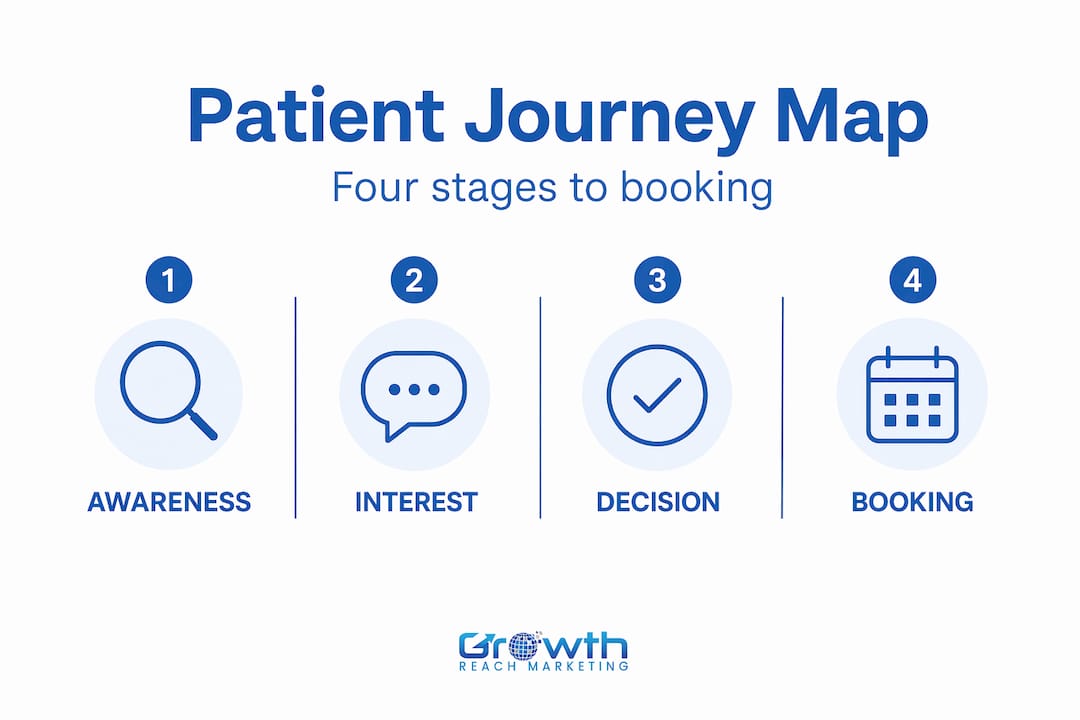
Mapping the patient journey looks like this in practice:
- Awareness: The patient notices a symptom or health concern and searches for information online.
- Consideration: They research clinics and providers, compare options, and look at reviews.
- Decision: They visit a specific clinic website, evaluate the booking process, and either complete the action or leave.
- Retention: Post-consultation follow-up determines whether they return or refer others.
Each stage has a different informational need. Awareness-stage content should answer questions, not sell. Decision-stage content should reduce friction and build confidence. Most clinic marketing only targets the decision stage and wonders why conversion rates are low.
Pro Tip: Create a simple one-page patient journey map for your top two or three patient types. Label what questions they have at each stage, then audit whether your current content actually answers those questions.
Building the digital foundation for online consultation visibility
Your website is where every marketing channel sends people. If it fails them on arrival, every upstream dollar you spent is wasted. Poor mobile usability and a lack of clear educational material create informational friction that causes potential patients to abandon the booking process entirely.
Here is what a strong digital foundation actually requires for online healthcare promotion:
- A mobile-first design that loads in under three seconds on a standard 4G connection
- A booking flow that requires no more than three steps from landing page to confirmation
- Clear, plain-language explanations of what happens during an online consultation, including what technology is needed, how privacy is protected, and what the patient can expect afterward
- FAQ sections that address the most common patient concerns about virtual care
SEO is the other half of your foundation. Local search presence is critical for attracting patients actively seeking virtual healthcare providers nearby. That means optimizing your Google Business Profile with your online consultation services listed explicitly, collecting location-specific reviews, and targeting keyword phrases that reflect how patients actually search, such as “online doctor consultation [city]” or “telehealth dermatology appointment.”
Content is where medical consultation SEO gets its power. Clinics that publish educational articles answering specific patient questions maintain visibility in AI-driven search tools increasingly used for symptom and provider research. Write one article per common patient question. Keep it practical. Skip the medical jargon.

| Website element | Why it matters | Quick fix |
|---|---|---|
| Page load speed | Slow pages increase bounce rate and lose bookings | Compress images, use a CDN |
| Mobile booking flow | Most patients search on mobile first | Test your full booking flow on a phone |
| Trust signals | Reviews, credentials, and security badges reduce hesitation | Add them above the fold on key pages |
| Educational content | Patients who understand the process convert better | Add a “What to expect” page for online consults |
Pro Tip: Add a short 60-second explainer video to your online consultation landing page showing exactly what a virtual appointment looks like. Clinics that do this consistently report lower drop-off at the booking stage.
Running multi-channel campaigns that actually convert patients
Getting found is step one. Getting patients to act on what they find is step two. This is where most clinic marketing stalls out. Clinics relying only on social media see significantly lower ROI than those using integrated strategies that capture high-intent traffic throughout the patient research cycle.
Here is a practical sequence for executing a multi-channel campaign for virtual clinic marketing:
-
Start with Google Ads for immediate visibility. Target high-intent keywords like “online consultation [specialty]” and “[city] telehealth appointment.” Send traffic to a dedicated landing page, not your homepage. For a deeper look at making PPC work for appointment-based businesses, the programmatic advertising guide from Growthreachmarketing covers campaign structure in practical detail.
-
Run SEO in parallel for long-term patient acquisition. PPC gives you traffic today. SEO builds the asset that keeps giving. Focus your content on question-based queries that match your patient journey map from Section 2.
-
Activate your existing patient list with email. Short, focused email campaigns informing patients about telehealth options increase engagement and re-bookings. A single email explaining “You can now see Dr. [Name] online” to your existing list often outperforms weeks of paid advertising to cold audiences.
-
Use social media for trust-building, not direct conversion. Post educational content, explain what online consultations cover, and share patient success stories (with consent). Social media warms audiences who then convert through search or direct booking.
-
Prioritize reputation management from day one. Prompting satisfied patients to leave detailed reviews consistently improves social proof and booking conversion rates. Make this part of your post-consultation workflow, not an afterthought.
| Channel | Best use | Typical timeline to results |
|---|---|---|
| Google Ads | Immediate, high-intent patient acquisition | Days to weeks |
| SEO and content | Long-term search visibility and organic traffic | 3 to 6 months |
| Email marketing | Re-engaging existing patients for online bookings | 1 to 2 weeks |
| Social media | Brand awareness and trust-building | Ongoing |
| Review management | Improving conversion rates from all channels | 1 to 3 months |
Pro Tip: Set a 90-day budget split test: allocate 60% to Google Ads and 40% to content creation and SEO. At the 90-day mark, compare cost per booked consultation from each channel and adjust accordingly.
Measuring what matters and optimizing over time
Running campaigns without tracking them is the most common and most expensive mistake clinic owners make. Clinics that monitor conversion rates and shift budgets accordingly consistently optimize appointment completions over time.
The metrics that actually tell you whether your clinic’s digital consultation advertising is working:
- Cost per booked consultation: Total ad spend divided by total confirmed online appointments. This is your north star metric.
- Landing page conversion rate: What percentage of visitors to your online consultation page actually book? Below 3% means the page has friction. Above 8% means your messaging is working.
- Email open and click rates: For patient re-engagement campaigns, open rates below 20% signal that your subject lines need work.
- Review volume and rating: Track monthly. Positive trends here directly impact organic conversion.
- Return appointment rate: Are online consultation patients coming back? Low retention signals a gap in the post-consultation follow-up experience.
Set up a simple Google Analytics 4 dashboard with conversion events tied to your booking confirmation page. Connect Google Ads to the same dashboard so you can see cost data alongside behavior data. Review it monthly, not quarterly.
Pro Tip: Use a monthly one-page report template that shows cost per acquisition, total bookings from each channel, and page conversion rate. Keeping it to one page forces you to focus on what matters and makes budget decisions faster.
What I’ve learned from marketing clinic online consultations
I’ve seen clinic owners invest significant budgets into digital consultation advertising only to watch results plateau after the first few months. The pattern is almost always the same. They treat online consultations as a separate product to promote rather than a natural extension of the care they already provide.
The clinics that consistently grow their virtual appointment volume do something different. They position online consultations as part of a continuous patient care journey, not a standalone convenience. Their marketing messaging says “you can now continue your care from home” rather than “try our new telehealth feature.” That framing change alone tends to improve patient adoption.
The other mistake I see regularly is underestimating how much educational, transparent content matters to healthcare audiences. Patients are not comparing clinic websites the same way someone compares restaurant menus. They are making trust decisions. A plain-English explanation of how a consultation works, what your data security practices are, and what happens after the appointment closes more bookings than any promotional headline.
Finally, I’ve learned that single-channel dependency is genuinely dangerous in this space. Clinics that rely entirely on Google Ads are one algorithm change away from losing their patient pipeline. Clinics that only do social media spend enormous energy for weak returns. The practices that build durable online consultation volume combine reputation, content, and paid acquisition into one system that reinforces itself.
— Gerard
How Growthreachmarketing helps clinics grow their online consultation bookings
If you’ve worked through this guide and you know your clinic needs better patient acquisition for online consultations but you’re not sure where to start, Growthreachmarketing specializes in exactly this problem.
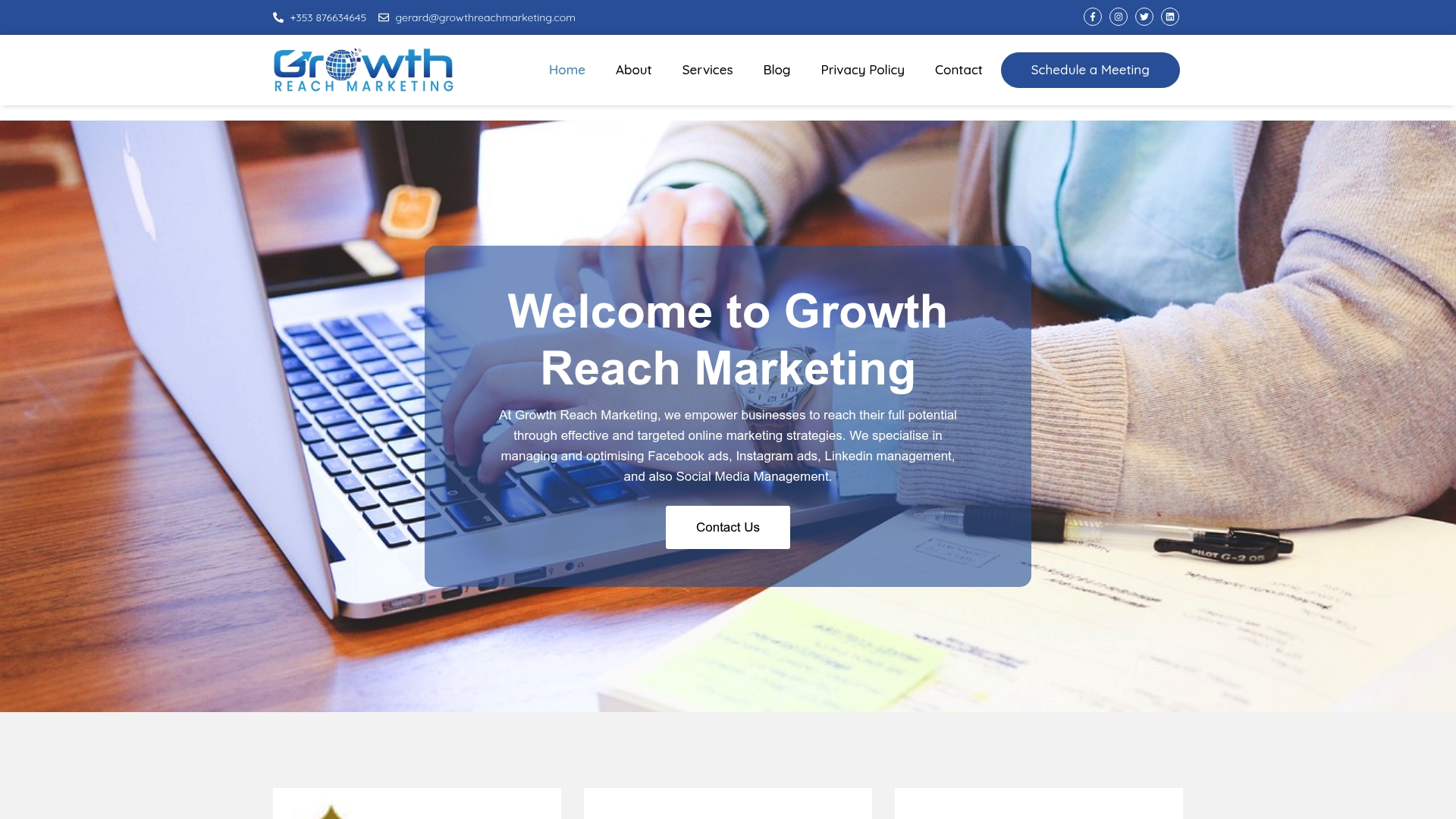
Growthreachmarketing builds patient acquisition systems for clinics using Google Ads, medical consultation SEO, content marketing, and reputation management working together. Whether your clinic needs a Google Ads campaign structured around high-intent consultation keywords, or a content strategy built to rank for the questions your patients are already searching, the Growthreachmarketing services for healthcare providers cover both. For clinic owners who want to understand how paid campaigns translate into booked appointments, the Google Ads conversion guide is a strong starting point. Growthreachmarketing works with clinics to turn marketing spend into a measurable, scalable patient pipeline.
FAQ
What is clinic online consultation marketing?
Clinic online consultation marketing refers to the strategies and channels a clinic uses to attract, educate, and convert patients into booked virtual appointments. It typically includes SEO, paid ads, email, and reputation management working together.
Which marketing channel works best for online consultation bookings?
No single channel outperforms the combination. Integrated strategies using SEO, Google Ads, and reputation management consistently deliver higher ROI than any solo approach.
How do patient reviews affect online consultation bookings?
Positive, detailed reviews build social proof that directly improves conversion rates on booking pages. Prompting satisfied patients to leave reviews after each appointment is one of the highest-return activities a clinic can do.
How long does it take to see results from telehealth marketing?
Google Ads can generate bookings within days. SEO and content marketing typically take three to six months to produce consistent organic traffic. Running both in parallel gives you short-term results while building long-term visibility.
What metrics should I track for remote patient engagement campaigns?
Track cost per booked consultation, landing page conversion rate, email engagement rates, review volume, and patient return rate. Review these monthly and adjust your budget toward the channels producing the lowest cost per confirmed appointment.
Recommended
- 1779192113847_Clinic-manager-reviewing-marketing-content-ideas – Growth Reach Marketing
- 1779071614269_Clinic-manager-reviewing-client-feedback-in-office – Growth Reach Marketing
- 1779071614269_Clinic-manager-reviewing-client-feedback-in-office-1 – Growth Reach Marketing
- 1778965278408_Clinic-manager-reviews-digital-ad-campaign-results – Growth Reach Marketing