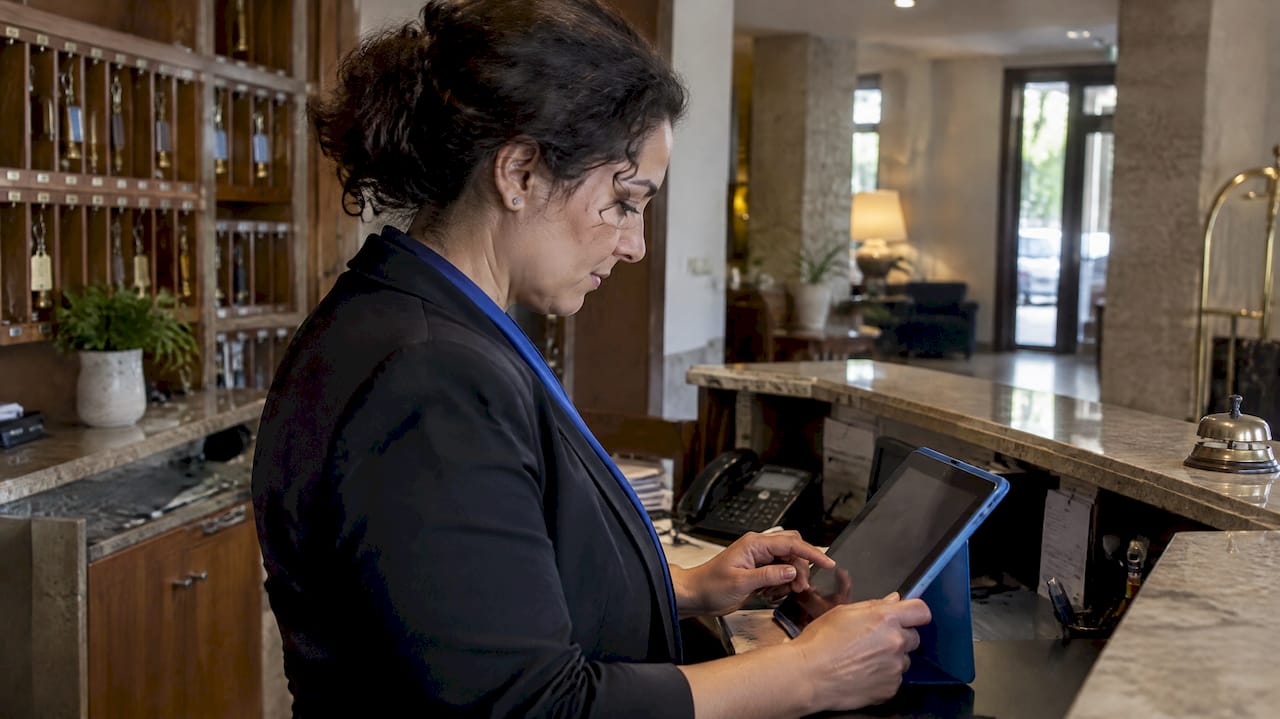

An aesthetic brand voice is the consistent verbal personality a brand uses across every written and spoken touchpoint, deliberately matched to its visual identity so that words and images reinforce the same feeling. Think of it as the written equivalent of your clinic’s interior: if the space is calm, minimal, and clinical-luxe, the copy should feel the same way. Core components include personality traits, vocabulary choices, sentence rhythm, tone spectrum, and the alignment between visual decisions (color, typography, imagery) and the language that surrounds them.
Before / After micro-copy for an aesthetic clinic:
Before: “Book your appointment today and get the look you want!”
After: “Your consultation is the first step. We’ll take it at your pace.”
The second line carries the same call to action, but the voice is measured, reassuring, and premium — matching a clean, white-space-heavy visual identity rather than fighting against it.
Key Takeaways
An aesthetic brand voice is the verbal personality that matches and amplifies a brand’s visual identity, and documenting it with concrete examples is what separates clinics that communicate consistently from those that sound different on every channel.
| Point | Details |
|---|---|
| Voice vs. tone | Voice is your permanent personality; tone shifts by context while the core stays fixed. |
| Document with examples | Vocabulary lists and on/off copy pairs drive adherence far better than adjectives alone. |
| Visual-verbal alignment | Your copy must confirm the feeling your visual identity sets in the first half-second. |
| Audit quarterly | Review 15–20 content samples per quarter; run a full guide refresh annually. |
| Growthreachmarketing | Offers voice audits, documentation, and channel rollout for aesthetic clinics in Ireland. |
Table of Contents
- Why does a defined brand voice matter for aesthetic brands?
- What is the difference between brand voice and brand tone?
- What are the core elements of an aesthetic brand voice?
- How do you discover and define your brand’s aesthetic voice?
- How do you document and govern your brand voice?
- How does your voice translate across different channels?
- How do you audit and evolve your brand voice over time?
- Growthreachmarketing’s checklist for aesthetic clinics in Ireland
- How does the “aesthetic” aspect shape voice beyond generic brand voice?
- Common mistakes when defining an aesthetic brand voice
- Why the “perfect voice” is often the wrong goal
- Growthreachmarketing helps aesthetic clinics build a voice that books appointments
- Sources
Why does a defined brand voice matter for aesthetic brands?
Trust is the purchase trigger in aesthetics. Clients are not buying a product off a shelf; they are deciding whether to let someone treat their face or body. Every word on your website, in your Instagram captions, and in your booking confirmation either builds that trust or quietly erodes it.
HubSpot reports that a large majority of consumers say trusting a brand matters when they decide to buy. For Irish aesthetic clinics, where word-of-mouth and Google reviews drive most new bookings, a voice that feels inconsistent or generic signals exactly the kind of carelessness clients are trying to avoid.
Beyond trust, a defined voice has practical outcomes. It makes pricing communication clearer because premium language signals premium value without you having to justify the number. It lifts social engagement because posts that sound like a real, specific personality get shared; posts that sound like every other clinic get scrolled past. And it reduces the back-and-forth between marketing managers and copywriters, because everyone is working from the same documented standard.
What is the difference between brand voice and brand tone?
Voice is permanent. Tone is situational. Shopify defines it cleanly: voice is the stable personality of your brand, and tone is how that personality modulates depending on context. A person can be warm and direct whether they are celebrating good news or handling a complaint, but they will not use the same words in both situations. Your brand works the same way.
Practical rules for keeping voice stable while varying tone:
- Celebratory context (new treatment launch, client milestone): warmer, slightly more expressive, short punchy sentences, one or two tasteful emojis if the channel allows.
- Instructional context (pre-treatment care page, FAQ): clear, direct, no filler, numbered steps, no jargon the client has not already encountered.
- Support context (complaint, concern, refund request): slower pace, longer sentences, no exclamation marks, empathetic but never over-apologetic.
The voice underneath all three is identical: calm, knowledgeable, and human. The tone shifts the temperature without changing who is speaking. For a practical framework on how tone variation maps to channel and audience, tone of voice guidelines from Jarvis & Co offer useful templates.
What are the core elements of an aesthetic brand voice?
Brandwatch describes brand voice as the distinct, consistent personality expressed across all communications, and recommends documenting it with concrete on-brand and off-brand examples rather than adjectives alone. The elements below give you the building blocks to do that.
Aesthetic branding — color, typography, photography, layout, and motion — shapes first impressions and must align with messaging to influence perceived value. A serif-heavy, muted-palette brand that writes in exclamation marks and slang creates cognitive dissonance. The table below maps each voice element to a practical decision example.
| Voice Element | What to Define | Practical Example |
|---|---|---|
| Core personality traits | 3–5 adjectives with behavioral descriptions | “Calm” means no urgency language; “Expert” means cite credentials, not trends |
| Vocabulary and taboo words | “Use” and “avoid” word lists | Use: “treatment,” “results,” “consultation” / Avoid: “cheap,” “deal,” “fix” |
| Sentence rhythm | Average length and structural preference | Short declarative sentences for hero copy; longer, subordinated sentences for FAQs |
| Formality level | Register on a scale from clinical to conversational | Semi-formal: no slang, contractions allowed, first-name basis with clients |
| Punctuation and emoji rules | What is permitted per channel | No exclamation marks on the website; one emoji maximum per Instagram caption |
| Domain-specific jargon | What to explain vs. what to assume | Define “cannula” on treatment pages; assume “consultation” needs no gloss |
The brand aesthetic is absorbed in roughly the first half-second, which means visual and verbal decisions are not separate departments. A light, airy sans-serif typeface signals approachability; the copy should match that register. A deep, monochromatic palette signals luxury; the copy should be measured and precise. For a deeper look at how these layers connect, the beauty brand identity guide from Growthreachmarketing covers the full identity stack.
How do you discover and define your brand’s aesthetic voice?
This process takes one to four hours for a small team and produces a working voice draft ready for documentation. Asana recommends running workshops and prototyping micro-copy before finalizing any guide.
- Audit existing touchpoints. Pull 10–15 pieces of existing copy: website homepage, three Instagram captions, one email, one booking confirmation. Note the words that repeat, the sentence length, and the emotional register. Record what feels right and what feels off.
- Research competitor and audience language. Read five competitor websites and note their vocabulary. Then read 20 recent Google reviews from your own clients and highlight the words they use to describe their experience. Those client words are often the most natural fit for your voice.
- Run a “brand as a person” workshop. Ask your team: if this clinic were a person, who would they be? What do they read, wear, and say at a dinner party? What would they never say? Use a persona map to capture answers. Aim for 3–5 core traits with behavioral descriptions, not just adjectives.
- Build vocabulary lists. Create two columns: “We say” and “We never say.” Hootsuite’s brand voice guide shows that concrete vocabulary lists reduce off-brand content far more effectively than style rules written in abstract terms.
- Prototype micro-copy. Write three variants each for your homepage hero line, one Instagram caption, and one support reply. Test them internally: which variant sounds most like the person from step 3? Score each on a simple 1–5 scale across the team and pick the winner.
Workshop prompts for step 3:
- “Our brand would never say ___.”
- “If a client described us in one sentence, we’d want it to be ___.”
- “The one feeling we always want to leave behind is ___.”
Pro Tip: For remote teams, run the persona exercise asynchronously in a shared document before the live session. Collect individual answers first, then compare in the call. You get more honest responses and a shorter meeting.

How do you document and govern your brand voice?
A voice guide with only adjectives is nearly useless. Lauren Pope’s anatomy of brand voice and Vistaprint’s brand voice resource both confirm that guides with real copy examples and templates drive far higher adherence across freelancers and agencies than those that simply list traits.
Your guide needs five sections:
- Core traits: 3–5 personality attributes with behavioral descriptions and one example sentence each.
- Tone rules by channel: a short note on how the tone shifts for social, email, website, and support.
- Vocabulary lists: “Use” and “avoid” columns, updated quarterly.
- On-brand vs. off-brand examples: real copy pairs, not invented ones.
- Templates: a homepage hook, an Instagram caption, a booking confirmation, and a complaint response.
Governance model: Assign one owner (usually the marketing manager or brand lead) who approves new campaign copy before it goes live. Run a quarterly vocabulary review and an annual full guide refresh. Keep a change log so freelancers and new hires can see what changed and why. For AI-assisted writing, Prose Coach’s guide on voice consistency offers practical QA steps to keep AI-generated drafts on-brand.
| On-Brand | Off-Brand |
|---|---|
| “Your results will develop over the following two weeks.” | “You’ll see amazing results super fast!” |
| “We recommend a consultation before any treatment.” | “Book now — no commitment needed!” |
| “Our team is here if you have any questions.” | “Hit us up anytime!” |
| “This treatment is suitable for most skin types.” | “This works for literally everyone.” |
Integrate the guide into onboarding: every new staff member, copywriter, or agency contact receives it on day one. Add a one-page QA checklist to your content approval workflow so reviewers can check copy against the guide before publication.
How does your voice translate across different channels?
The voice core stays fixed. The format, length, and tone temperature change. Aesthetic branding strategy depends on this consistency: clients who find you on Instagram and then visit your website should feel they are meeting the same brand, not two different businesses.
Channel-specific micro-copy examples for an aesthetic clinic:
- Homepage hero: “Skin that reflects how you feel. Book your consultation.” (Calm, confident, no pressure.)
- Product/treatment description: “Profhilo works by stimulating collagen and elastin from within. Results build gradually over four weeks.” (Instructional, precise, no hype.)
- Instagram caption: “The quiet confidence of skin that’s been looked after. ✨ Link in bio to book.” (Warmer tone, one emoji, short.)
- Paid search ad headline: “Aesthetic Treatments in Dublin | Expert Consultations Available” (Direct, credential-led, no personality flourish — format constraints apply.)
- Email subject line: “Your next step, whenever you’re ready.” (Low pressure, personal, mirrors the clinic’s pace.)
- Support reply: “Thank you for getting in touch. We’d like to understand your concern fully before we respond. Could you share a little more detail?” (Measured, no over-apologizing, professional.)
A before/after example: one Irish aesthetic clinic rewrote its booking confirmation from “Thanks for booking! We can’t wait to see you!” to “Your appointment is confirmed. We’ll send a reminder 24 hours before, along with your pre-treatment notes.” Clients reported feeling more confident and prepared. The clinic saw a measurable drop in no-shows and an uptick in five-star reviews mentioning “professionalism.”
How do you audit and evolve your brand voice over time?
Voice is not set-and-forget. Positioning shifts, new treatments launch, and client expectations change. A quarterly audit keeps the voice aligned with where the brand is heading.
Audit checklist:
- Sample 15–20 pieces of content across at least four channels.
- Score each against the core traits: does it sound like the brand person from the discovery workshop?
- Flag vocabulary drift: are “avoid” words creeping back in?
- Check engagement metrics: which posts, emails, and pages perform above average? What do they have in common?
HubSpot’s data on brand trust supports measuring trust and perception as primary KPIs alongside conversion. For aesthetic clinics, that means tracking Google review sentiment, consultation-to-booking conversion rate, and social engagement rate alongside the usual traffic numbers.
Testing methods: A/B test homepage hero lines and email subject lines with small audience splits before rolling out changes. Run a brief qualitative interview with three to five recent clients: ask how they would describe the clinic to a friend. If their language matches your core traits, the voice is landing. If it does not, the gap tells you exactly where to focus.
Review schedule: quarterly vocabulary audit, annual full guide refresh. A voice change is incremental when it adjusts vocabulary or tone temperature. It is strategic when it redefines a core trait, which requires a full team workshop and a new round of micro-copy prototyping before rollout.
Growthreachmarketing’s checklist for aesthetic clinics in Ireland
This checklist reflects the onboarding process Growthreachmarketing applies for beauty and clinic clients. Use it to audit your current voice before building or revising a guide.
- [ ] Core personality traits defined (3–5, with behavioral descriptions, not just adjectives)
- [ ] “Use” and “avoid” vocabulary lists documented and shared with all content contributors
- [ ] Homepage hero line reviewed against voice traits and tested with at least two internal readers
- [ ] Booking flow copy (button labels, confirmation emails, reminder texts) audited for tone consistency
- [ ] Google Business Profile description and review-response templates written in brand voice
- [ ] Instagram bio and caption templates created and stored in the voice guide
- [ ] Treatment page copy reviewed: no hype language, no unsubstantiated claims
- [ ] Testimonial and review language guidelines documented (what to highlight, how to respond)
- [ ] Local SEO snippets (meta descriptions, title tags) written in voice and checked for keyword alignment
- [ ] On-brand vs. off-brand copy pairs added to the guide for each major channel
- [ ] Voice guide shared with any external copywriters, agencies, or social media managers
- [ ] Legal review scheduled for any copy referencing medical-aesthetic treatments or outcomes
Templates for Irish aesthetic clinics:
Homepage hook: “Expert aesthetic treatments in [City]. Consultations tailored to you, results that last.”
Instagram caption: “Confidence is quiet. So is great skin care. 🤍 Book your consultation via the link in bio.”
Booking confirmation email: “Your appointment is confirmed for [Date] at [Time]. We’ll send your pre-treatment notes 24 hours before. If anything changes, reply to this email or call us directly.”
Pro Tip: In Ireland, the Medical Council and the Irish Medical Council’s guidance on advertising medical treatments applies to any clinic offering injectable or surgical aesthetics. Before publishing copy that references specific outcomes, percentage improvements, or before/after claims, have a qualified legal or regulatory advisor review it. This is not optional — it protects both the clinic and its clients.
How does the “aesthetic” aspect shape voice beyond generic brand voice?
Most brand voice frameworks treat voice as a communication tool. For aesthetic brands, it is also a sensory signal. DigitalPolo notes that the brand aesthetic is absorbed in roughly the first half-second, before a single word is read. That means the visual system sets an expectation the copy must fulfill or the whole experience feels off.

A clinic with a warm, terracotta-and-linen visual identity signals approachability and natural beauty. If the copy is cold and clinical, clients feel a mismatch they may not be able to name but will act on by leaving. Conversely, a high-gloss, monochrome clinic that writes in casual, emoji-heavy language signals that the visual identity is a costume, not a genuine positioning.
The aesthetic aspect of brand voice means asking: does this sentence feel like our space? Does the rhythm of this paragraph match the pace of our treatment rooms? Slow, deliberate copy suits a luxury positioning. Brisk, efficient copy suits a results-focused medical aesthetic brand. Neither is wrong; the wrong move is choosing one visually and the other verbally.
For brands building this alignment from scratch, the beauty brand identity guide from Growthreachmarketing covers how visual and verbal identity layers connect at the strategy level.
Common mistakes when defining an aesthetic brand voice
The most frequent error is defining voice with adjectives and stopping there. “Warm, professional, and approachable” describes half the aesthetic clinics in Ireland. Without behavioral descriptions, vocabulary lists, and copy examples, those adjectives give writers nothing to work with.
A second common mistake is letting the voice drift by channel. The website sounds like a luxury brand; the Instagram sounds like a fast-fashion retailer; the email sounds like a GP’s office. This happens when different people manage different channels without a shared guide. The fix is governance, not talent.
Copying a competitor’s voice is a subtler trap. It feels safe because the competitor appears successful, but it erases the differentiation that makes clients choose you. Aesthetic brand differentiation depends on a voice that is specific to your positioning, not borrowed from the category average.
Over-complicating the guide for a small team is also common. A 40-page brand bible that no one reads is worse than a two-page summary that everyone uses. For small clinics, a one-page voice card with core traits, five “use” words, five “avoid” words, and three copy examples is enough to start. Build complexity only when the team grows and the need is real. Common beauty brand content mistakes often trace back to this exact problem: over-engineered guidelines that collapse under the weight of daily content demands.
Why the “perfect voice” is often the wrong goal
Most agencies will tell you to define your brand voice and then protect it. That is sound advice, but it misses something: the brands that communicate most effectively are the ones that defined a voice specific enough to be useful and then trusted their team to apply it with judgment, not the ones that built an airtight rulebook.
The voice guide is a tool, not a constitution. The mistake is treating the guide as finished rather than as a living document that gets sharper with every quarterly audit.
There is also a tendency in the aesthetic sector to conflate “premium voice” with “distant voice.” Luxury does not mean cold. The most trusted aesthetic brands in Ireland write with warmth and precision simultaneously. They do not over-explain, but they do not withhold either. That balance is harder to achieve than either extreme, and it is exactly what separates a voice that converts from one that merely sounds expensive.
Growthreachmarketing helps aesthetic clinics build a voice that books appointments
Growthreachmarketing works with aesthetic clinics and beauty brands across Ireland to turn brand voice from a vague concept into a documented, channel-ready system. The process moves from a voice audit of your current touchpoints, through a documented guide with vocabulary lists and copy templates, to a full channel rollout covering your website, Google Business Profile, social content, and booking flow.
Clients typically receive a completed voice guide within two to three weeks, along with on-brand copy for their homepage hero, Instagram bio, and booking confirmation. The guide is built to be used by in-house staff, freelancers, and any external agency without constant oversight. For clinics ready to connect voice with search visibility, aesthetic clinic SEO strategy is the natural next step after voice documentation.
Contact Growthreachmarketing to book a voice audit for your clinic.
Sources
- What is Brand Voice? | Brandwatch Social Media Glossary
- Craft your best brand voice: Expert tips, examples, and templates | HubSpot
- What Is Brand Voice? How To Create One for Your Brand (2025) – Shopify
- Aesthetic Branding: Why the Most Profitable Brands Look the Way They Do — Ninth Oasis
- Brand Aesthetics: A Practical Guide (With Examples) | DigitalPolo