
A beauty brand identity is the complete system of visual, verbal, and experiential elements that defines how a brand looks, sounds, and feels to consumers. It goes far beyond a logo or color palette. Brand identity, the recognized industry term, covers everything from strategic positioning and tone of voice to packaging texture and the sound a product makes when opened. For brand managers and marketers in the beauty industry, understanding this system is the first step toward building recognition, trust, and premium perception in one of the most competitive consumer markets in the world.
What is a beauty brand identity made of?

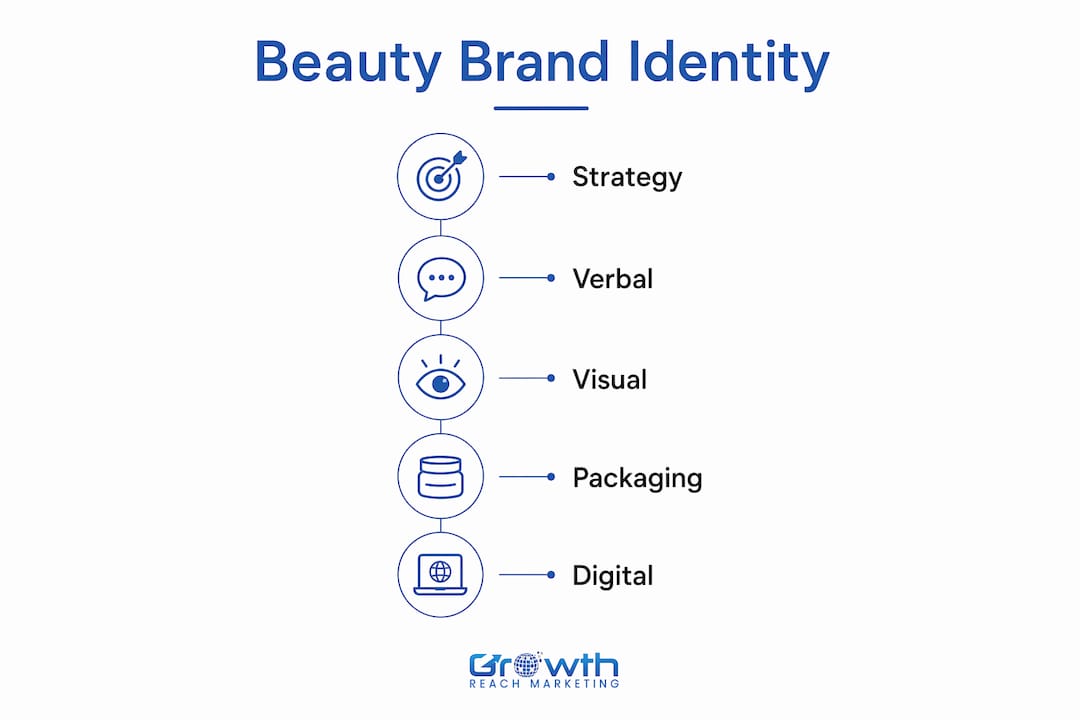
Beauty brand identity is built on five distinct layers, each one dependent on the others to create a unified experience. A full identity system spans strategy, verbal identity, visual identity, packaging, and digital and retail expression. Every layer must align with the brand’s core positioning to move a product from pharmacy shelf to premium tier.
The five layers break down as follows:
- Strategy layer: This is the foundation. It defines the brand’s positioning, target audience, and belief system, the single idea that every design and messaging decision must serve. Think of it as the brand’s north star.
- Verbal identity: Naming conventions, tone of voice, taglines, and messaging frameworks all live here. A luxury skincare brand speaks differently than a clinical dermatology line, and that difference must be deliberate and documented.
- Visual identity: Logo, color palette, typography, photography style, and iconography form the visual language. These elements create instant recognition across every channel.
- Physical packaging: Primary and secondary packaging carry the brand into the consumer’s hands. Weight, texture, and the tactile feel of materials communicate quality before the product is even used.
- Digital and retail expression: Website design, social media templates, and point-of-sale displays extend the identity into every environment where a consumer encounters the brand.
Brand identity is not brand image. Identity is what you build and control. Image is what consumers perceive. The goal is to close the gap between the two through deliberate, consistent execution.
Why does consistency matter so much for beauty brands?
Consistency is the mechanism that turns a brand identity system into business results. Consistent branding across all touchpoints can increase company revenue by up to 23%. That figure reflects the compounding effect of recognition, trust, and differentiation working together over time.
“Beauty brands build cohesive ecosystems where every touchpoint consistently communicates the same story, fostering customer loyalty and recognition. This approach ensures brand relevance despite shifting trends and strengthens consumer trust.”
robinwaite.com
Inconsistency does real damage. When tone of voice on Instagram contradicts the clinical language on a product label, consumers sense a disconnect even if they cannot name it. That disconnect erodes trust. In beauty, where purchase decisions are deeply personal and often driven by aspiration, lost trust is lost revenue.
Brand consistency across retail and digital channels also accelerates marketing impact. Every consistent impression reinforces the last one, which means your paid media, organic content, and in-store presence all work harder together than they would in isolation. Inconsistency forces each channel to start from zero with every consumer interaction.
The brands that dominate premium beauty categories do not have better products alone. They have better systems for delivering the same brand experience, reliably, across every context.
How to build a strong beauty brand identity
Building a strong brand identity starts with strategy, not aesthetics. The most common mistake brand managers make is opening a design brief with mood boards. Mood boards communicate visual preferences, not brand positioning. A strategic brand brief that defines positioning, audience, and brand exclusions must come first. Designs built without this foundation tend to look appealing but fail to differentiate in the market.
Follow these steps to build a brand identity system that holds up under pressure:
- Define the belief system. Write a single, clear statement of what your brand fundamentally believes about beauty, skin, or wellness. This belief drives every naming, design, and messaging decision that follows.
- Develop the verbal identity. Document your tone of voice with real examples. Write sample product descriptions, social captions, and customer service responses. Test whether they all sound like the same brand.
- Build the visual system. Commission a logo, color palette, and typography suite that express the belief system visually. Every visual choice should be justifiable against the strategy, not just aesthetically pleasing.
- Design multi-sensory packaging. Physical sensory elements like packaging weight, sound, and texture heavily influence customer perception of luxury and efficacy. A matte finish communicates differently than gloss. A weighted cap signals quality before the lid is removed.
- Create scalable digital templates. Build social media, email, and website templates that any team member can use without breaking the visual system. Consistency at scale requires systems, not willpower.
- Run regular brand audits. A brand audit reviewing all customer touchpoints identifies inconsistencies before they compound. Ask whether your brand is recognizable without its logo, whether packaging aligns with digital presence, and whether tone of voice matches across channels.
Pro Tip: Before briefing a designer, write a one-page document that states your brand’s belief, its audience, and three things the brand is explicitly not. This single constraint document prevents more costly redesigns than any mood board ever will.
A common pitfall is treating the brand identity as a launch deliverable rather than a living system. Markets shift, product lines expand, and team members change. Without documented standards and regular audits, identity drift is inevitable.
How do successful beauty brands express their identity?
The most effective beauty brands treat their identity as an ecosystem, not a collection of assets. Every channel, from the cosmetic campaign materials to the unboxing experience, tells the same story. That story is grounded in the belief system and expressed through every layer of the identity system.
Several characteristics define brands that execute identity well:
- Naming conventions align with positioning. Premium brands use evocative, often abstract names. Clinical brands use descriptive, ingredient-forward naming. Neither approach is wrong, but mixing them within a single brand creates confusion.
- Photography style is non-negotiable. The lighting, model casting, and composition choices in product photography communicate positioning as clearly as the logo does. A brand that uses clinical white backgrounds on its website but warm lifestyle imagery on Instagram is sending two different messages.
- Tone of voice extends to microcopy. The words on a pump dispenser, the subject line of a shipping confirmation email, and the language on a returns page are all brand touchpoints. Tone of voice, product naming, and tactile elements must all align with the core brand promise.
- Retail and digital presence mirror each other. A consumer who discovers a brand online and then encounters it in a department store should feel immediate recognition. That recognition is the result of deliberate system design, not coincidence.
A differentiation strategy underpins all of this. Without a clear point of difference, even a beautifully executed identity becomes invisible in a crowded category.
Key Takeaways
A beauty brand identity is a five-layer system spanning strategy, verbal identity, visual design, packaging, and digital presence, and consistency across all five layers is what drives recognition, trust, and revenue growth.
| Point | Details |
|---|---|
| Identity is a system, not a logo | Brand identity spans strategy, verbal, visual, packaging, and digital layers working together. |
| Belief system comes first | Define what your brand believes before commissioning any design or naming work. |
| Consistency drives revenue | Consistent branding across all touchpoints can increase revenue by up to 23%. |
| Multi-sensory packaging matters | Weight, texture, and sound shape consumer perception of quality before product use. |
| Audits prevent identity drift | Regular brand audits catch inconsistencies before they erode consumer trust. |
What I’ve learned working with beauty brands on identity
Most brand managers I work with understand that identity matters. Where they get stuck is in the gap between knowing it matters and knowing what to actually fix. The belief system concept is where I see the biggest unlock. When a brand can articulate a single, clear belief, every downstream decision becomes faster and more defensible. Without it, every design review becomes a debate about personal taste.
The multi-sensory dimension of beauty branding is the most underestimated element. Marketers spend months on logo refinements and almost no time on how a product sounds when opened or how a box feels in the hand. Those sensory details are what consumers remember and what they describe to friends. They are also what justifies a premium price point in a category where the formula inside two products can be nearly identical.
The brands I see struggling most are those that built a strong visual identity at launch and then let it drift as the team grew and channels multiplied. A social proof strategy built on inconsistent brand signals is far less effective than one built on a tight, recognizable system. The audit step is not optional. It is the maintenance schedule for your most valuable marketing asset.
My honest recommendation: treat your brand identity document the same way you treat a product formula. It is proprietary, it requires version control, and it should never be changed without a deliberate process.
— Gerard
How Growthreachmarketing supports beauty brand growth
Building a strong brand identity is only half the equation. Getting that identity in front of the right consumers, consistently and at scale, requires a marketing system built for the beauty industry.

Growthreachmarketing works with beauty brands, salons, and aesthetic clinics to build visibility through AI-powered SEO, content marketing, and local search strategies. If your brand identity is solid but your local SEO for beauty brands is not delivering the reach it should, that is where we start. Every service Growthreachmarketing provides is built around one goal: turning a well-defined brand into a consistently booked, consistently growing business. Reach out to explore what a tailored growth strategy looks like for your brand.
FAQ
What is a beauty brand identity?
A beauty brand identity is the complete system of visual, verbal, and experiential elements that defines how a brand is perceived by consumers. It includes strategy, naming, visual design, packaging, and digital presence, all aligned to a central belief system.
What are the core elements of beauty branding?
The five core elements are strategy, verbal identity, visual identity, physical packaging, and digital and retail expression. Each layer must align with the brand’s positioning to create a unified consumer experience.
Why does brand consistency matter for beauty companies?
Consistent branding across all customer touchpoints can increase revenue by up to 23% by building recognition, trust, and differentiation. Inconsistency erodes consumer confidence and weakens the impact of every marketing channel.
What is a brand belief system in beauty?
A brand belief system is the single core idea that drives all design and messaging decisions for a beauty brand. It acts as the north star for naming, visual choices, tone of voice, and packaging, keeping every element aligned.
How often should a beauty brand run a brand audit?
A brand audit should be conducted at least once a year, or any time a brand expands its product line, enters a new channel, or brings on new team members. Audits identify inconsistencies before they compound into larger trust and recognition problems.