Programmatic advertising now accounts for 90% of U.S. digital display ad spend, yet most clinic owners and healthcare marketers are still relying on manual ad buys and medical directory listings to attract patients. That gap represents a real competitive opportunity. Understanding what is programmatic advertising for clinics means recognizing that you can reach the right patient, on the right device, at the exact moment they are searching for care, all without manually negotiating with publishers. This guide breaks down how it works, why it matters for healthcare, and exactly how to start using it.
Table of Contents
- Key takeaways
- What is programmatic advertising for clinics
- Benefits of programmatic ads for healthcare providers
- Ad formats clinics can use in programmatic campaigns
- How to implement programmatic advertising for your clinic
- Measuring programmatic success and demonstrating ROI
- My honest take on programmatic in clinic marketing
- How Growthreachmarketing helps clinics with programmatic
- FAQ
Key takeaways
| Point | Details |
|---|---|
| Programmatic automates ad buying | Real-time bidding replaces manual insertion orders, placing ads in milliseconds using audience data. |
| Clinics benefit from open web reach | Targeting beyond medical sites expands patient reach and reduces cost per impression significantly. |
| Multiple ad formats apply to clinics | Display, video, native, and DOOH formats each serve different patient acquisition goals. |
| Dynamic creatives outperform static ads | Intent-aligned messaging tied to seasonal health needs converts better than generic brand ads. |
| Measurement goes beyond clicks | Programmatic supports CRM integration, conversion tracking, and physician-level attribution for full ROI visibility. |
What is programmatic advertising for clinics
At its core, programmatic advertising is the automated buying and selling of digital ad inventory through technology platforms, replacing manual negotiation with real-time, data-driven decisions. When a patient visits a webpage, an auction happens in milliseconds. Your clinic’s ad either wins that impression or it doesn’t, based on bidding logic, audience data, and budget parameters you set in advance. Automation decides the bid, the creative, and the placement per impression before the page even finishes loading.
The technology stack behind this has three core components you need to know:
- DSP (Demand-Side Platform): This is where advertisers, including clinics, set their budgets, targeting, and creatives. Think of it as your control room.
- SSP (Supply-Side Platform): Publishers use these to make their ad inventory available for auction.
- Ad Exchange: The marketplace where DSPs and SSPs connect, and where real-time bidding actually takes place.
For clinics specifically, the relevant channels include display banners, video pre-roll, native content units, social programmatic placements, connected TV (CTV), and programmatic digital out-of-home (DOOH). The targeting draws on behavioral data (sites visited, content consumed), demographic data (age, location, household income), and intent signals (search queries, condition-related content engagement). This means your dermatology clinic can serve video ads specifically to people who have been researching skin conditions in your metro area over the past 30 days.
Pro Tip: When setting up your first programmatic campaign, start with intent-based behavioral segments rather than broad demographic targeting. A 35-year-old searching for “knee pain treatment” is a far more valuable impression than a 35-year-old who simply lives near your orthopedic clinic.
Benefits of programmatic ads for healthcare providers
The most important benefit for clinics is scale without waste. Traditional healthcare advertising often confines you to medical directories or local print, limiting your reach and locking you into fixed placements regardless of performance. Programmatic changes that equation entirely.
Healthcare digital ad spend was projected to reach nearly $20 billion by end of 2025, and the clinics capturing that growth are the ones running automated, data-driven campaigns. Here is what they gain:
- Precision targeting at scale: You can reach verified patient segments based on health interest data, condition searches, and geographic proximity, without being limited to users who happen to visit a single medical website.
- Dynamic, intent-aligned messaging: Rather than one static ad running for three months, programmatic lets you serve different creatives based on where a patient is in their decision journey. Someone researching symptoms sees an educational ad. Someone comparing providers sees a booking offer.
- Multi-channel activation from a single platform: Web, mobile, streaming audio, social, CTV, and DOOH can all be managed through one DSP, giving you consistent messaging across every touchpoint.
- Reduced media wastage: Automation in programmatic bidding ensures clinics only pay for impressions with high patient intent, which directly improves marketing ROI.
- Point-of-care targeting: Innovations like OptimizeRx allow programmatic activation inside EHR workflows, meaning pharmaceutical brands and specialized clinics can reach physicians at the exact moment they are making prescribing or referral decisions.
“Programmatic DOOH is transforming healthcare advertising by delivering ads precisely when and where they resonate most — improving patient engagement beyond what traditional placements could achieve.” — The Power of Programmatic DOOH for Healthcare
The referral value here is enormous. A clinic that consistently appears across a patient’s digital environment, from a health article they read Tuesday to a YouTube pre-roll on Thursday to a pharmacy waiting room screen on Saturday, builds far more trust than a single sponsored listing.
Ad formats clinics can use in programmatic campaigns
Programmatic advertising in healthcare integrates display, video, native, social, CTV, and DOOH into unified campaigns. Each format serves a different purpose in patient acquisition, and selecting the right one depends on your marketing goal.
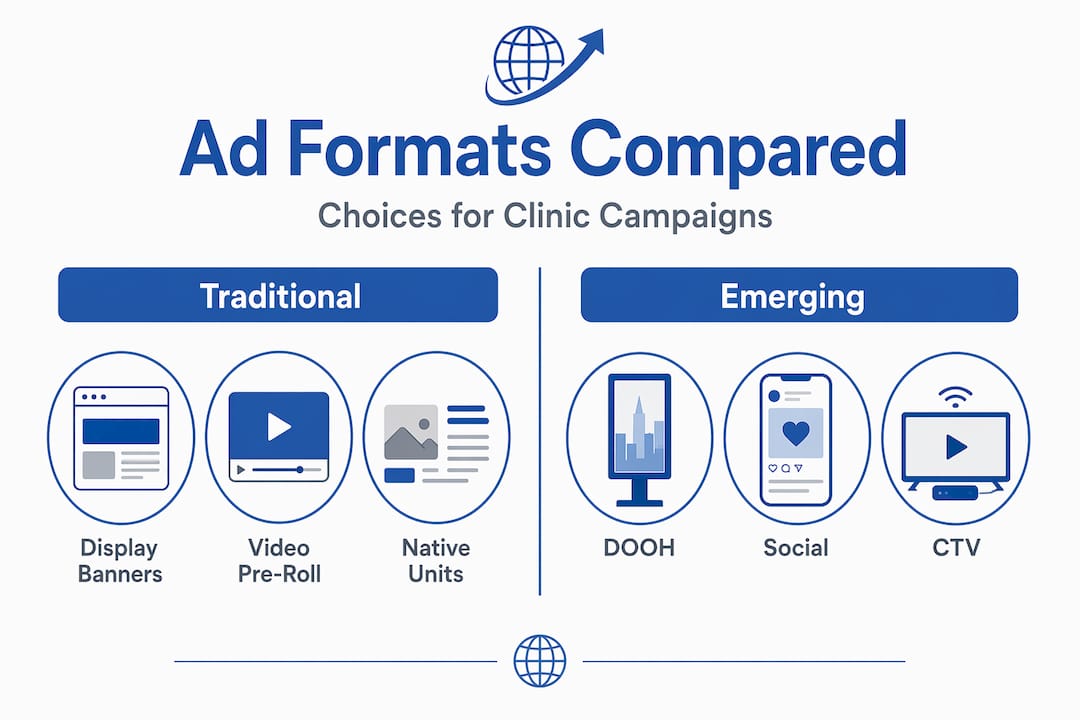
| Ad Format | Best For | Typical Clinic Use Case | Watch Out For |
|---|---|---|---|
| Display banners | Retargeting and brand visibility | Reminding website visitors to book an appointment | Banner blindness if creative is generic |
| Video (pre-roll/CTV) | Awareness and emotional connection | Introducing your clinic to cold audiences on streaming platforms | Higher CPM, requires strong creative investment |
| Native ads | Education and engagement | Sponsored health articles driving traffic to blog or landing page | Slower to convert, needs strong content strategy |
| Social programmatic | Interest-based targeting | Reaching new movers or health-conscious demographics on social platforms | Platform data restrictions in healthcare categories |
| Programmatic DOOH | Location-based contextual targeting | Pharmacy waiting rooms, gym screens, transit near your clinic | Impression measurement less granular than digital |
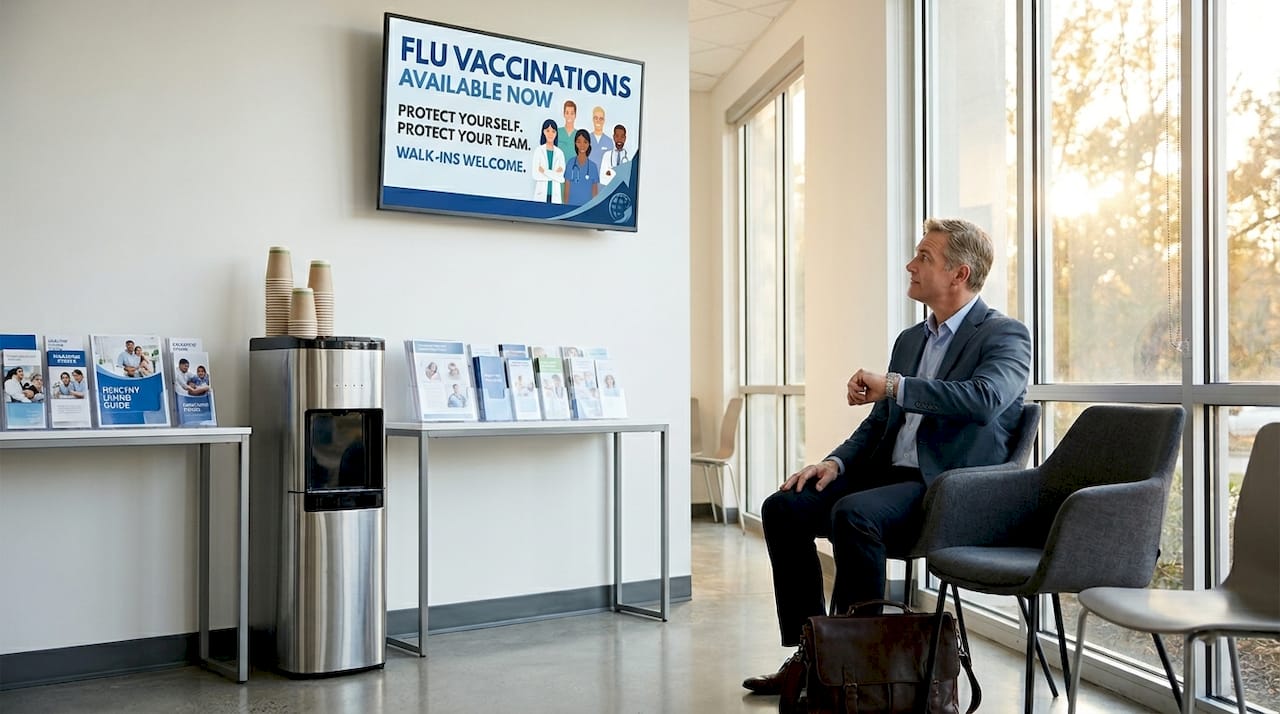
Programmatic DOOH deserves special attention for clinics. DOOH synchronizes ads with real-time data like local weather, health news, and time of day, making your message genuinely relevant to the context. A dermatology clinic can automatically trigger UV protection messaging on high-UV index days. An urgent care center can increase ad frequency during flu season spikes in the local area.
Pro Tip: If you are new to programmatic buying for healthcare, start with display retargeting and native awareness campaigns before investing in CTV or DOOH. These entry-point formats are lower cost, easier to measure, and will teach you which audience segments actually convert before you scale budget into higher-CPM formats.
How to implement programmatic advertising for your clinic
Getting a programmatic campaign live is not as complex as it sounds, but doing it right requires a deliberate setup process. Here is how clinic marketers should approach it:
-
Define your patient audience segments using first-party data. Your CRM, patient intake forms, and website analytics contain behavioral signals about your best patients. Build lookalike and custom audience profiles from this data before you buy a single impression. This is the foundation everything else builds on.
-
Choose a DSP with healthcare-specific inventory access. Not all DSPs are equal for healthcare. Look for platforms that offer verified health interest segments, contextual safety controls for sensitive categories, and access to medical-adjacent inventory. Vetting your supply partners for brand safety is non-negotiable in healthcare.
-
Build creatives that match patient intent at different funnel stages. Intent-aligned dynamic ads consistently outperform generic branding in healthcare settings. A patient searching “sports injury rehab near me” responds to a different message than someone casually browsing fitness content. Your creative strategy should reflect that difference.
-
Set KPIs before you launch, not after. Qualified patient leads, cost per booking inquiry, and appointment conversion rate are the metrics that actually matter for clinics. Impressions and clicks are supporting metrics, not success metrics. Align your DSP reporting setup to track what generates revenue.
-
Run continuous optimization cycles. Programmatic’s real advantage over static buys is the ability to adjust in real time. Review frequency caps weekly to avoid ad fatigue. Shift budget toward high-performing audience segments. Pause placements with low viewability scores. This ongoing attention is what separates average campaigns from ones that consistently bring in new patients.
-
Avoid the narrow targeting trap. Open web targeting with verified healthcare data dramatically lowers costs and increases campaign scale compared to limiting yourself to medical websites only. The patient you need to reach is reading news, watching videos, and browsing lifestyle content. Be where they actually are, not just where you assume they go for health information.
Pro Tip: Set a frequency cap of 3 to 5 impressions per user per week when starting out. Showing your ad too many times creates negative brand associations, especially in healthcare where trust is everything.
Measuring programmatic success and demonstrating ROI
Measurement is where programmatic advertising earns its seat at the marketing budget table. Unlike traditional media, every impression in a programmatic campaign generates data you can act on.
The standard metrics layer from broad to specific:
- Impressions and reach: How many times your ad was served and to how many unique users.
- Click-through rate (CTR): Benchmark CTRs for healthcare display typically range from 0.05% to 0.2%, so don’t panic if yours are low. CTR is a signal, not the outcome.
- Conversion events: Form fills, phone calls, appointment bookings. These are tracked through pixel placement on your website and should feed directly into your attribution model.
- Cost per acquisition (CPA): The actual cost to generate one new patient inquiry or booked appointment. This is your north star metric.
Where programmatic gets especially powerful is attribution. You can track which ad formats, audience segments, and placements contributed to a booking, not just the last click. Healthcare data analytics shows that multi-touch attribution models are increasingly used to credit the full patient acquisition journey rather than a single touchpoint.
| Metric | What It Tells You | Optimization Action |
|---|---|---|
| High impressions, low CTR | Ad is being seen but not compelling enough | Test new creative or refine audience segment |
| High CTR, low conversions | Landing page or offer is misaligned with ad promise | Audit landing page relevance and booking friction |
| High CPA | Audience too broad or competitive bidding inflating costs | Tighten targeting segments and adjust bid strategy |
| Low impressions | Budget or targeting too restrictive | Expand to open web placements or increase bid floors |
Integration with your clinic’s CRM is the final piece. When a patient who clicked your programmatic ad books an appointment and then becomes a repeat patient, that lifetime value should inform how aggressively you bid for similar profiles in future campaigns.
My honest take on programmatic in clinic marketing
I’ve seen clinic marketing budgets go to waste on over-targeted campaigns that are so narrow they never generate enough impressions to matter. The instinct to only advertise on medical portals or condition-specific websites makes intuitive sense. But in my experience, it dramatically limits what programmatic advertising can actually deliver for a clinic.
The patients you want are not exclusively on WebMD or Healthline. They are on YouTube, reading local news, watching streaming content, and scrolling social feeds. Verified behavioral data lets you reach them there, at a fraction of the cost of premium medical placements, and with far more contextual relevance. Clinics that target verified health segments across the open web consistently see lower CPAs than those restricted to medical site inventory.
What I find genuinely exciting in 2026 is the convergence of AI-driven audience segmentation with DOOH. The ability to trigger a physical billboard near a pharmacy with a specific message based on a real-time health trend in that zip code is no longer a future concept. It’s available now, and most aesthetic clinics and local healthcare providers have not started using it yet.
My recommendation is to pilot programmatic with a 60-day display and native campaign before scaling. Track every conversion event. Connect your CRM. Then expand based on what the data tells you, not assumptions. The clinics that start building programmatic competency now will have a structural advantage over competitors who wait another two years.
— Gerard
How Growthreachmarketing helps clinics with programmatic
At Growthreachmarketing, we build programmatic advertising systems specifically for aesthetic clinics, beauty brands, and local healthcare providers who want to grow their patient base without burning budget on guesswork. Our clinic digital marketing services include data-driven audience builds, creative strategy aligned to patient intent stages, and campaign activation across top DSPs with full transparent reporting.
We handle the technical setup so you can focus on running your clinic. That includes multi-channel integration across display, native, CTV, and DOOH, plus trigger-based email follow-ups that activate when a prospect engages with your programmatic ads. Whether you are starting your first digital campaign or scaling an existing one, we create a system built for patient acquisition, not just impressions. Explore our programmatic advertising solutions or visit our full service overview to see what we can build for your clinic.
FAQ
What is programmatic advertising for clinics?
Programmatic advertising for clinics is the automated buying of digital ad placements using real-time bidding and audience data to reach potential patients across web, mobile, video, and out-of-home channels. It replaces manual ad buying with technology that makes targeting and budget decisions in milliseconds.
How does programmatic work for clinics specifically?
A clinic sets up audience segments, creatives, and budget inside a demand-side platform (DSP), which then bids automatically on individual ad impressions across publisher networks wherever the target patient audience is active online.
What are the main benefits of programmatic ads for healthcare?
The core benefits include precision targeting using health intent data, access to patients across the open web rather than just medical sites, dynamic creative messaging aligned to patient needs, and real-time optimization that reduces wasted ad spend.
Is programmatic advertising HIPAA-compliant for clinics?
Compliant programmatic campaigns in healthcare use anonymized, aggregated audience data and do not transmit personally identifiable patient information. Work with a DSP that explicitly offers healthcare-safe data segments and review your targeting setup with a compliance advisor before launching.
How much should a clinic budget to start with programmatic advertising?
Most clinics can run a meaningful test campaign with $3,000 to $5,000 per month across display and native formats. This provides enough impressions and conversion data to optimize effectively before scaling to video, CTV, or DOOH formats.