
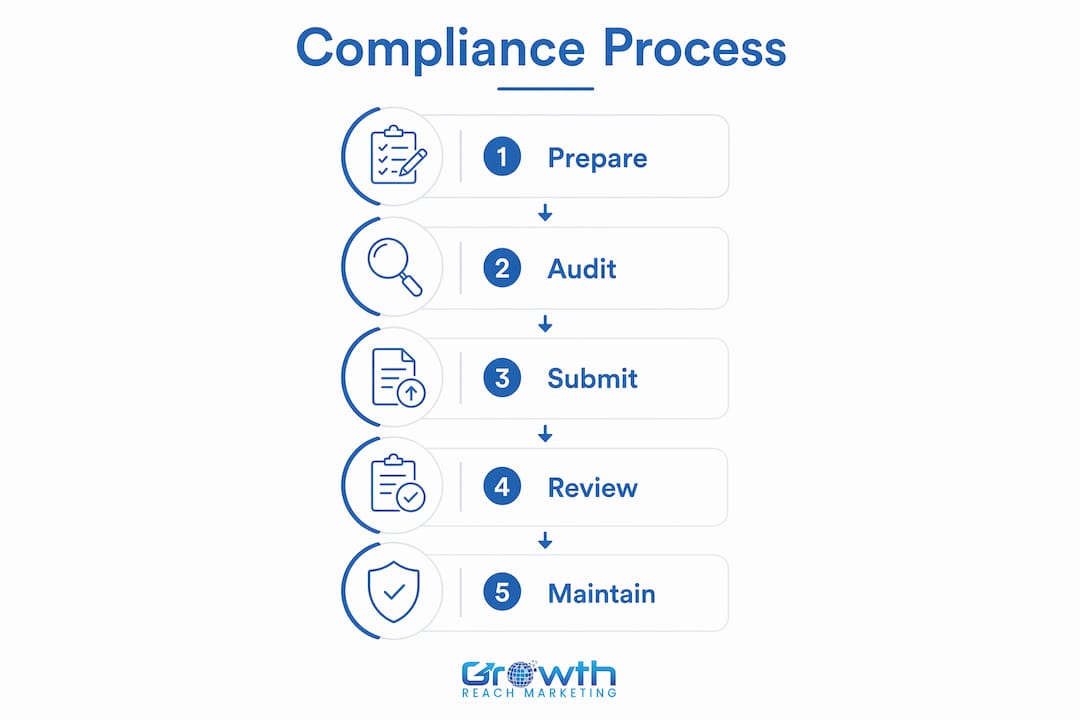
Advertising compliance in medical aesthetics is defined as the practice of following laws, platform policies, and industry standards that govern how aesthetic clinics promote their services. Aesthetic clinic ads need compliance because violations trigger ad disapproval, account suspension, and legal penalties that can shut down a clinic’s entire marketing operation overnight. Regulatory bodies including the ASA (Advertising Standards Authority), the FTC, and the MHRA set strict rules around prescription-only medicines, outcome claims, and testimonials. Platforms like Google Ads and Meta enforce their own overlapping policies on top of those rules. Clinics that ignore these requirements do not just risk fines. They risk losing the paid media channels that drive their bookings.
Why aesthetic clinic ads need compliance: the regulatory framework
Aesthetic clinic advertising regulations exist because many treatments involve prescription-only medicines and medical procedures that carry real clinical risk. The ASA explicitly prohibits public-facing advertising of prescription-only medicines in the UK, including brand names like Botox, before-and-after photos, and influencer endorsements. That ban applies to social media posts, paid ads, and organic content alike. The only exceptions are communications directed exclusively at healthcare professionals.
The FTC operates a parallel framework in the United States. The FTC updated its endorsement guidelines in 2023, requiring that testimonials and influencer endorsements be authentic and clearly disclosed. Any ad that implies a guaranteed result or uses a paid endorsement without disclosure breaches FTC rules. That applies to Instagram Reels, Google Display ads, and email campaigns equally.

Advertising claims must be factual and cannot guarantee specific outcomes. Before-and-after photos are treated as medical efficacy claims under advertising standards, not as general marketing imagery. Posting them in ads or on linked landing pages violates both ASA rules and platform policies simultaneously.
The key restricted areas in aesthetic clinic advertising include:
- Prescription medicine brand names (Botox, Dysport, Juvederm) in public-facing ads without platform certification
- Outcome guarantees such as “remove all wrinkles” or “permanent results”
- Before-and-after photos used as advertising creative or on ad-linked landing pages
- Undisclosed influencer endorsements or paid testimonials presented as organic reviews
- Unverified credentials where no professional registration number or CQC registration is displayed
Displaying professional credentials and CQC registration on clinic websites serves a dual purpose. It signals regulatory compliance to prospective patients and functions as a trust asset that improves conversion rates.
How do platform policies affect aesthetic clinic ad accounts?
Google Ads applies the strictest certification requirements of any major advertising platform. To advertise prescription-only medicines like Botox on Google Ads, clinics must obtain third-party certification such as LegitScript. Without that certification, Google disapproves ads and can suspend the entire account. A suspended account means zero paid traffic until the issue is resolved, which can take weeks.
The consequences escalate quickly:
- Ad disapproval. Google flags individual ads containing restricted terms and stops them from serving.
- Campaign suspension. Repeated disapprovals or policy violations suspend entire campaigns, cutting off traffic to specific services.
- Account suspension. Serious or repeated violations result in a permanent account ban, which is extremely difficult to reverse.
- Domain flagging. Google can flag the clinic’s domain, making it harder to run compliant ads even after creating a new account.
Meta platforms take a different approach. Facebook and Instagram allow the use of “Botox” in ad copy without requiring separate certification. However, Meta still restricts misleading claims, before-and-after imagery, and ads that target people based on sensitive health characteristics. Clinics that assume Meta’s relative flexibility means anything goes routinely get ads rejected for imagery or copy that implies guaranteed results.
The critical difference between Google and Meta compliance is where the review happens. Google reviews the entire linked website, not just the ad copy. Meta focuses more on the creative and copy within the ad itself. Both platforms can and do reject ads, but the triggers differ.
Pro Tip: Before launching any Google Ads campaign for aesthetic treatments, run a full crawl of your website using a tool like Screaming Frog to identify every page that contains restricted terms. Fix those pages before submitting ads for review.
How to audit your clinic website and ad content for compliance
A compliance audit for an aesthetic clinic covers far more than the ad copy itself. Google Ads policy reviews entire website content, not just the landing page linked in the ad. A single mention of “Botox” in a navigation menu, a blog post title, or a footer service list can trigger campaign disapproval even when the ad copy itself is fully compliant.
What to include in your compliance audit
- Navigation menus and header links. Check every menu item for restricted drug names or treatment brand names.
- Blog posts and resource pages. Search the entire site for terms like “Botox,” “Dysport,” and active ingredient names such as “botulinum toxin” in contexts that imply public promotion.
- Footer content. Service lists in footers frequently contain restricted terms that clinic owners overlook.
- Image alt text and metadata. Google’s crawlers read alt text. Restricted terms in image descriptions count as site-wide violations.
- Testimonials and review widgets. Any embedded review that guarantees outcomes or uses before-and-after language creates a compliance risk.
Pro Tip: Create a separate subdomain or a dedicated landing page for Google Ads traffic that contains zero restricted terms. Keep your main website for organic SEO and use the clean landing page exclusively for paid campaigns.
The table below outlines the most common compliance audit categories and what to check in each:
| Audit category | What to review | Common violation |
|---|---|---|
| Ad copy | Headlines, descriptions, display URLs | Prescription drug names without certification |
| Landing pages | All text, images, and embedded content | Before-and-after photos, outcome guarantees |
| Site-wide content | Navigation, blog, footer, metadata | Restricted brand names in non-ad contexts |
| Testimonials | Review widgets, case study pages | Undisclosed paid endorsements, guaranteed results |
| Credentials display | About page, practitioner profiles | Missing CQC registration or GMC/NMC numbers |
Clinics that complete this audit before launching paid campaigns avoid the most common rejection triggers. Those that skip it often spend weeks troubleshooting disapprovals that trace back to a single blog post written two years ago.
What steps protect your clinic’s ad accounts long-term?
Ongoing compliance requires building it into your marketing workflow, not treating it as a one-time fix. Clinics that lose paid ad spend most often do so because they set up campaigns correctly at launch and then let content drift out of compliance as the site grows.
The practical steps that protect ad accounts over time include:
- Obtain LegitScript certification before running any Google Ads for prescription treatments. The certification process takes time, so start it before you need it.
- Train all content creators on restricted terms and prohibited claims. A single blog post written by a new team member can trigger site-wide disapprovals.
- Set a quarterly compliance review to check new content, updated service pages, and any regulatory changes from the ASA, FTC, or MHRA.
- Monitor ad account health weekly. Check the policy tab in Google Ads and the account quality score regularly. Catch disapprovals before they escalate to suspensions.
- Display clinic qualifications prominently. Show CQC registration numbers, GMC or NMC registration for practitioners, and any relevant professional body memberships on every key page.
- Use compliant ad copy frameworks. Focus ad messaging on the consultation process, the clinic’s qualifications, and the patient experience rather than specific treatment outcomes.
The importance of compliance in aesthetics extends beyond avoiding penalties. Clinics that maintain transparent, credential-forward marketing build patient trust faster than those that rely on outcome-heavy claims. Patients choosing aesthetic treatments are making decisions about their health and appearance. They respond to credibility signals, not guarantees.
Growthreachmarketing works with aesthetic clinics to build compliant Google Ads campaigns that pass platform review and generate qualified leads without putting ad accounts at risk.
Key Takeaways
Aesthetic clinic ads require compliance with both regulatory standards and platform policies to avoid account suspension, legal penalties, and loss of patient trust.
| Point | Details |
|---|---|
| Regulatory bodies set the rules | ASA, FTC, and MHRA prohibit prescription medicine promotion, outcome guarantees, and undisclosed endorsements. |
| Google requires LegitScript certification | Without third-party certification, Google disapproves ads for prescription treatments and can suspend accounts. |
| Whole-site audits are non-negotiable | Restricted terms anywhere on your website, including blog posts and footers, trigger ad disapprovals. |
| Meta and Google have different triggers | Google reviews linked websites; Meta focuses on ad creative and copy. Each platform needs a separate compliance strategy. |
| Credentials build trust and compliance | Displaying CQC, GMC, or NMC registration numbers satisfies regulatory requirements and improves patient confidence. |
The compliance mistake I see clinics make most often
Most clinic owners I work with understand that they cannot advertise Botox without certification. What catches them off guard is the site-wide scope of Google’s review. A clinic spends weeks getting LegitScript certified, builds clean ad copy, and then gets disapproved because a blog post from three years ago has “Botox” in the title. The ad copy was never the problem. The problem was a content library that grew without any compliance filter applied to it.
The second mistake is treating compliance as a launch task rather than an ongoing process. Regulations change. The FTC’s 2023 endorsement update caught a significant number of medspas off guard because they had testimonial pages that were compliant under the old rules and suddenly were not. Platform policies update with similar frequency and rarely come with advance notice.
My honest advice is to build compliance infrastructure before you scale ad spend. Get LegitScript certified. Audit the full site. Train whoever writes your content. Then set a calendar reminder to review everything quarterly. Clinics that do this spend their budget on reaching patients. Clinics that skip it spend their budget on troubleshooting suspensions.
The long-term payoff goes beyond avoiding penalties. Patients searching for aesthetic treatments are acutely aware of the risks involved. A clinic that leads with its qualifications, shows its registration numbers, and makes no inflated promises signals safety. That signal converts better than any outcome guarantee ever will.
— Gerard
Growthreachmarketing helps aesthetic clinics advertise with confidence
Running paid ads for an aesthetic clinic without a compliance foundation is expensive. Every disapproval wastes budget. Every suspension costs bookings. Growthreachmarketing specializes in building compliant paid media systems for aesthetic clinics that pass Google’s review process and generate consistent leads.
The team at Growthreachmarketing handles LegitScript certification guidance, site-wide compliance audits, and ad copy frameworks built around current ASA, FTC, and platform policies. For clinics that want to grow their visibility beyond paid ads, the aesthetic clinic SEO guide covers how organic search works alongside compliant paid campaigns. The 2026 Google Ads clinic guide walks through certification, campaign structure, and compliance requirements in full detail.
FAQ
What is advertising compliance for aesthetic clinics?
Advertising compliance for aesthetic clinics means following laws and platform policies that govern how medical aesthetic services can be marketed, particularly around prescription-only medicines, outcome claims, and testimonials.
Can aesthetic clinics advertise Botox on Google Ads?
Aesthetic clinics can advertise Botox on Google Ads only after obtaining LegitScript certification. Without certification, Google disapproves the ads and may suspend the account.
What are the risks of non-compliance in aesthetic ads?
Non-compliance in aesthetic advertising leads to ad disapproval, campaign suspension, permanent account bans, and potential legal action from regulatory bodies including the ASA and FTC.
Are before-and-after photos allowed in aesthetic clinic ads?
Before-and-after photos are treated as medical efficacy claims under advertising standards and are prohibited in ads and on ad-linked landing pages.
How often should aesthetic clinics review their ad compliance?
Aesthetic clinics should review ad compliance at least quarterly, since platform policies and regulations from bodies like the ASA, FTC, and MHRA update regularly and without advance notice.
Recommended
- Aesthetic Clinic Video Marketing: Your 2026 Guide – Growth Reach Marketing
- Google Ads for Medical Aesthetics: 2026 Clinic Guide – Growth Reach Marketing
- Why Aesthetic Clinics Lose Paid Ad Spend in 2026 – Growth Reach Marketing
- Why Aesthetic Clinics Need an SEO Strategy in 2026 – Growth Reach Marketing