Run a small local conversion funnel: boost a top-performing Reel to a 5 to 10 kilometer radius, seed a lookalike from the people who engage with it, then retarget those viewers over 7 to 14 days with an offer built for bookings. That sequence, not a scattershot boost budget, is what turns Instagram ads targeting salon clients into actual chairs filled.
Pick your ad objective based on how clients book. If your booking software takes the appointment directly, run Conversions and track the booking event. If most new clients still message you first, run Messages instead. Either way, get this live before you spend a dollar:
- Set a location radius of 5 to 10 kilometers around the salon (tighter in dense cities, wider in rural areas).
- Choose Conversions or Messages as the objective, not Awareness or Traffic.
- Boost your highest-performing organic Reel from the last 60 days as the seed creative.
- Confirm the booking link in your bio and ad end card is live and loads in under three seconds.
Everything past this point is about refining that funnel so it keeps producing bookings instead of just clicks.
Key Takeaways
A structured Instagram ad funnel, boosted Reel to lookalike seed to staged retargeting, consistently books more salon clients than isolated boosted posts.
| Point | Details |
|---|---|
| Start with the funnel, not the ad | Boost a top Reel to a local radius, build a lookalike from engagers, then retarget in stages. |
| Segment before you target | Build two or three client personas and upload a real client list as your custom audience seed. |
| Keep lookalikes tight | Seed from your highest-value clients and cap the lookalike at 1% to 3% of the population. |
| Fix the booking path before scaling spend | A live Book button, a stripped-down landing page, and fast DM replies matter more than a bigger budget. |
| Track cost per booking, not likes | Judge every ad set against cost per booking and ROAS, and give tests a minimum spend before pausing them. |
| Hand off the technical setup when needed | Growthreachmarketing manages audience building, creative testing, and conversion tracking for salons short on time. |
Table of Contents
- Who Is Your Ideal Salon Client on Instagram?
- How Should You Set up Audience Targeting for Salon Ads?
- Which Campaign Objective Should You Run First?
- What Creative Actually Gets Salon Clients to Book?
- How Do You Turn Ad Clicks Into Booked Appointments?
- What Numbers Should You Track to Know It’s Working?
- How Growth Reach Marketing Approaches Salon Ad Campaigns
- Why Most Salon Ad Advice Undersells the Funnel
- Get Instagram Ads Working for Your Salon’s Booking Calendar
- Sources
Who Is Your Ideal Salon Client on Instagram?
Every dollar you spend on Instagram ads targeting salon growth gets wasted if you’re advertising to everyone. A 24-year-old getting her first balayage and a 52-year-old loyal client booking a monthly blowout respond to completely different creative, offers, and even times of day. Build two or three client profiles before you touch Ads Manager.
Start with the attributes that actually change ad performance: age range, primary service (color, cuts, nails, lashes, brows), visit frequency, and price sensitivity. A client who books a $180 balayage every eight weeks needs different messaging than someone chasing a $35 blowout special.
- The new client. Price-curious, discovery mode, responds to “first visit offer” framing and before/after proof.
- The loyal returner. Books on a routine, cares about availability and her stylist’s schedule, responds better to a “book your next visit” retargeting ad than a discount.
- The bridal or event client. Books months ahead, higher basket size, responds to trial-run offers and portfolio-style content.
- The high-ticket color client. Least price-sensitive, most influenced by technical skill and transformation quality, worth building a dedicated lookalike from.
Once you’ve sketched these out, turn them into targeting seeds. Interest layers like “hair coloring,” “beauty salons,” or “bridal fashion” work as a rough filter, but your own client list uploaded as a custom audience is far more precise. Pull your booking software’s client export, upload it to Meta as a customer list, and let that become your seed for lookalike audiences later.
Pro Tip: Segment your client list by lifetime spend before uploading it. A lookalike built from your top 20% of spenders by revenue almost always outperforms one built from your entire client database.
How Should You Set up Audience Targeting for Salon Ads?
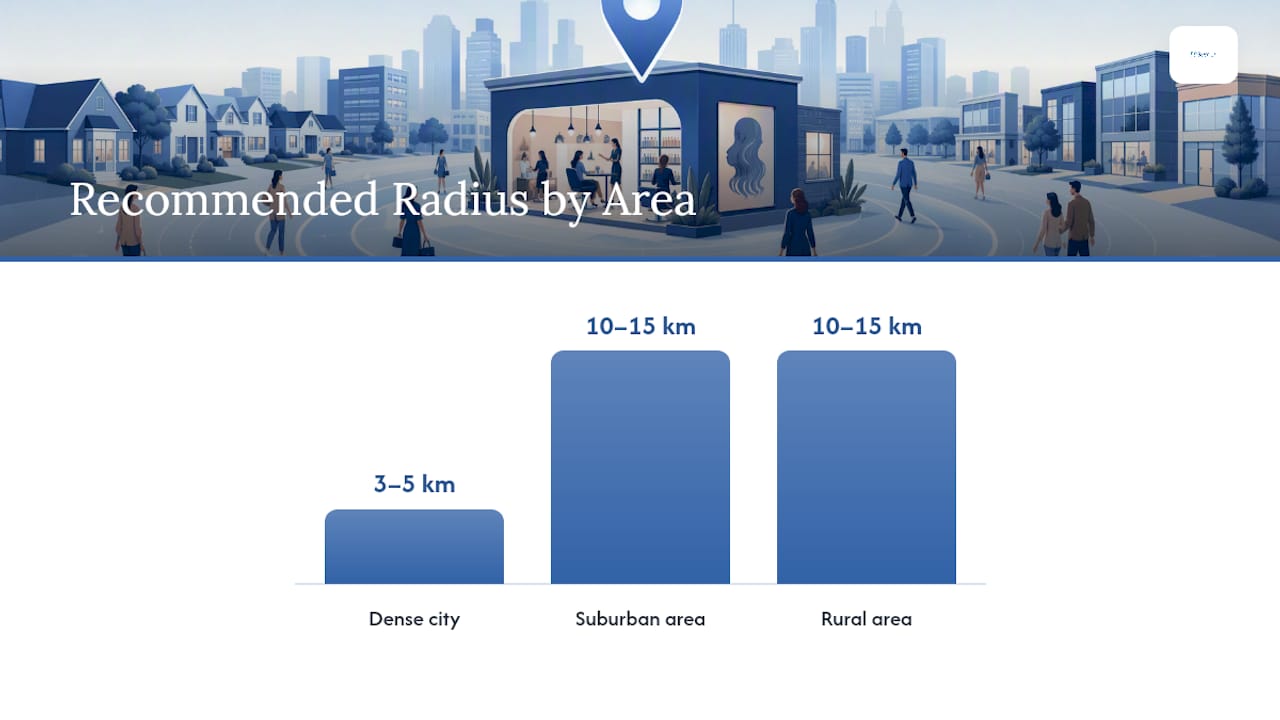
Meta’s targeting tools reward specificity, but only when you know which levers actually matter for a local business. Radius targeting is the foundation. A salon in a dense city can go tighter, 3 to 5 kilometers, and still hit enough people. A salon in a suburban or rural area often needs 10 to 15 kilometers to reach a viable audience size.
Go broad when you’re testing new creative and want Meta’s algorithm room to find responders. Go narrow when you’re retargeting or running a lookalike, since the audience is already qualified by behavior. Layering three or four interests on top of a broad audience usually shrinks your reach without meaningfully improving relevance, and it inflates your cost per result because the auction has fewer people to bid into.
Interest and behavior targeting still has a place, particularly for cold audiences before you have enough pixel data. Reasonable layers for a salon include beauty and personal care interests, hairstyling and hair care product engagement, and bridal or wedding planning interests for event-driven services. Keep these as a light layer over your radius, not a replacement for it.
The real performance gains come from custom audiences and lookalikes:
- Client list custom audience. Upload your booking software export monthly to keep it fresh.
- Instagram engagers. Anyone who liked, commented, saved, or shared a post or Reel in the last 90 days.
- Video viewers. Segment by 50%, 75%, and 95% view thresholds. The 95% group is your highest-intent retargeting pool.
- Website visitors. Anyone who hit your booking page but didn’t complete, tracked via the Meta pixel or Conversions API.
For lookalikes, seed from your highest-value list, past converters or 95% video viewers, and keep the percentage tight, 1% to 3% of the population.
| Retargeting stage | Audience | Window | Creative angle |
|---|---|---|---|
| Cold discovery | Broad radius + light interest layer | Always on | Transformation Reel |
| Warm engagers | People who engaged with the Reel or ad | 7 days | Offer or social proof |
| Site visitors | Booking page visitors, no completion | 14 days | Urgency or limited-slot offer |
| Past clients | Client list, no visit in 60+ days | 30 days | “We miss you” reactivation |
This is the sequencing described in Growth Reach Marketing’s guide to local salon targeting: each stage feeds the next instead of running as an isolated campaign.
Which Campaign Objective Should You Run First?
Objective choice depends on where your salon actually sits, not on which one sounds most impressive in Ads Manager. A brand-new salon with almost no online presence benefits from a short reach phase to build initial audience data. A salon with steady foot traffic and a real booking gap should skip straight to conversions.
- Awareness or reach: use only in the first two to three weeks for a brand-new location or a new service line with zero existing audience data.
- Traffic or engagement: useful for building the engaged-audience pool you’ll need for lookalikes, but don’t mistake link clicks for bookings.
- Conversions: the default objective once your pixel has at least 20 to 30 recorded booking events; this optimizes delivery toward people likely to complete the action you care about.
- Messages: the right choice if your salon fields most new bookings through DMs rather than an online form.
Structure your ad sets so each one isolates a single variable. Separate by radius or by audience type (cold interest layer, warm engagers, custom audience), but keep the same three or four creatives running across each ad set so you can compare performance cleanly. Mixing radius changes and creative changes in the same test tells you nothing useful.
On placements, let Reels and Stories carry the weight. Vertical, full-screen video consistently outperforms feed-only placements for salon content because it matches how people already consume Instagram. Automated placements can work once you have data, but early on they tend to dump budget into whichever placement is cheapest, not whichever converts best.
Pro Tip: Run every new ad set for a minimum of 7 to 14 days before judging it. Meta’s delivery system needs time to exit the learning phase, and a 3 day test on a $10 daily budget will give you noise, not a real signal.
What Creative Actually Gets Salon Clients to Book?
Reels and short-form video outperform static photos by a wide margin for salon content, and transformation reveals are the single strongest format in that category. If you’re only going to produce one type of ad creative this month, make it a before/after reveal shot on a clean, well-lit background.
Beyond the classic reveal, four formats consistently earn their spend:
- Transformation Reel. Show the client walking in, cut to the process in three or four quick shots, land on the reveal in the first 15 seconds.
- Before/after carousel. Static but effective for services where the transformation reads better in a still image, like brow shaping or nail art.
- Stories with an offer sticker. Pair a limited-slot promotion with a swipe-up or link sticker straight to your booking page.
- Process Reel with voiceover testimonial. Let a real client narrate over footage of the appointment; this format tends to build more trust than a polished studio shot.
Script your hook for the first one to two seconds, because that’s the window where someone decides to keep watching or scroll past. “Watch this color correction in 20 seconds” works better than a slow salon-branding intro. Save your logo and booking CTA for the final three seconds, once you’ve earned the attention.
Test variations as dark posts so they never touch your public grid. Run the same offer with two different hooks, or the same hook with two different thumbnails, and let the data pick a winner before you commit real spend. Track cost per booking by creative, not just click-through rate. It’s common to see a high-CTR ad that converts poorly and a modest-CTR ad that quietly produces most of your bookings.
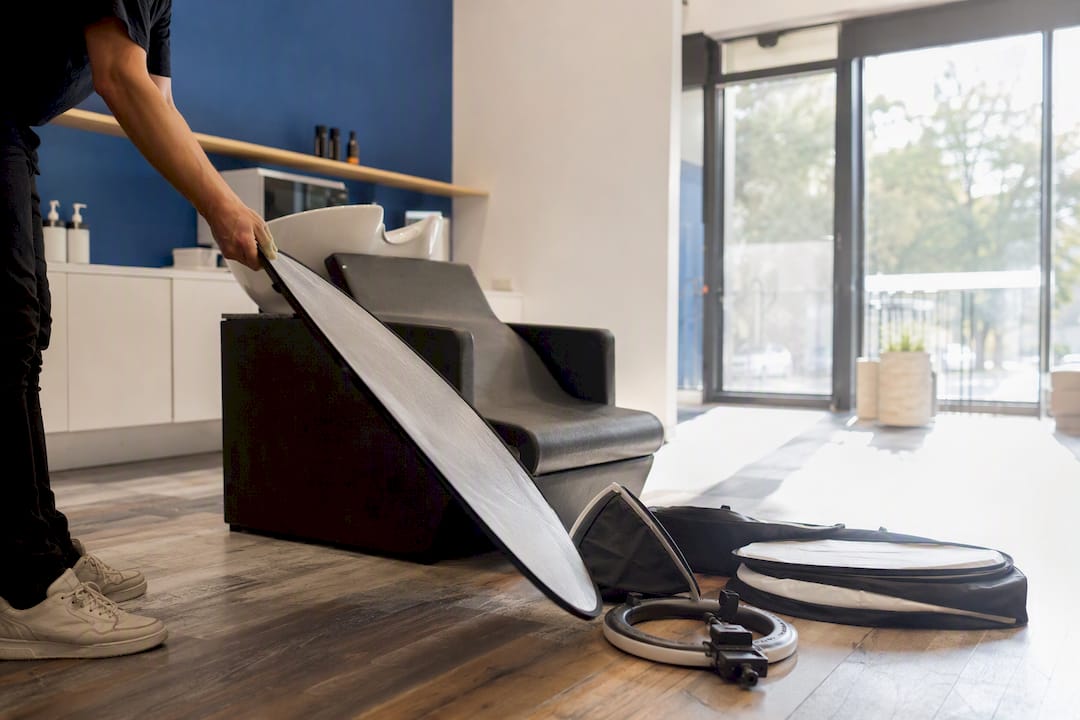
Before you shoot anything, run through this checklist: even lighting (window light or a ring light, never overhead fluorescents), a thumbnail that reads clearly at a glance, a hook in the first two seconds, and a CTA that names the exact next step, “Tap to book” beats “Learn more” every time. The Moor Marketing guide to social ad creatives covers hook and thumbnail testing in more depth if you want to go deeper on the creative side. For carousel-specific formats, this before/after photo guide breaks down sequencing that keeps viewers swiping to the reveal.
How Do You Turn Ad Clicks Into Booked Appointments?
An ad that gets clicks but no bookings isn’t a targeting problem, it’s a friction problem. Linking your booking software directly into your Instagram profile and ad end cards removes the single biggest drop-off point in the whole funnel.
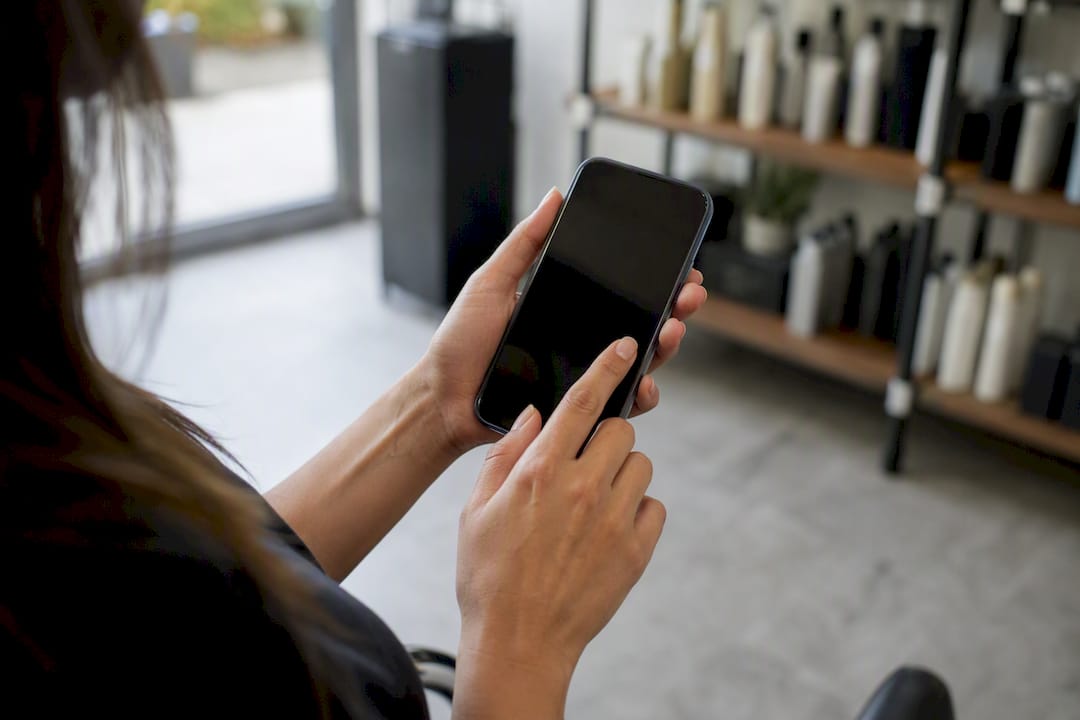
Set up the native Book button if your booking platform supports Meta’s integration, or add a direct deep link to your booking page in your bio and every ad’s call-to-action. Booksy and similar salon booking tools that connect straight to Instagram let a client go from ad click to confirmed slot without ever leaving the app, and that one-click path measurably increases completion rates.
Your landing page matters just as much as the ad. Send traffic to a single-purpose booking page, not your homepage. Strip the form down to name, phone, and service type. If pricing varies by stylist or technique, show a range rather than making someone guess or bounce.
- Keep the booking page free of navigation menus that let visitors wander off.
- Show service price ranges or a clear “book a consultation” CTA if pricing is complex.
- Mirror the offer from the ad on the landing page so nothing feels like a bait and switch.
- Set up saved replies for common DM questions (price, availability, location) so response time stays under a few minutes.
Fast DM responses are one of the more underrated conversion levers available, and a slow reply window quietly kills bookings that the ad itself did everything right to earn. Pair saved replies with a clear response SLA, even fifteen minutes during business hours makes a measurable difference, and use Messages ads when you know a chunk of your audience prefers to ask questions before committing.
Pro Tip: Set up the Meta pixel and Conversions API together, not just one or the other. The Conversions API catches booking events that browser-based tracking misses, especially on iOS, and that gap is often where your reported cost per booking looks worse than reality.
What Numbers Should You Track to Know It’s Working?
Vanity metrics like likes and follower growth tell you nothing about revenue. Cost per booking and booking conversion rate are the two numbers that actually tell you whether an Instagram ad campaign is paying for itself.
Calculate cost per booking by dividing total ad spend by confirmed bookings attributed to that campaign. Calculate ROAS by dividing the revenue from those bookings by ad spend, then compare that ratio against your average service ticket to see if you’re actually profitable once labor and product costs are factored in.
For a small independent salon, a reasonable starting point is $15 to $25 per day per ad set, split across two or three ad sets testing different audiences or creatives. That’s enough spend to generate meaningful data within a week without risking a large budget on an untested funnel.
- Give each test a minimum of $50 to $100 in total spend before judging results; daily budgets under $10 rarely produce a clean signal.
- Scale a winning ad set gradually, 20% to 30% budget increases every few days, rather than doubling it overnight.
- Pause any variant that’s burned through its test budget with a cost per booking well above your service ticket price.
- Check attribution weekly against your actual appointment book, not just Meta’s reported conversions, since tracking gaps are common.
A funnel that’s actually working usually shows a falling cost per booking as you move from cold to retargeted audiences, since the retargeting stage is working with a warmer, more qualified pool. If that number climbs instead of falls as you retarget, the creative at that stage is likely mismatched to the audience’s intent.
How Growth Reach Marketing Approaches Salon Ad Campaigns
Salon owners come to Growth Reach Marketing after burning through a boost budget with nothing to show for it beyond likes. The fixes above, radius targeting, lookalikes seeded from real client value, and booking-linked creative, are exactly the levers agency work applies at scale across salon and beauty clinic accounts.
The gap between a salon running its own boosted posts and a salon running a structured ad funnel usually isn’t creative talent. It’s the audience architecture and the conversion tracking underneath it.
If you’re comfortable in Ads Manager and have the hours to test creative weekly, the checklist above will get you most of the way there on your own. Reach out for hands-on management when:
- You need lookalikes and retargeting sequences built and maintained across multiple ad sets.
- Your Conversions API or booking attribution setup isn’t reporting cleanly.
- You want a full local visibility strategy that pairs paid social with search.
Why Most Salon Ad Advice Undersells the Funnel
Most Instagram advice aimed at salons stops at “post more Reels” or “boost your best content,” and that’s the ceiling most owners hit. Boosting a good Reel gets you reach. It does not get you a booking system, and treating the two as the same thing is where a lot of ad budget quietly disappears.
The conventional wisdom undervalues the middle of the funnel. Everyone talks about creative, and plenty talk about targeting, but almost nobody talks about what happens between the click and the confirmed appointment. That gap, a slow DM reply, a booking page with too many form fields, a missing pixel event, is where most of the lost bookings actually happen. Fix that before you spend another dollar chasing a better hook.
If there’s one thing to prioritize first, it’s the boring infrastructure: get your booking link live, your pixel firing correctly, and your DM replies fast. Only then does spending more on reach or fancier creative actually compound into bookings instead of leaking out through a broken funnel. A salon with mediocre creative and a tight funnel will consistently outperform a salon with beautiful Reels and a slow booking process.
— Gerard
Get Instagram Ads Working for Your Salon’s Booking Calendar
Growthreachmarketing runs this exact funnel for salons and aesthetic clinics that don’t have the hours to manage lookalike audiences, dark-post testing, and pixel troubleshooting on top of running a business. Instead of a one-off boosted post, you get an ongoing system: audience building, creative testing, and conversion tracking managed together, so ad spend keeps translating into filled appointment slots rather than isolated likes.
That matters most for salons juggling social ads alongside local search visibility, since a client who sees your Reel today might Google your salon next week before booking. Growthreachmarketing pairs Instagram ad management with local SEO built for beauty brands, so both channels feed the same booking calendar instead of competing for credit.
If your current setup is producing clicks without bookings, start with a review of your funnel and tracking setup. Reach out to Growth Reach Marketing to get a plan built around your salon’s actual booking gaps, not a generic content calendar.
Sources
- Salon Marketing: 2026 Guide to Ideas, Plans & Strategies for Hair & Beauty
- Marketing for Salons in 2026
- Salon marketing guide (Shopify)
- How to Grow Your Salon on Instagram: Step by Step in 2026 — Monolit Blog