
Remarketing for aesthetic clinics is the targeted process of re-engaging previous website visitors or known leads to increase patient bookings and lower acquisition costs. Only 2–4% of website visitors book an appointment on their first visit. That means 96–98% of the patients you paid to attract leave without booking. Understanding how remarketing works for aesthetic clinics is the difference between recovering that lost revenue and writing it off entirely. Growthreachmarketing works with aesthetic clinics to build remarketing systems that turn warm audiences into booked appointments, not wasted ad spend.
How remarketing works for aesthetic clinics: the core mechanics
Remarketing and retargeting are related but not the same. Confusing them leads to wasted budget and mixed messaging. Remarketing uses owned channels, including email sequences, SMS campaigns, CRM automation, loyalty flows, win-back campaigns, and cross-sell messages, to re-engage known leads with permission. Retargeting uses paid ads on platforms like Google Display, Meta, and YouTube to follow anonymous website visitors across the internet.

The practical difference matters for your clinic. Remarketing reaches patients who have already given you their contact details, so the communication carries more context and trust. Retargeting reaches people who visited your site but never identified themselves, using pixel-based tracking to serve them ads later.
Here is where clinics typically use each channel:
- Remarketing (owned channels): Email sequences after a consultation inquiry, SMS reminders for patients who booked but did not return, CRM win-back flows for lapsed patients, post-treatment loyalty offers
- Retargeting (paid ads): Display ads for visitors who viewed your Botox or filler treatment pages, video ads for people who watched 50% of your Instagram Reel, carousel ads for booking-page abandoners
Coordinating both channels prevents message redundancy and improves the patient experience. A patient who receives your email sequence should not simultaneously receive the same offer through a paid ad. Suppression logic, which removes CRM contacts from your paid retargeting audiences, solves this problem cleanly.
Pro Tip: Set up a suppression audience in Google Ads and Meta that excludes anyone currently in an active email sequence. This prevents overexposure and keeps your messaging feeling personal rather than automated.
How to segment audiences for aesthetic clinic remarketing
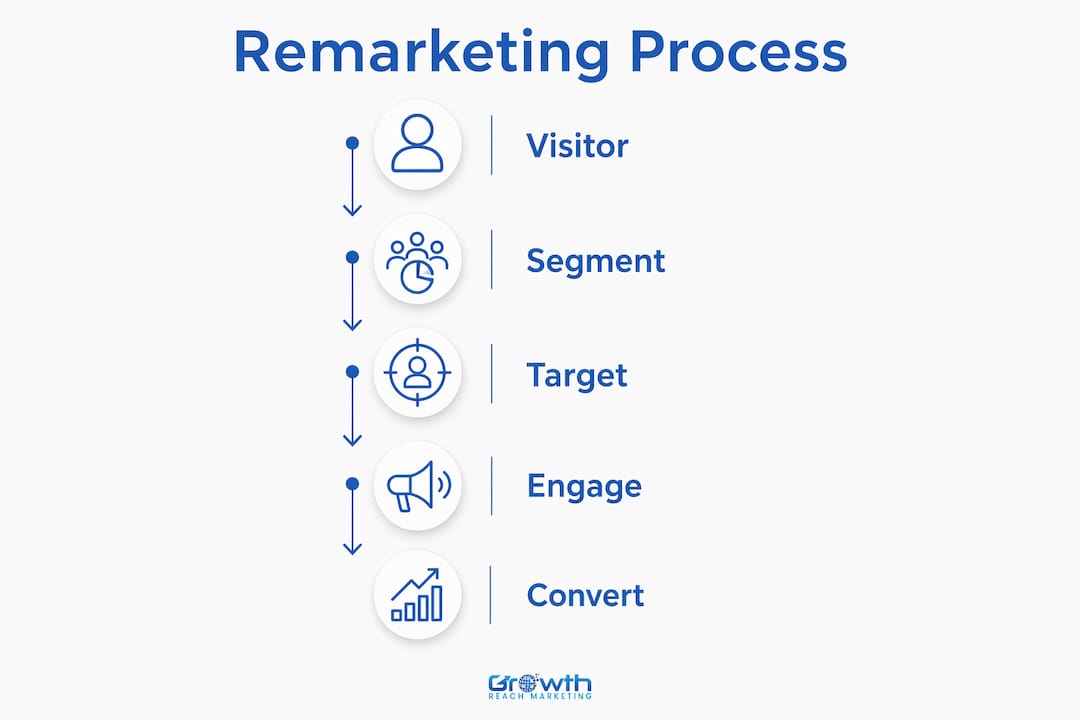
Audience segmentation is the single biggest driver of remarketing performance. Segmentation by behavior and engagement increases ad relevance and booking conversions because different patients have different price points, motivations, and decision timelines.
Segmenting by website behavior
Website behavior tells you exactly where a patient is in their decision process. A visitor who spent four minutes on your lip filler page is far warmer than someone who bounced from your homepage after ten seconds. Build separate audiences for each of these groups:
- Visitors to specific treatment pages (Botox, dermal fillers, skin treatments)
- Booking page visitors who did not complete the form
- Multi-page browsers who viewed three or more pages in one session
- Visitors who returned to your site more than once within 30 days
Segmenting by engagement and CRM data
Engagement-based segments capture patients who interacted with your content but never reached your website. These include social media followers who watched your treatment videos, people who clicked a lead ad but did not book, and email subscribers who opened but did not click.
CRM data unlocks your most valuable segments. Past patients who have not returned in six months are prime reactivation targets. Leads who inquired but never booked need a different message than loyal patients ready for their next treatment. Retargeted visitors convert at 2–3x the rate of cold traffic, which makes warm CRM segments your highest-ROI audience.
| Audience type | Segmentation criteria | Messaging goal |
|---|---|---|
| Treatment page visitors | Viewed specific service page, 60+ seconds on page | Educate and build trust, highlight social proof |
| Booking abandoners | Reached booking page, did not submit form | Remove friction, offer a direct booking link or incentive |
| Social engagers | Watched 50%+ of video, clicked lead ad | Introduce the clinic, drive to website or consultation |
| Lapsed patients | No visit or booking in 6+ months | Win-back offer, new treatment announcement |
| Active leads (CRM) | Inquired but not yet booked | Nurture with testimonials, FAQs, and provider content |
Tailored messaging per segment increases relevance. A booking abandoner needs a frictionless path back to the form. A lapsed patient needs a reason to return. Sending the same generic ad to both groups wastes budget and annoys patients.
What creative strategies work best for clinic remarketing?
Creative quality determines whether your remarketing ads convert or get ignored. Social proof ads, including patient testimonials and review counts, outperform generic treatment imagery by 2–3x in click-through rate. That is a significant gap, and most clinics still default to stock photography.
The highest-performing creative formats for aesthetic clinic remarketing include:
- Patient testimonials: Short video clips (15–30 seconds) where real patients describe their experience and results
- Before-and-after carousels: Authentic treatment results with clear labeling and consent, used on Meta and Google Display
- Provider-led videos: Your practitioner speaking directly to camera about a treatment builds trust faster than any graphic
- Offer-driven static ads: A genuine limited-time discount or free consultation offer with a clear expiration date
- Educational content: Short explainer videos addressing common hesitations, such as pain levels, downtime, or cost
Educational content is underused and highly effective. Patients who are hesitant about a treatment respond better to a “What to expect from your first Botox appointment” video than to a promotional offer. Reducing hesitation is a conversion strategy.
Rotating ad creatives every 2–3 weeks prevents ad fatigue and maintains conversion rates. When a patient sees the same ad five times, they stop seeing it at all. A successful creative rotation mixes provider-led videos, testimonials, and clear calls to action across the cycle.
Pro Tip: Build a creative calendar with at least three distinct ad concepts per audience segment. Rotate on a 2-week schedule and track click-through rate drops as your signal to refresh.
Avoid these common creative mistakes. Running the same static image for three months, using stock photos of models who do not represent your actual patients, and writing ad copy that sounds like a brochure all kill performance. Patients respond to authenticity, not polish.
How to implement and budget remarketing campaigns for maximum ROI
Setting up a remarketing campaign requires decisions on platforms, budget allocation, frequency, and tracking before you spend a dollar.
- Allocate 20–30% of your total ad budget to remarketing. Remarketing audiences are smaller than cold prospecting audiences, but they convert at a much higher rate. This allocation reflects the efficiency of warm traffic.
- Run campaigns across Google Display, Meta (Facebook and Instagram), and YouTube. Each platform reaches your audience in a different context. Google Display catches patients while they browse news and content sites. Meta reaches them in their social feed. YouTube serves pre-roll ads before relevant videos.
- Set frequency caps per platform. Recommended frequency caps are 3–5 impressions per day on Google Display, 1–2 per day on Meta feed placements, and 2–3 per week on YouTube. Exceeding these thresholds drives negative brand sentiment.
- Apply suppression logic. Remove current patients from prospecting campaigns. Remove active email sequences from paid retargeting. Remove recent bookers from all remarketing audiences for at least 30 days post-appointment.
- Set audience duration windows by segment. Booking abandoners should see ads for 7–14 days. Treatment page visitors warrant a 30-day window. Lapsed patient win-back campaigns can run 60–90 days through CRM channels.
| Platform | Frequency cap | Best audience match | Ad format |
|---|---|---|---|
| Google Display | 3–5 impressions/day | Treatment page visitors | Static banner, responsive display |
| Meta (Facebook/Instagram) | 1–2 impressions/day | Social engagers, booking abandoners | Video, carousel, story |
| YouTube | 2–3 impressions/week | Cold-to-warm nurture, education | 15–30 second pre-roll |
Track these KPIs to measure performance: cost per lead, click-through rate, assisted conversions (where remarketing contributed to a booking without being the last click), and return on ad spend by segment. Targeted retargeting reduces cost per booked consultation by 30–50% compared to prospecting alone. That reduction compounds over time as your audience data improves.
Clinics that skip omnichannel marketing integration lose the compounding effect of paid and owned channels working together. A patient who sees your retargeting ad, receives your email sequence, and then gets an SMS reminder converts at a significantly higher rate than one who only sees the ad.
Key Takeaways
Remarketing works for aesthetic clinics by re-engaging warm audiences through paid retargeting and owned channels, reducing cost per booking while increasing conversion rates across every patient segment.
| Point | Details |
|---|---|
| Most visitors do not book on first visit | 96–98% of site visitors leave without booking, making remarketing the primary recovery tool. |
| Remarketing and retargeting serve different roles | Use owned channels for known leads and paid ads for anonymous visitors to avoid redundant messaging. |
| Segmentation drives performance | Separate audiences by behavior, engagement, and CRM status to deliver relevant messages at each stage. |
| Creative rotation prevents ad fatigue | Refresh ad creatives every 2–3 weeks using a mix of testimonials, provider videos, and offer-driven formats. |
| Budget allocation matters | Allocate 20–30% of total ad spend to remarketing and apply frequency caps to protect brand perception. |
What I have learned running remarketing for aesthetic clinics
The biggest mistake I see clinic owners make is treating remarketing as a single ad campaign rather than a coordinated system. They set up one retargeting audience, run one creative, and wonder why results plateau after two weeks. Remarketing works when paid retargeting and CRM flows operate together, with suppression logic keeping the messaging clean and non-repetitive.
The second mistake is ignoring creative refresh. I have watched clinics run the same before-and-after image for four months and then blame the platform when click-through rates collapse. The platform is not the problem. Ad fatigue is. Patients in a remarketing audience are a small, finite group. They will see your ad repeatedly, and if it never changes, they will tune it out completely.
What actually moves the needle is provider-led video content. When a practitioner speaks directly to camera about a treatment, hesitation drops. Patients book consultations with people they trust, not with brands they recognize. A 20-second video of your lead injector explaining what to expect from a filler appointment will outperform a polished graphic every single time.
Patient decision timelines in aesthetics are longer than most clinic owners expect. A patient who visited your Botox page in january may not book until march. Multi-touch campaigns that stay present across that window, without being intrusive, are what convert consideration into appointments. The types of retargeting ads you choose for each stage of that window matter as much as the budget you put behind them.
— Gerard
How Growthreachmarketing helps clinics build remarketing systems that fill calendars
Aesthetic clinics that run remarketing without a clear structure lose budget to poor segmentation, creative fatigue, and disconnected channels.
Growthreachmarketing builds remarketing systems specifically for aesthetic clinics, covering audience segmentation, creative development, CRM suppression logic, and cross-platform campaign structuring. The work connects your paid retargeting on Google and Meta with your owned email and SMS flows so every patient touchpoint works together. If you want a clinic marketing system built around Google Ads for medical aesthetics that includes remarketing from day one, the 2026 clinic guide is the right starting point. Growthreachmarketing also offers consultation and strategy resources for clinics ready to build a full patient acquisition system.
FAQ
What is remarketing for beauty clients?
Remarketing for beauty clients is the practice of re-engaging known leads and past patients through owned channels like email, SMS, and CRM automation to drive repeat bookings and reactivate lapsed relationships.
How does retargeting differ from remarketing in a clinic context?
Retargeting uses paid ads to reach anonymous website visitors tracked by pixel. Remarketing uses owned channels to reach identified leads or past patients with permission-based communication.
What percentage of clinic website visitors book on their first visit?
Only 2–4% of website visitors book on first visit, which means the vast majority of clinic traffic requires remarketing to convert into appointments.
How often should aesthetic clinics refresh their remarketing ad creatives?
Clinics should rotate ad creatives every 2–3 weeks to prevent ad fatigue and maintain click-through rates across remarketing audiences.
What budget should a clinic allocate to remarketing campaigns?
Allocating 20–30% of total ad spend to remarketing is the standard recommendation, reflecting the higher conversion rates of warm audiences compared to cold prospecting traffic.
Recommended
- Why Aesthetic Clinics Lose Paid Ad Spend in 2026 – Growth Reach Marketing
- Google Ads for Medical Aesthetics: 2026 Clinic Guide – Growth Reach Marketing
- Why Aesthetic Clinics Need an SEO Strategy in 2026 – Growth Reach Marketing
- Types of Aesthetic Clinic Retargeting Ads Explained – Growth Reach Marketing