
Most beauty clinics post consistently and still wonder why their bookings don’t grow. The problem isn’t effort. It’s the lack of a clear model to follow. The best beauty clinic content marketing examples share something in common: they educate first, build trust second, and convert as a natural result. This article gives you concrete, tested content types you can adapt immediately, a framework for evaluating what’s worth your time, and a comparison of what actually works for different goals. No recycled advice. Just real examples built for aesthetic and beauty businesses.
Table of Contents
- Key takeaways
- What makes a beauty clinic content marketing example worth following
- 1. Full patient case studies with documented journeys
- 2. Educational treatment guides
- 3. Expert Q&A sessions
- 4. Authentic client testimonials and success stories
- 5. Behind-the-scenes clinic content
- 6. Myth-busting posts
- 7. Seasonal skincare tips and trend-relevant content
- 8. Live demonstrations and video procedure walkthroughs
- Comparing content types for different clinic goals
- Building a content calendar that actually gets used
- My honest take on where most beauty clinic content goes wrong
- Ready to turn your content into a client-booking system?
- FAQ
Key takeaways
| Point | Details |
|---|---|
| Lead with education | Content that explains treatments and sets realistic expectations attracts higher-quality leads before they even call. |
| Authenticity outperforms perfection | Documented patient journeys with full context build more trust than polished before-and-after photos alone. |
| Video drives the most engagement | Reels and transformation videos generate significantly more interaction than static posts on Instagram. |
| Consistency multiplies results | Posting three or more times per week can generate 10 to 45 monthly inquiries depending on frequency. |
| A content calendar ties it all together | Batching content monthly and aligning posts with seasonal trends reduces stress and improves posting quality. |
What makes a beauty clinic content marketing example worth following
Not every piece of content that gets likes is worth replicating. Before you build your content plan around an example you found online, run it through these filters.
Does it serve the audience’s actual questions? Educational content that answers patient questions before any contact takes place drives trust and improves lead quality. The best examples don’t just show a result. They explain the treatment, what to expect during recovery, and who it’s actually suited for.
Does it demonstrate real expertise? E-E-A-T compliance requires visible licensed professional authorship, credentials, and transparent sourcing. This matters for both Google rankings and patient confidence. If a content piece could have been written by anyone without clinical knowledge, it’s not doing enough work for your clinic.
Pro Tip: Add a practitioner’s name and credentials to every educational post or blog article. A named author with a photo and bio converts skeptical readers far better than anonymous clinic content.
Does it prioritize authenticity over aesthetics? Clinics sharing full context, including treatment limitations and realistic alternatives, strengthen credibility far more than polished content that only shows wins. Audiences are increasingly skeptical of overly curated marketing, especially in the aesthetic space.
Does the format match the platform? A 2,000-word blog post won’t perform the same way on Instagram as it does in search. Evaluate examples based on whether the format suits where your audience actually consumes content.
1. Full patient case studies with documented journeys
Simple before-and-after photos are table stakes in 2026. What separates strong content is the story around the image. Aesthetic clinics that publish full patient case studies include patient profiles, clinical reasoning, the treatment plan, and outcomes with timeline-stamped results and realistic disclosures.
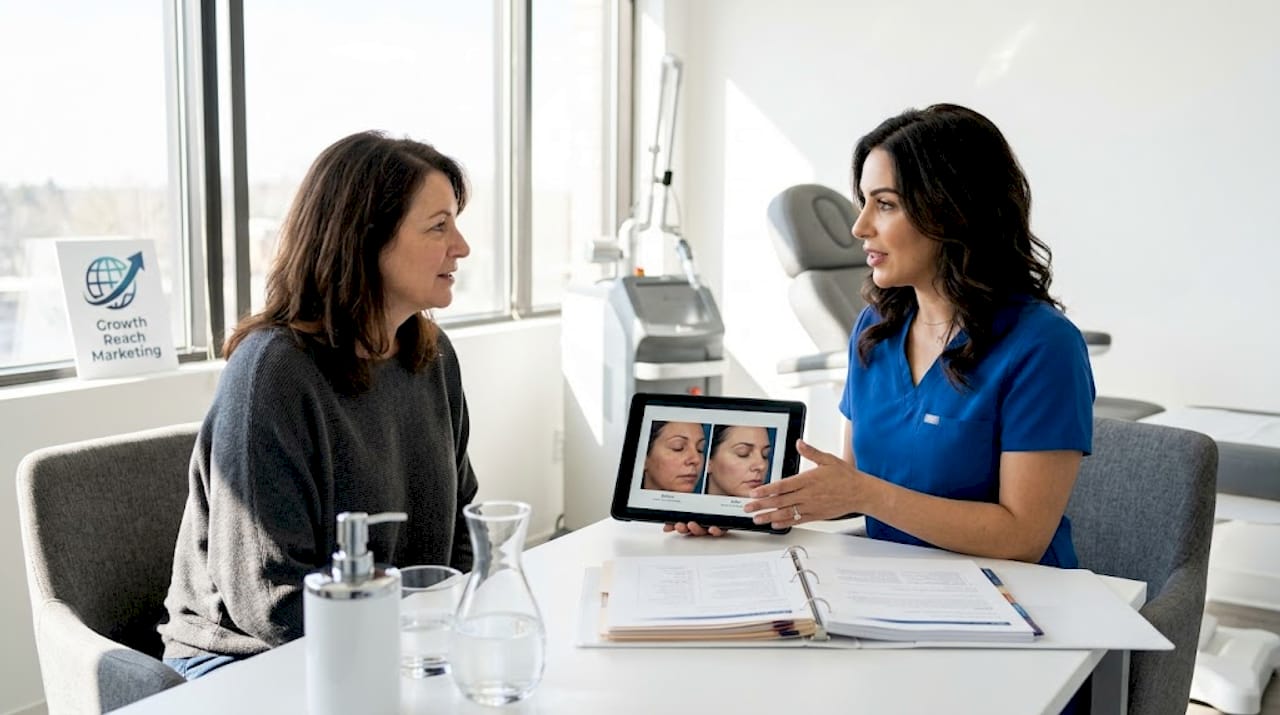
This kind of content does three things at once: it educates potential clients on what a real experience looks like, it signals clinical authority, and it manages expectations before the consultation even happens. Less time correcting unrealistic expectations in the room means more satisfied clients and better reviews.
2. Educational treatment guides
Write content that explains exactly what a treatment involves, who it is designed for, and what results are realistic. Posts or articles covering topics like “what to expect during your first microneedling session” or “how long filler results actually last” attract people actively researching those treatments.
This isn’t just good for SEO. Educational posts explaining treatments and recovery timelines raise awareness before contact, which means your consultation calls start from a better-informed place. Clients who arrive knowing what they want are far easier to convert and retain.
3. Expert Q&A sessions
Feature your practitioners answering real questions your clients have asked. This works as a blog format, a short-form Reel, or a live Instagram session. The key is using actual questions from real patients rather than sanitized, generic topics.
Publishing these consistently positions your team as the go-to authority in your local market. It also creates search-friendly content organically because real questions often match what people type into Google. One practitioner Q&A video answering “does Botox hurt?” will outperform a general “services” page for that search query every time.
4. Authentic client testimonials and success stories
Written reviews have diminishing impact on their own. Video testimonials, on the other hand, carry emotional weight that no caption can replicate. Ask satisfied clients to share a short video describing their experience. Keep it conversational, not scripted.
Always obtain written consent and be transparent about the nature of the results. Generic disclaimers bolted onto the end of content look defensive. Weaving realistic context into the story itself feels honest. That honesty is what builds loyalty.
5. Behind-the-scenes clinic content
Show your preparation rituals, your sterilization process, your team’s morning routine. This type of content humanizes your brand and answers the unspoken question every new client has: “Is this place safe and professional?” You don’t need cinematic production. A 30-second clip of your team prepping treatment rooms before opening creates more trust than most promotional graphics ever will.
Pro Tip: Film behind-the-scenes content in batches on one designated day per month. You will generate enough material for two to three weeks of posting without disrupting your clinical schedule.
6. Myth-busting posts
Every treatment category has its own set of misconceptions. “Filler migrates everywhere.” “Chemical peels are only for older skin.” “Laser hurts too much to be worth it.” These myths actively block potential clients from booking. Content that addresses them directly removes a real barrier.
Structure these posts clearly. State the myth, explain why it’s wrong, and back it up with clinical fact. This format also performs well in search because it targets specific fears people type into Google verbatim.
7. Seasonal skincare tips and trend-relevant content
Align your content with what your clients are already thinking about. Sunscreen reminders before summer. Skin repair content after winter. Pre-event glow treatments before wedding season. This kind of content earns attention because it’s timed to felt needs, not just your promotional calendar.
The best beauty clinic content calendar maps these seasonal moments months in advance and builds content clusters around them. A single seasonal theme can generate a blog post, three to four social captions, an email, and a short video with minimal additional effort.
8. Live demonstrations and video procedure walkthroughs
Video Reels deliver three times more engagement than static posts for med spas and beauty clinics on Instagram. Live demonstrations and procedure walkthroughs work because they demystify treatments that people find intimidating.
You don’t need to show every clinical detail. A time-lapse of a facial treatment, a short clip of a consultation, or a walkthrough of a device your clinic uses are all effective. Video content and live demonstrations consistently build a stronger emotional connection with potential clients, which translates directly to more booking inquiries.
Comparing content types for different clinic goals
Not all content serves the same purpose. Choosing the right format for the right goal matters more than simply producing more content.
| Content type | Best platform | Primary goal | Production effort | Scales easily |
|---|---|---|---|---|
| Patient case studies | Blog, Google | Trust and SEO | High | No |
| Educational guides | Blog, Email | Awareness and SEO | Medium | Yes |
| Video Q&A / Reels | Instagram, YouTube | Engagement and reach | Medium | Yes |
| Client testimonials | Website, Instagram | Conversion | Low | Yes |
| Behind-the-scenes clips | Instagram, TikTok | Brand affinity | Low | Yes |
| Myth-busting posts | Blog, Instagram | Objection removal | Low | Yes |
| Seasonal tips | Email, Instagram | Relevance and loyalty | Low | Yes |
Video content wins for engagement and emotional connection. Written guides win for long-term search visibility. Testimonials and case studies win for conversion. Ideally, your content plan includes all three types in rotation so you’re not dependent on any single format.
For clinics running paid campaigns, pairing strong organic content with a solid understanding of conversion tracking for ads means you can see exactly which content types are driving booked appointments, not just clicks.
Building a content calendar that actually gets used
A content calendar only works if the process behind it is realistic. The goal isn’t an elaborate spreadsheet. It’s a repeatable system your team can actually stick to.
Batching content monthly reduces creation stress and dramatically improves posting consistency. Set aside one day per month to script, film, and write captions for the entire upcoming period. You’ll find the creative momentum from batching produces better content than squeezing out one post at a time between appointments.
Structure every caption using the hook-value-CTA formula. Captions starting with a strong hook, followed by genuine value, and ending with a clear call-to-action consistently outperform captions written without this structure.
Posting three times per week generates 10 to 20 monthly inquiries. Daily posting can push that to 45. The gap between those two outcomes is significant enough to take your posting frequency seriously.
Finally, automate your first-response to DMs and comments. Leads contacted within five minutes convert at dramatically higher rates than those who wait 30 minutes or longer. AI-powered response automation turns Instagram from a platform you manage reactively into a lead engine that works while you’re with clients. You can explore how to avoid the common pitfalls in this process by reviewing common social media mistakes that clinic marketers make most often.
Pro Tip: Build your beauty clinic content calendar around three content tiers: educational anchor posts once a week, engagement-focused short videos twice a week, and conversion-focused testimonials or offers every 10 to 14 days.
My honest take on where most beauty clinic content goes wrong
I’ve worked with beauty and aesthetic clinics long enough to say this plainly: most of the content that gets produced looks fine and does nothing. The photos are sharp, the captions are polished, and the bookings don’t move.
The problem I see most often is that clinics treat content as output rather than communication. They ask “what should we post today?” instead of “what does our ideal client need to see or know right now?”
What actually works, in my experience, is radical transparency. Not the kind that shares every internal process, but the kind that shows a real patient with a real concern, a documented journey, and an honest result. Publishing full patient journeys with disclaimers and clinical reasoning is a shift the most credible aesthetic practices are already making. Clinics still hiding behind stock imagery are losing ground fast.
I also see clinics post well for three weeks and then go quiet for two months. That inconsistency destroys the trust signals you’ve built. An audience that follows you needs to feel that you are reliably there. You can learn more about building that kind of sustained content presence on our beauty industry content marketing guide.
One more thing: posting without measuring is guessing. Track which posts generate DMs, which drive profile visits, and which result in bookings. That data should shape what you create next month, not your aesthetic preferences.
— Gerard
Ready to turn your content into a client-booking system?
Creating great content is only half the equation. The other half is making sure it reaches the right people and converts them into booked appointments.
At Growthreachmarketing, we specialize in helping beauty clinics and aesthetic businesses build marketing systems that compound over time. From content strategy and SEO to Google Ads and conversion optimization, every service we offer is built around one goal: filling your appointment calendar with qualified clients. If you’re ready to stop guessing and start growing, explore our full marketing services for clinics or get into the details with our guide on Google Ads conversion actions built specifically for salons and clinic owners.
FAQ
What are the best content types for beauty clinic marketing?
Educational guides, patient case studies, video Q&As, and client testimonials consistently outperform generic promotional posts by educating potential clients and building trust before they book.
How often should a beauty clinic post on social media?
Posting at least three times per week generates 10 to 20 monthly inquiries, while daily posting can produce up to 45 inquiries per month according to current engagement data.
How do I build a beauty clinic content calendar?
Start by mapping seasonal trends and promotions three months ahead, then batch-create content monthly with scripts, captions, and visuals prepared in one dedicated session for consistency.
Does video content really outperform static posts for beauty clinics?
Yes. Video Reels generate three times more engagement than static posts on Instagram for med spas and beauty clinics, making short-form video one of the highest-priority formats to invest in.
What is E-E-A-T and why does it matter for beauty clinic content?
E-E-A-T stands for Experience, Expertise, Authoritativeness, and Trustworthiness. It affects both Google rankings and patient confidence, requiring content to include named practitioners, credentials, and transparent clinical information.