
Aesthetic clinics need an SEO strategy because patients searching for Botox, lip fillers, or laser treatments in their city are making booking decisions directly from Google search results. Without a deliberate search optimization plan, your clinic is invisible to the highest-intent buyers in your local market. The clinics ranking at the top of Google in 2026 are not necessarily the best. They are the ones that have invested in being found. This article breaks down exactly how SEO drives patient acquisition, what the most effective tactics are, and why waiting costs you real appointments every week.
Why aesthetic clinics need an SEO strategy for local patient growth
Local SEO is the practice of optimizing your clinic’s online presence so it appears prominently when nearby patients search for treatments. Clinics that neglect local SEO miss patients who are ready to book and actively searching for services nearby. That is not a traffic problem. It is a revenue problem.
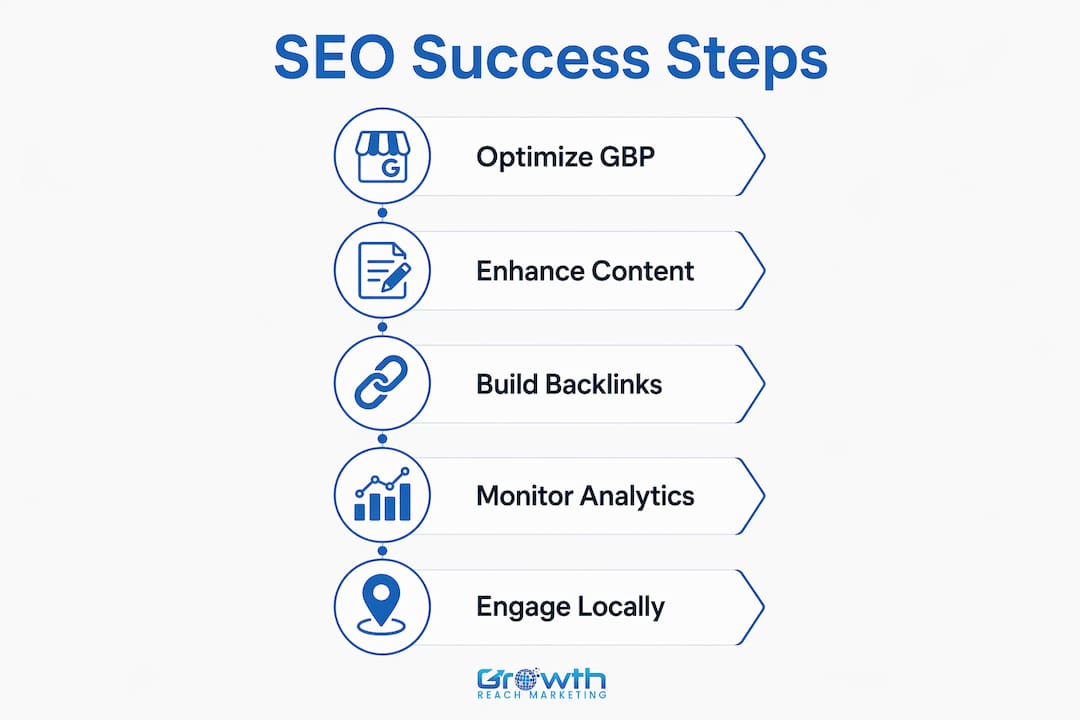
The most visible local SEO asset for any clinic is the Google Business Profile (GBP). Google Business Profile quality is the primary driver for local map rankings and the discovery calls that follow. Clinics that appear in the Google Maps three-pack receive the majority of new patient inquiries from local searches. A fully optimized GBP with accurate hours, treatment categories, photos, and patient reviews signals authority to Google before a potential patient ever visits your website.
Beyond GBP, local SEO for aesthetic clinics depends on several interconnected factors:
- Consistent NAP details (Name, Address, Phone) across every directory and listing
- Geo-targeted service pages that mention the city and neighborhood you serve
- Patient reviews on Google, Yelp, and RealSelf that build social proof and ranking signals
- Local citations on trusted directories like Healthgrades and Zocdoc that confirm your clinic’s legitimacy
Pro Tip: Complete every section of your Google Business Profile, including the “Services” tab with individual treatment names like “dermal fillers” or “chemical peels.” Google uses this data to match your profile to specific patient queries.
Patients searching “lip filler near me” or “best medspa in city]” are not browsing. They are ready to book. [Specialized SEO strategies that target treatment-specific keywords connect your clinic to those patients at exactly the right moment.
What website SEO best practices actually move the needle for clinics
A clinic website that ranks well is built around how patients search, not how practitioners talk about treatments. The gap between those two things is where most clinic websites fail.
Here are the website SEO fundamentals that produce measurable results:
- Create individual pages for each treatment. A single “Services” page listing Botox, microneedling, and PRP in one block does not rank for any of them. Each treatment deserves its own page with a unique title, patient-focused description, FAQs, and a clear booking call to action.
- Add schema markup to every treatment page. Schema markup on treatment pages can increase organic visibility by 30 to 60 percent within 60 to 90 days. Schema tells Google and AI search platforms like ChatGPT exactly what your page is about, which accelerates citation appearances.
- Prioritize mobile speed. More than half of all local health searches happen on mobile devices. A page that loads in under three seconds retains visitors. One that loads in five seconds loses them before they read a word.
- Build content that answers real patient questions. Blog posts like “How long does Botox last?” or “What to expect after a chemical peel” attract patients in the research phase and establish your clinic as a credible source before they book.
High engagement on an SEO-optimized site reduces bounce rate and signals relevance to Google, which directly supports higher rankings over time. Every minute a visitor spends reading your treatment pages works in your favor.
Pro Tip: Link your individual treatment pages to each other. A patient reading about Botox should see a contextual link to your “Botox vs. dermal fillers” comparison page. Internal linking keeps visitors on your site longer and distributes ranking authority across pages.

For clinics that want to see how content marketing supports these SEO gains, the beauty clinic content examples from Growthreachmarketing show exactly what converts readers into booked appointments.
Why directory listing consistency makes or breaks your local rankings
Inconsistent clinic information across directories is one of the most common and most damaging SEO mistakes aesthetic clinics make. It is also one of the easiest to fix once you know where to look.
Google and AI systems cross-reference your clinic’s details across multiple authoritative directories to verify your identity and trustworthiness before ranking you. If your address appears as “Suite 4” on your website but “Ste. 4” on Healthgrades and is missing entirely on Zocdoc, Google treats those as three different businesses. That fragmentation lowers your ranking confidence.
| Directory | What to check | Common error |
|---|---|---|
| Google Business Profile | Name, address, phone, hours | Outdated phone number or old address |
| Healthgrades | Practice name, specialty, location | Name formatted differently than GBP |
| Zocdoc | Accepting new patients, services listed | Services not updated after adding treatments |
| Yelp | Business category, hours, website URL | Wrong category (e.g., “spa” instead of “medical spa”) |
| RealSelf | Procedures listed, before/after photos | Incomplete profile with no photos |
NAP inconsistencies across directories reduce local authority and fragment the ranking signals Google needs to place you in the map pack. Auditing your listings twice a year, especially after any address or phone number change, is non-negotiable for maintaining local SEO authority. Tools like BrightLocal or Moz Local can scan your listings across dozens of directories in minutes and flag every discrepancy.
For clinics investing in their Google Business Profile specifically, the GMB optimization guide from Growthreachmarketing covers every optimization lever available in 2026.
SEO vs. paid ads: which one builds a sustainable patient pipeline?
Paid advertising on Google or Meta delivers immediate visibility, but it stops the moment your budget runs out. SEO works differently. It builds an asset that compounds in value over time.
SEO is a compounding asset that yields sustained patient growth long after the initial optimization work is complete. A clinic that ranks on page one for “laser hair removal [city]” continues receiving patient inquiries every day without paying per click. That same Google Ads campaign requires continuous spend to produce the same result.
The practical timeline for SEO results in aesthetic clinics looks like this:
- Weeks 1 to 4: Technical fixes, GBP optimization, and directory cleanup are completed
- Weeks 6 to 8: First AI citation appearances begin, and local map rankings start improving
- Months 3 to 6: Organic patient inquiries compound as content pages gain authority and backlinks accumulate
- Month 6 and beyond: SEO becomes a self-reinforcing patient acquisition channel that reduces dependence on paid spend
This does not mean paid ads have no place in a clinic’s marketing mix. Google Ads and retargeting campaigns are effective for launching new treatments or filling short-term appointment gaps. The distinction is that paid ads are a tap you turn on and off. SEO is a well you dig once and draw from indefinitely.
The organic search authority that SEO builds also strengthens every other marketing channel. Patients who see your Google Ads are more likely to convert when they can also find your clinic organically, read your reviews, and see your treatment pages ranking credibly.
For clinics that want to understand how paid and organic strategies work together, the omnichannel marketing approach Growthreachmarketing recommends for aesthetic practices is worth reviewing.
Key takeaways
An aesthetic clinic without an SEO strategy is handing local patients directly to competitors who have invested in being found on Google.
| Point | Details |
|---|---|
| Google Business Profile is non-negotiable | An incomplete GBP is the most common reason clinics fail to appear in local map results. |
| Individual treatment pages outperform general service pages | Each procedure needs its own optimized page to rank for specific patient search queries. |
| Directory consistency protects local rankings | NAP mismatches across Healthgrades, Zocdoc, and Yelp fragment your authority signals. |
| SEO compounds where paid ads expire | Organic rankings continue delivering patient inquiries long after the optimization work is done. |
| Results follow a predictable timeline | Clinics typically see visibility gains within 6 to 8 weeks and compounding growth by month 3 to 6. |
What I have learned from watching clinics succeed and fail at SEO
I have worked with enough aesthetic clinics to know that the ones who struggle with SEO almost always share the same blind spot. They treat it as a one-time website task rather than an ongoing patient acquisition system.
The most common pattern I see is a clinic that spends money on a beautiful website, publishes it, and then waits for patients to arrive. When they do not, the clinic owner concludes that SEO does not work for their type of practice. What actually happened is that the website was never optimized for local search, the Google Business Profile was left half-complete, and no treatment-specific content was ever created.
The clinics I have seen grow consistently through SEO share three habits. They keep their GBP updated every month with new photos and posts. They add one new treatment or FAQ page every four to six weeks. They audit their directory listings at least twice a year. None of these tasks require a large budget. They require consistency.
The other thing I want to be direct about is that SEO for aesthetic clinics is not the same as general SEO. The patient intent behind “Botox near me” is completely different from someone searching for general health information. Targeting treatment-specific, location-specific keywords is what separates clinics that get booked out from clinics that get traffic with no conversions. View SEO as a patient acquisition channel with a measurable cost per booking, not as a vanity metric for web traffic.
— Gerard
How Growthreachmarketing helps aesthetic clinics get found and booked
Growthreachmarketing specializes in SEO for aesthetic clinics, medspas, and beauty practices that want to rank higher on Google and convert that visibility into booked appointments.
The team at Growthreachmarketing builds clinic SEO strategies that cover Google Business Profile optimization, treatment-specific content, directory auditing, and local citation building. Every strategy is built around the treatments your clinic offers and the patients searching for them in your city. If your clinic runs seasonal promotions, the seasonal SEO strategy guide shows exactly how to align your promotion calendar with search demand to maximize bookings year-round. Contact Growthreachmarketing to get a personalized SEO plan built for your clinic’s growth goals.
FAQ
Why do aesthetic clinics need an SEO strategy?
Aesthetic clinics need an SEO strategy to appear in local search results when patients search for treatments nearby. Without it, high-intent patients find and book with competitors who have optimized their online presence.
How long does SEO take to show results for a clinic?
Clinics typically see initial visibility improvements within 6 to 8 weeks of implementing SEO, with patient growth compounding over 3 to 6 months as content and authority build.
What is the most important local SEO factor for aesthetic clinics?
Google Business Profile optimization is the primary driver of local map rankings. An incomplete or unoptimized GBP is the most common reason clinics fail to appear in local search results.
Does SEO work better than Google Ads for aesthetic clinics?
SEO and Google Ads serve different purposes. Paid ads deliver immediate traffic but stop when the budget ends. SEO builds a compounding organic presence that continues attracting patients without ongoing per-click costs.
How do directory listings affect a clinic’s Google ranking?
Inconsistent NAP details across directories like Healthgrades, Zocdoc, and Yelp fragment your local authority signals. Google cross-references these listings to verify your clinic’s identity, so consistency directly affects your map pack rankings.