
Patient lead generation online is the structured process of attracting, capturing, and converting prospective patients through digital channels into booked appointments. Known in healthcare marketing as digital patient acquisition, this practice spans local SEO, paid search, content marketing, and physician referral programs, all governed by HIPAA-compliant tracking standards. Clinic owners who treat patient acquisition as a system rather than a series of one-off tactics grow faster and more predictably. The shift toward AI-powered search has added a new layer: providers must now build trust signals that satisfy both human patients and AI retrieval models like Google AI Overviews and Perplexity.
What is patient lead generation online, and why does it matter?
Patient lead generation is the structured process of attracting, capturing, and nurturing prospective patients using multiple digital and offline channels. The goal is not just traffic. It is converting that traffic into scheduled appointments and long-term patients. Clinics that treat their website, Google Business Profile, and paid ads as isolated tools miss the compounding effect that comes from connecting them into one acquisition system.
The business case is direct. A clinic with no structured acquisition strategy depends on word of mouth and walk-ins. Both are unpredictable. A clinic running multi-channel patient acquisition through SEO, paid ads, reputation management, and referral programs builds consistent, qualified patient flow despite fluctuations in any single source. That reliability is what separates practices that grow from practices that plateau.

HIPAA compliance is not optional in this process. Every form, chatbot, and automated follow-up sequence that touches patient data must meet federal privacy standards. Clinics that skip this step face regulatory risk and erode patient trust.
What are the primary online channels for patient lead generation?
Each digital channel attracts a different type of patient at a different stage of their decision. The strongest acquisition systems use at least four channels simultaneously.
- Local SEO and Google Business Profile. Patients searching “dermatologist near me” or “Botox clinic in Austin” rely on local search results. A fully optimized Google Business Profile with accurate hours, photos, services, and direct booking links captures these patients at the moment of highest intent. Aesthetic clinics that want a deeper look at local SEO tactics can find channel-specific guidance built for healthcare providers.
- Paid search campaigns. Google and Bing PPC ads capture high-intent patients actively searching for care. Targeting by service, location, and condition delivers strong lead quality because the patient is already in decision mode.
- Content marketing. Blog posts, FAQs, and treatment pages that answer specific patient questions rank in organic search and build authority over time. A page titled “What to expect from a lip filler consultation” attracts patients researching that procedure and positions the clinic as the credible answer.
- Social media advertising. Platforms like Meta allow demographic and interest-based targeting. This channel works best for elective and aesthetic procedures where visual content drives interest before the patient actively searches.
- Online directories and reputation management. Healthcare consumers rely heavily on online ratings before booking. Profiles on Healthgrades, Zocdoc, and Google must be current and actively managed. A single unanswered negative review costs more leads than most clinic owners realize.
- Physician referral programs. While partly offline, referral tracking can be digitized. Referral management software logs incoming referrals, triggers acknowledgment emails, and tracks conversion to appointment.
Pro Tip: Set up UTM parameters on every digital channel so you can see exactly which source, medium, and campaign drives booked appointments, not just clicks.
How does AI-driven search change online patient lead generation?
AI-powered search models have changed how patients find providers. Google AI Overviews, ChatGPT, and Perplexity now answer patient questions directly, pulling from sources they judge as authoritative. A clinic that ranks on page one of traditional search may not appear in an AI-generated answer at all if its content lacks the right trust signals.
AI-powered search models prioritize providers with verified credentials and structured data. This means schema markup for medical providers, verified Google Business Profiles, and content that clearly states provider qualifications, board certifications, and clinic accreditations. These signals tell AI retrieval systems that the source is trustworthy enough to recommend.
“The healthcare search journey now depends heavily on trust signals valued by AI models rather than traditional ranking alone. Providers who build authority through verified credentials, structured content, and consistent online presence will dominate AI-generated recommendations.”
The practical implication for clinics is clear. Publishing thin service pages is no longer enough. Each page must answer the specific question a patient would ask, cite the provider’s credentials, and use structured data so AI systems can extract and present that information accurately. Clinics that adapt their content strategy now will hold a significant advantage as AI search continues to grow.
Strategies that work for AI visibility include publishing detailed provider bios, earning and displaying patient reviews consistently, maintaining accurate NAP (name, address, phone) data across all directories, and creating condition-specific content that mirrors how patients phrase their questions.
What technologies and tools support efficient online patient lead conversion?
Attracting a patient to your website is only half the job. Converting that visit into a booked appointment requires the right technology stack. Clinics that invest in traffic but neglect conversion lose a large share of their potential patients before they ever pick up the phone.
- Online scheduling integrations. Integrating direct booking links into Google Business Profiles increases conversion rates by 20–30% from local search. Patients who can book at 10 PM without calling the front desk are far more likely to complete the booking than those who must wait until office hours.
- Native EHR scheduling tools. Clinics often underutilize native EHR tools for online scheduling and patient messaging integrated with Google profiles. Connecting your EHR’s scheduling module directly to your Google profile eliminates friction and keeps patient data in a single compliant system.
- HIPAA-compliant automated workflows. Automated intake forms and follow-up sequences handle lead capture, follow-up, and intake forms securely. A patient who fills out a contact form at 7 PM should receive an automated, compliant confirmation within minutes, not the next morning.
- AI-powered chatbots. Website chatbots qualify leads in real time by asking about the patient’s condition, preferred appointment time, and insurance status. This filters out low-intent visitors and routes high-intent patients directly to booking.
- CRM and practice management integration. A CRM connected to your practice management system tracks every lead from first contact to booked appointment. This closes the loop between marketing spend and actual revenue.
Pro Tip: Test your own booking flow monthly. Call your clinic number, fill out your contact form, and attempt to book online. Friction you find is friction your patients experience.
The table below shows how conversion tools map to the stages where patients most commonly drop off.
| Conversion stage | Common drop-off cause | Tool that fixes it |
|---|---|---|
| Landing page visit | No clear booking call to action | Conversion-focused web design |
| Booking attempt | No 24/7 scheduling option | EHR-integrated online booking |
| Post-inquiry silence | No automated follow-up | HIPAA-compliant CRM workflow |
| Intake process | Paper forms or phone-only intake | Digital intake forms |
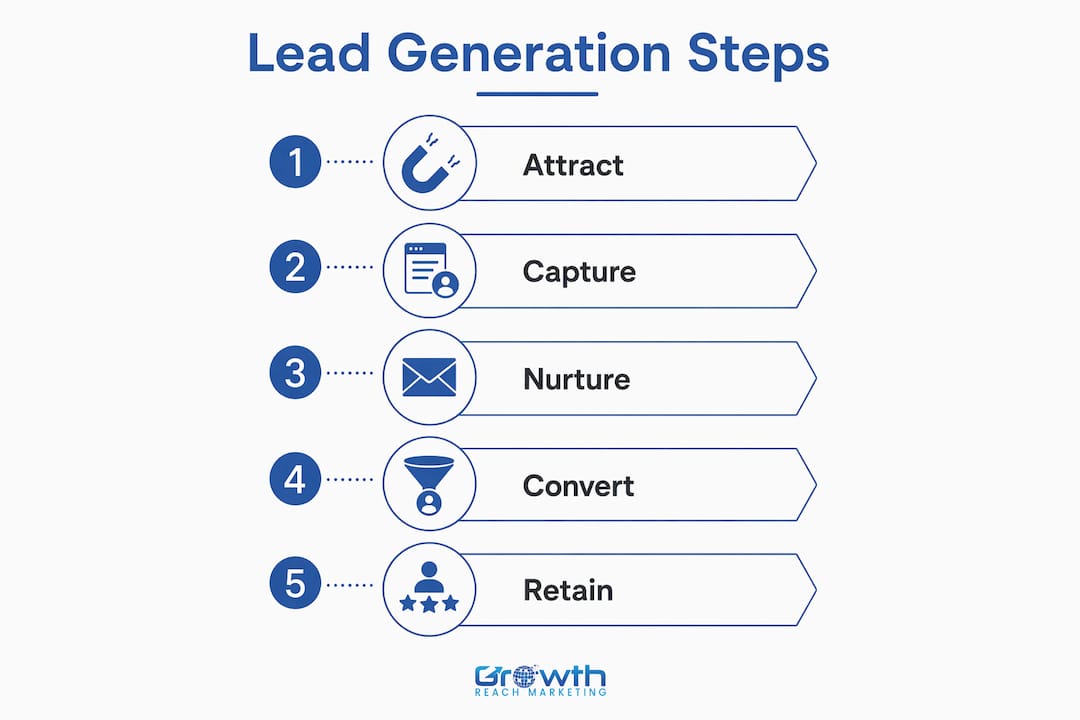
For clinics focused on filling their appointment calendar through marketing automation, connecting these tools into one system is the single highest-leverage improvement available.
What role do physician referrals and offline channels play alongside online strategies?
Physician referrals are the highest-ROI patient acquisition channel available to most specialists. The advertising cost is near zero, and referred patients arrive with a built-in level of trust that no paid ad can replicate. Rapid acknowledgment and follow-up within 24–48 hours of receiving a referral is the standard that keeps referring physicians engaged and loyal.
Most clinics underinvest in the referral loop. Sending a specialist note back to the referring physician after the patient’s first appointment is not just courteous. It is a business practice that directly increases the volume of future referrals from that provider. Referral loops that include acknowledgment and specialist notes increase physician referral ROI for specialists measurably.
Combining offline referral networks with digital tracking produces the clearest picture of total patient acquisition cost. Practical steps include:
- Assign unique phone numbers or landing pages to each referring practice so digital analytics can attribute appointments correctly.
- Use referral management software to log, track, and follow up on every incoming referral automatically.
- Schedule quarterly check-ins with top referring physicians, either in person or by video call, to maintain the relationship.
- Share anonymized outcome data with referring providers to demonstrate clinical quality and reinforce the referral relationship.
Aesthetic clinics building their first referral network can find practical guidance on attracting first-time patients through both digital and relationship-based channels.
How to measure, optimize, and ensure compliance in patient lead generation?
Continuous optimization separates clinics that grow from those that spend without results. Practices that measure, test, and refine campaigns outperform static efforts by a wide margin. Three metrics matter most: conversion rate by channel, cost per acquired patient, and lead source attribution.
Conversion rate tells you what percentage of visitors or inquiries become booked patients. Cost per acquisition tells you what you paid to get each one. Lead source attribution tells you which channel produced each patient. Without all three, you are optimizing blind.
HIPAA compliance in digital marketing is a specific and evolving requirement. HIPAA-ready automated workflows handle lead capture, follow-up, and intake forms securely, but the tools must be configured correctly. Standard marketing platforms like generic email tools are not HIPAA-compliant by default. Clinics must use Business Associate Agreements (BAAs) with every vendor that touches patient data. For a detailed breakdown of what compliance means for your digital campaigns, the guide on HIPAA and digital marketing covers current requirements clearly.
| Metric | What it measures | Optimization action |
|---|---|---|
| Conversion rate | Visitors who book an appointment | Improve landing page and booking flow |
| Cost per acquisition | Spend divided by new patients | Reallocate budget to highest-performing channels |
| Lead source attribution | Which channel produced each patient | Scale what works, cut what does not |
| Review volume and rating | Reputation and trust signals | Automate review request sequences post-appointment |
Pro Tip: Run A/B tests on your booking page headline and call-to-action button text every 60 days. Small copy changes regularly produce double-digit conversion improvements.
Key Takeaways
Effective online patient lead generation requires a connected system of SEO, paid search, automation, referrals, and HIPAA-compliant tracking working together to produce consistent, measurable patient acquisition.
| Point | Details |
|---|---|
| Define the system first | Patient lead generation is a structured acquisition process, not a collection of isolated tactics. |
| Use at least four channels | SEO, paid search, reputation management, and referrals together produce stable patient flow. |
| Fix the conversion layer | Online booking, automated follow-up, and digital intake prevent leads from dropping off after the first click. |
| Optimize for AI search | Verified credentials, structured data, and authoritative content determine AI-generated recommendations. |
| Measure every channel | Track conversion rate, cost per acquisition, and lead source to allocate budget where it produces results. |
What I’ve learned after years of watching clinics get this wrong
Most clinics I work with have the same problem. They invest in one channel, see inconsistent results, and conclude that digital marketing does not work for healthcare. The real issue is almost never the channel. It is the absence of a conversion layer.
A clinic can rank first on Google for its target keywords and still lose 70% of those visitors because the booking process requires a phone call during business hours. The traffic was there. The intent was there. The system failed at the last step.
The second pattern I see constantly is treating physician referrals and digital marketing as separate departments. They are not. The best-performing clinics I have observed use digital tools to track, acknowledge, and nurture referral relationships the same way they track paid ad performance. When a referring physician sends a patient and receives a detailed follow-up note within 24 hours, the next referral comes faster.
AI search is the shift that most clinic owners are not prepared for. Patients are increasingly getting provider recommendations directly from ChatGPT or Google AI Overviews without ever clicking a traditional search result. If your clinic’s content does not answer specific patient questions with clear provider credentials attached, you will not appear in those answers. This is not a future concern. It is happening now.
The clinics that will dominate patient acquisition over the next three years are the ones building authority content, maintaining clean structured data, running compliant automated workflows, and treating referral relationships as a managed channel. None of this is complicated. All of it requires consistency.
— Gerard
How Growthreachmarketing helps clinics build patient acquisition systems
Growthreachmarketing works with aesthetic clinics and healthcare providers to build the kind of patient acquisition systems described in this article, not just individual campaigns.
The work covers Google Business Profile optimization, local SEO, Google Ads campaign setup, content marketing for treatment-specific queries, and HIPAA-compliant automation workflows. Every engagement starts with identifying where the clinic’s current system loses patients, then fixing those gaps before adding more traffic. Clinics ready to build a reliable patient acquisition engine can start with the clinic SEO strategy guide to see exactly how Growthreachmarketing approaches search visibility for healthcare providers.
FAQ
What is patient lead generation online?
Patient lead generation online is the process of attracting prospective patients through digital channels and converting them into booked appointments. It includes local SEO, paid search, content marketing, and automated follow-up workflows.
How do I generate patient leads without a large marketing budget?
Google Business Profile optimization and content marketing produce strong results at low cost. Prioritizing physician referral programs alongside these channels builds consistent patient flow with near-zero advertising spend.
What does HIPAA compliance mean for digital patient acquisition?
HIPAA compliance requires that every tool handling patient data, including contact forms, chatbots, and email sequences, operates under a signed Business Associate Agreement. Standard marketing platforms are not compliant by default.
How does AI search affect how patients find clinics?
AI models like Google AI Overviews and Perplexity prioritize providers with verified credentials, structured data, and authoritative content. Clinics without these trust signals may not appear in AI-generated recommendations even if they rank well in traditional search.
What metrics should clinics track for online patient lead generation?
The three core metrics are conversion rate by channel, cost per acquired patient, and lead source attribution. Tracking all three allows clinics to scale what works and cut what does not.