

If you run an aesthetic clinic, salon or med spa in Ireland, three bodies shape what your ads can say: the Advertising Standards Authority (ASA), the Competition and Consumer Protection Commission (CCPC) and the Health Products Regulatory Authority (HPRA). The rule that catches most clinics out is simple. You cannot advertise prescription-only treatments such as Botox to the public, by name or by obvious implication, on your website, in a post or in a paid ad. Everything else comes down to honest claims, genuine reviews, realistic photos and clear prices.
This guide walks through each rule, who enforces it and how to check an ad before it goes live.
TL;DR
- Prescription-only medicines, including botulinum toxin, cannot be advertised to the public in Ireland, online or offline. Advertise the consultation and the clinic, not the product.
- Every health or beauty claim needs substantiation, and photos must not create unrealistic expectations.
- Reviews must be genuine, and paid-for reviews must not be presented as independent.
- Prices shown to consumers must include VAT and any other taxes, with no hidden charges.
- Three regulators can act: the ASA on the advertising code, the CCPC on consumer law, the HPRA on medicines advertising.
Table of Contents
- Who regulates aesthetic advertising in Ireland
- Botox, fillers and the prescription-only rule
- Claims about results and treatments
- Before-and-after photos
- Testimonials, reviews and endorsements
- Pricing and offers
- Websites, social media and paid ads
- What happens if an ad breaches the rules
- A pre-publication checklist
- Our perspective
- Marketing that stays inside the rules
- FAQ
- Sources
Who regulates aesthetic advertising in Ireland
There is no single “aesthetics advertising law”. Several layers apply at once, and your ad has to satisfy all of them.
| Body | What it covers | How it affects your ads |
|---|---|---|
| ASA | The self-regulatory advertising code, including the Health & Beauty section | Complaints, decisions, monitoring of websites and social media |
| CCPC | Consumer protection law on misleading advertising and pricing | Can take action such as prosecution, prohibition orders or compliance notices |
| HPRA | Medicines advertising law | Monitors compliance and can report or remove breaching online content |
| Coimisiún na Meán | Broadcasters’ commercial communications | Matters if you buy radio or TV airtime |
The CCPC explains that the ASA promotes higher advertising standards, the CCPC enforces consumer protection requirements and Coimisiún na Meán regulates broadcasters. It also states that all business advertisements are governed by consumer protection law and must not contain false, misleading or deceptive information about goods or services.
The ASA’s Health & Beauty section of the code covers medicines, medical devices, treatments, health-related products and beauty products. It regulates the marketing, not the products themselves. Product regulation sits with bodies such as the HPRA.
Botox, fillers and the prescription-only rule
This is the rule with the most enforcement behind it, so start here.
The HPRA is clear that prescription-only medicines may not be advertised or promoted to the public, in traditional or online media. That includes websites and social media. The legal basis is the Medicinal Products (Control of Advertising) Regulations 2007, which say a person shall not advertise a medicinal product that may not be sold except in accordance with a prescription.
The HPRA explains the reasoning: these treatments should only be recommended based on an individual patient’s medical history and professional advice, not a promotional post.
What the ASA has done about it
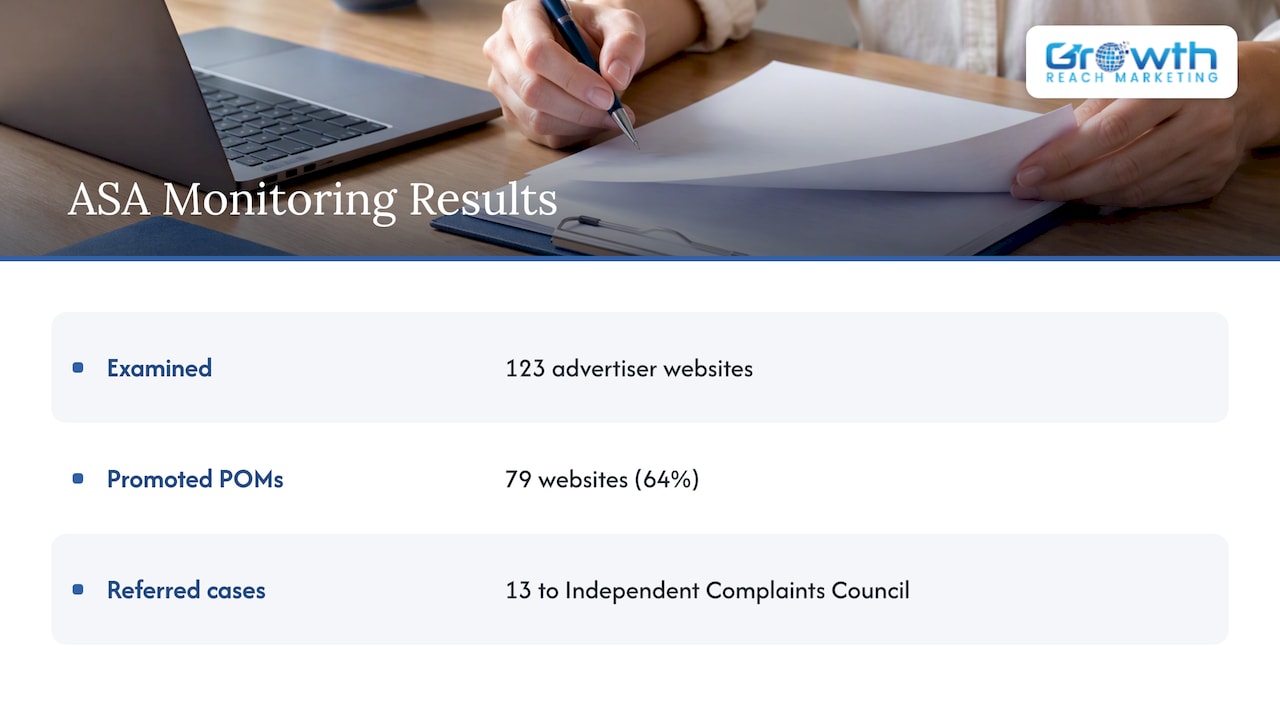
This is not theoretical. In an ASA monitoring project, 123 advertiser websites were examined and 79 of them (64%) promoted prescription-only medicines, potentially in breach of the Code. The ASA contacted the advertisers, and 13 cases were referred to its Independent Complaints Council.
The ASA also upheld a complaint over a social media post from Therapie Clinic that referenced “BOTOX” for Valentine’s Day, finding it breached the Code’s prohibition on advertising prescription-only medicines to the public. A seasonal, light-hearted post was enough.
What this means in practice
- Do not name the product (Botox, a filler brand or a drug name) in ads, captions, hashtags, alt text or page titles.
- Do not run discounts on these treatments. Offers framed around “20% off” a prescription-only treatment are the pattern the ASA’s monitoring targets.
- Promote the clinic, the practitioner’s qualifications, and the consultation as the first step.
- Keep treatment-specific detail for the consultation room, or for neutral, factual patient information that does not push people towards the product. If you are unsure where information ends and promotion begins, ask a regulatory solicitor or the ASA’s copy advice service before publishing.
The HPRA also notes that the advertising status of some non-prescription medicines can be restricted to healthcare professionals, and that this is listed publicly. Its guide to advertising compliance is the place to check a specific product.
Claims about results and treatments
Outside the prescription rule, the next most common problem is the claim itself. Under the ASA code, claims about health and beauty products and treatments should be backed by substantiation, and where relevant that should include robust, reputable trials on human subjects. Scientific information must be accurate.
The same section adds two points relevant to cosmetic products:
- Do not claim a cosmetic product is authorized or approved by a competent EU authority.
- Distinguish between what a product contains and the effects of applying it.
The code also says marketing for medical services should not cause unwarranted or disproportionate anxiety. “Fix your ageing face before it’s too late” is the kind of line that fails.
A quick test for any claim:
- Can you point to evidence for exactly this claim, not a nearby one?
- Is the wording about the treatment you actually perform, with the equipment or product you actually use?
- Does it promise a result, or describe a typical experience honestly?
If the answer to the first is no, rewrite it. “Visibly smoother-looking skin after a course of sessions” is easier to stand behind than “erases wrinkles”.
Before-and-after photos
Photos are persuasive, which is why they get scrutiny. The ASA code says photographs for individual treatments should not minimise or trivialise the treatment or create unrealistic expectations.
In practice:
- Use the same lighting, angle, distance and no filters in both images.
- Show typical outcomes, not your single best result.
- Keep captions factual. Skip “transformation of the year” language.
- Never use images for a prescription-only treatment in a way that promotes it. The photo rule sits on top of the medicines rule, not instead of it.
Consent and data protection are a separate layer: photos of identifiable clients are personal data. We cover the consent wording, storage and the marketing-label requirement in our guide to before and after rules in Ireland.
Testimonials, reviews and endorsements
The CCPC says businesses cannot promote consumer reviews unless they have taken reasonable steps to ensure the reviews are genuine, and that paid-for reviews must not be presented as independent. For a clinic this means:
- No fake reviews, and no reviews written by staff or friends.
- Do not filter to show only five-star feedback while implying it is representative.
- If you gave a client a free or discounted treatment in return for a review, that relationship should be clear.
Review replies are advertising-adjacent too. A reply that names a treatment or confirms someone was a patient can create both advertising and privacy problems. This overview of compliance in review responses is helpful when you set a reply policy for regulated services.
On endorsements, the ASA code says medicinal-product advertising must not refer to professional or celebrity recommendations. If you use influencers or client content, our guide to using client content on Meta in Ireland covers how to do it with clear labelling.
Pricing and offers
Under Irish consumer law, prices in ads aimed at consumers must be tax-inclusive: they must include VAT and any other applicable taxes, with no hidden charges. Businesses must also tell customers the correct price before any transaction, according to the CCPC.
For aesthetic clinics, that translates into some habits:
- Show the full price, not an ex-VAT figure, and include any consultation or booking fee.
- If a package has conditions (number of sessions, validity period), state them next to the price.
- Do not use “from” prices that no client actually pays.
- Keep offers to non-prescription services such as facials, skin analysis, laser hair removal sessions or lash treatments, and check each against the claims rules above.
Seasonal offers are fine for the right services. Plan them early and let your SEO and ads team see the compliance rules first, as we explain in why seasonal promotions need an SEO strategy.
Websites, social media and paid ads
The medicines rules apply equally online. The HPRA says anyone advertising a medicine must follow the law in traditional and online media, including websites and social media, and it monitors compliance and can report or remove online content that breaches the rules.
Where the risk hides:
- Service pages. A page titled with a prescription-only product name is advertising it.
- Instagram captions and hashtags. Hashtags count as copy.
- Lead ads. Forms and ad text with product names or discounts can breach the rules before a lead is ever captured. See our Facebook lead ads guide for Irish clinics and the Instagram lead ads templates.
- Google Ads. Platform policy is a separate gate from Irish law, so an ad can be legal and still be rejected, or the reverse. Our Google Ads guide for medical aesthetics goes through the practical side.
- Video. Voiceover and on-screen text are copy. See our aesthetic clinic video marketing guide.
Radio and television
Broadcast has its own rules. Under Coimisiún na Meán’s commercial communications code, commercial communications for cosmetic services should contain only the provider’s address and factual descriptions, and must not encourage use of the services. Broadcasters are also prohibited from advertising health products or treatments intended for serious complaints that should be treated by a registered medical practitioner. If you buy airtime, expect the broadcaster to apply this before the ad is accepted.
What happens if an ad breaches the rules
The consequences depend on the regulator:
- CCPC: may take action including prosecution, prohibition orders, compliance notices, undertakings and fixed payment notices.
- HPRA: can report or remove breaching online content.
- ASA: the complaints process can lead to upheld decisions that are published. The ASA says its primary approach is to work with advertisers to help them understand the rules, and its monitoring project referred only the most serious cases onward.
A published decision names the business. For a clinic that depends on trust, that reputational cost often matters more than any formal step.
A pre-publication checklist
Run every ad, page and post through these questions:
- Does it name or clearly point to a prescription-only medicine? If so, remove it.
- Is every claim substantiated for this exact treatment?
- Do photos show a realistic, typical result with consistent conditions?
- Are reviews genuine, and are any incentives clear?
- Is the price tax-inclusive, with conditions stated?
- Is the content clearly identifiable as marketing?
- Would it cause unwarranted anxiety about appearance or health?
- Is the platform’s own policy satisfied?
Keep a dated record of who approved each ad. If a complaint arrives, you can show a process, which helps a cooperative resolution.
Our perspective
We work only with salons, aesthetic clinics and beauty brands, and the pattern we see is consistent. Clinics rarely get into trouble through bad intent. They get into trouble because a marketer, a freelancer or a staff member copies a competitor’s post that was never compliant in the first place.
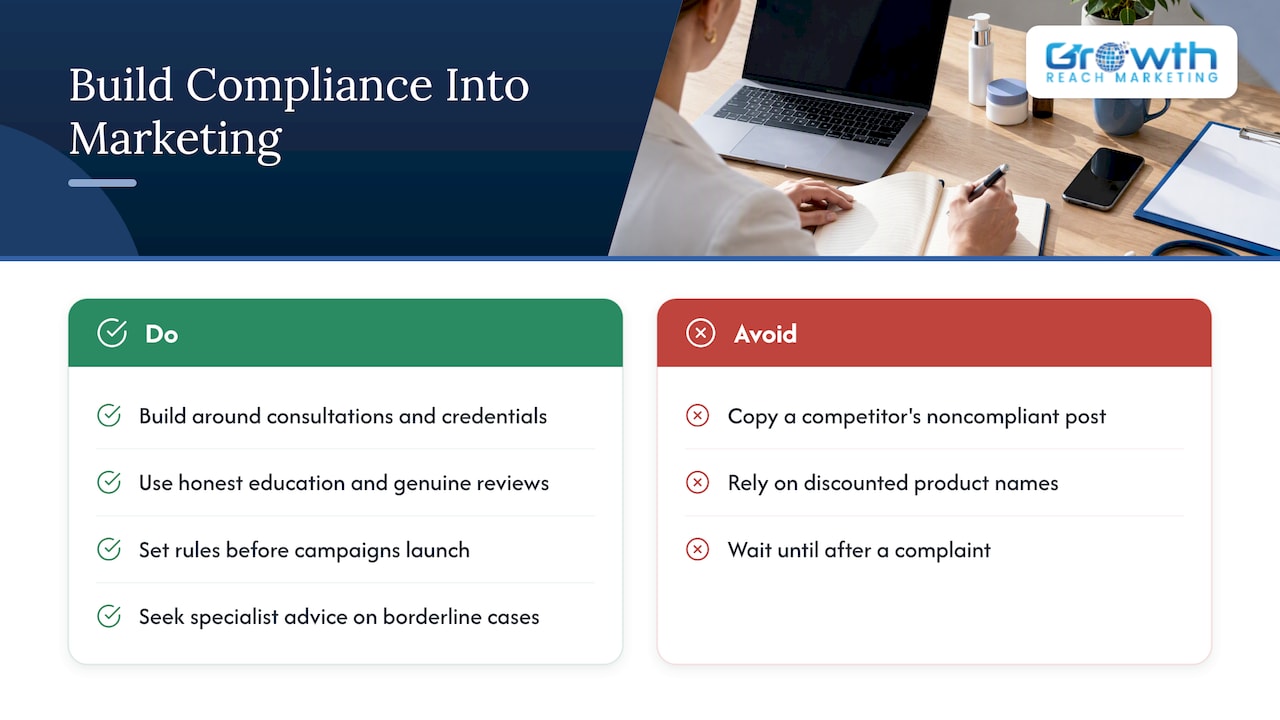
Our view is that compliance and performance are not opposed. Clinics that build their marketing around the consultation, the practitioner’s credentials, honest education and genuine reviews tend to attract better-qualified enquiries than those relying on a discounted product name. They also keep their ad accounts and their reputation. That is why we write compliance rules into briefs, ad templates and approval steps before a campaign launches, not after a complaint. For a wider view, see why aesthetic clinic ads need compliance.
We are marketers, not lawyers. For a borderline treatment or a new product, get advice from a solicitor experienced in medicines advertising or ask the ASA directly.
— Gerard
Marketing that stays inside the rules
If you want visibility on Google and social platforms without the risk of a breach, our team builds campaigns for Irish salons and clinics with these rules built in. We manage Facebook and Instagram ads, social media and LinkedIn with compliance review at every step. If you would rather start with discoverability, our local SEO guide for beauty brands shows how clinics get found by people already searching.
FAQ
Can I mention Botox on my clinic’s website?
Not in a way that promotes it to the public. Prescription-only medicines may not be advertised to consumers, and the HPRA applies this to websites and social media. The ASA’s monitoring found a large share of cosmetic treatment sites at risk on this point, so treat product names in service pages, titles and captions as a red flag.
Do the rules apply to salons or only medical clinics?
They apply to anyone advertising. Consumer law on misleading claims, tax-inclusive prices and genuine reviews covers every business, and the ASA’s health and beauty rules cover beauty products and treatments as well as medical services.
Are before-and-after photos allowed?
Yes, with care. They should not minimise or trivialise a treatment or create unrealistic expectations, and they cannot be used to promote a prescription-only medicine. You also need proper client consent, which is a data protection matter.
Who do I contact if I am unsure about an ad?
For medicines questions, the HPRA publishes advertising guidance and is the authority on the subject. For the advertising code, the ASA is the body to ask. For complex or high-risk copy, take legal advice before publishing.
Sources
- Advertising standards for businesses in Ireland, CCPC
- Promoting medicines to the public on social media, HPRA
- S.I. No. 541/2007, Medicinal Products (Control of Advertising) Regulations 2007
- ASA monitoring project on cosmetic treatment advertising
- ASA complaint decision, Health & Beauty
- ASA Advertising Code, Health & Beauty
- HPRA Guide to advertising compliance
- Coimisiún na Meán General Commercial Communications Code
- Compliance in review responses