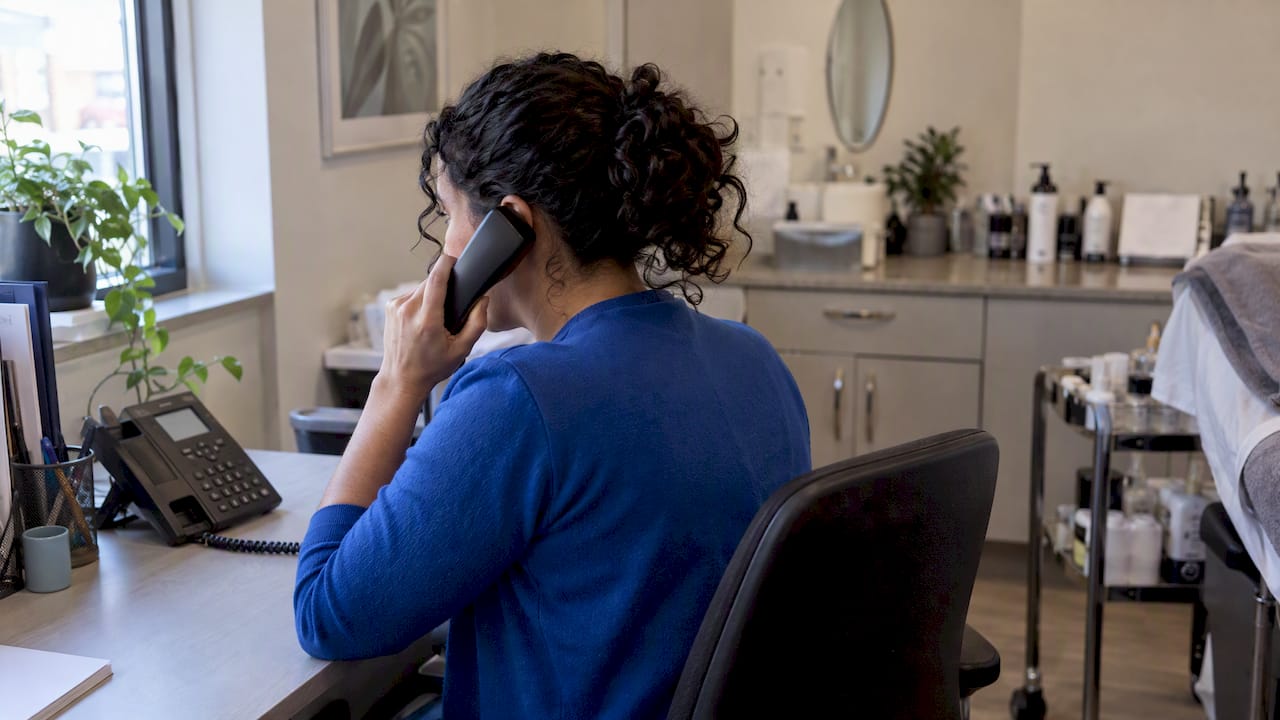
Add call assets to your Google Ads campaigns and turn on call reporting: this combination lets clients tap to call directly from the search results while giving you real data on which calls turn into bookings. Verify your phone number, set a minimum call duration conversion so brief or wrong number calls do not skew your results, and if you are still running the old call only ad format, move it over to responsive search ads with call assets before the format disappears entirely.
TL;DR:
- Call assets should be verified with a clear, consistent phone number on your contact page to ensure eligibility and accurate tracking.
- Structuring campaigns around high-intent keywords like “book appointment today” helps generate more valuable phone calls rather than broad research queries.
- Enable call reporting with forwarding numbers and set a minimum call duration of 60 seconds to filter out irrelevant or brief calls.
- Transition all legacy call-only ads to responsive search ads with call assets, as Google is deprecating the old call-only format.
- Continually review call data, especially call start times and area codes, to optimize ad scheduling and geographic targeting effectively.
Table of Contents
- What call assets and call campaigns are, and why salons benefit from them
- Step-by-step: verify your number, add call assets, and build a call-focused campaign
- How to track calls correctly: call reporting, forwarding numbers, and the GTM snippet
- Targeting, keywords, ad scheduling and bidding to prioritize high-quality phone leads
- Ad copy and asset strategy: writing responsive search ads that get callers
- Measure and optimize: using call duration thresholds and reports to improve ROI
- Practical checklist and common pitfalls from Growth Reach Marketing
- Deciding between phone-first and booking-first strategies
- How Growth Reach Marketing can help set up and optimize call-focused Google Ads
- FAQ
- Sources
What call assets and call campaigns are, and why salons benefit from them
A call asset is a phone number or clickable call button attached to a search ad, letting a client ring your salon straight from the results page instead of visiting your website first. Call assets require a verification URL or final URL where the phone number is visible, which confirms to Google that the business behind the ad actually owns that number. Call campaigns are a step further: entire campaigns structured around generating calls as the primary goal, useful when phone booking is how most of your clients actually convert. Call only ads, the format that showed a phone number with no clickable headline or landing page, are being phased out in favor of call assets on responsive search ads, according to Google’s transition guidance.
For salons, phone calls often beat website clicks for specific booking scenarios:
- A client wants to check availability for a same day appointment and does not want to navigate an online booking widget.
- Someone is asking about a service that needs a quick conversation first, like color correction or a consultation for extensions.
- A caller wants to confirm pricing or parking before committing to a visit.
- An older or less tech comfortable client simply prefers talking to a person over filling out a form.
On mobile, the call asset appears as a tappable button right next to your ad copy. On desktop, Google often displays the number as text or, in some layouts, a QR code that links a phone to dial the number directly. Either way, the client never has to leave the search results to reach you.
Step-by-step: verify your number, add call assets, and build a call-focused campaign
Setting up call assets correctly the first time saves you from rejected ads and broken tracking later. Follow this order:
- Choose your verification URL. Pick a page, usually your contact page or homepage, where your exact phone number appears in plain text in the page source, not just inside an image.
- Add the call asset at the right level. You can add call assets at the account, campaign, or ad group level in Google Ads; ad group level gives you the most control if different services need different numbers or messaging.
- Fill in the required fields. Enter your business phone number, select the countries where the number can be called, and choose whether to show the asset on both search and call history reporting.
- Build service-specific ad groups. Group keywords by treatment type (haircuts, color, extensions, bridal) so each responsive search ad can speak directly to that service and its typical caller.
- Write headlines and descriptions with call intent. Pair the call asset with copy that invites a phone action, such as mentioning same day availability or consultation calls.
- Select keywords with clear call intent. Terms like “salon near me open now” or “balayage appointment today” tend to produce more phone activity than broad, research stage queries.
- Transition any remaining call only ads. If you still have legacy call only campaigns, rebuild them as responsive search ads with call assets attached, since Google is deprecating the old format and existing call only ads will eventually stop serving.
- Submit for review and check asset status. New call assets go through a verification check; watch for a “not eligible” status, which usually means the phone number on your verification URL does not match what you entered.
Once assets are live, give the campaign a few days to collect data before judging performance. Early call volume can be low simply because Google is still learning which queries and placements produce calls for your specific account.
How to track calls correctly: call reporting, forwarding numbers, and the GTM snippet
Turn on call reporting as soon as your call assets go live, because without it you are running blind on which ads actually generate phone activity. Call reporting assigns a Google forwarding number that sits between your ad and your real business line, tracking call duration, start time, and, for longer calls, some caller details. Google tries to preserve your local area code on the forwarding number where possible, which keeps the number recognizable to local callers, falling back to a toll-free forwarding number when a local one is not available.
There are two distinct metrics worth separating:
- Calls from ads track activity generated directly by the call asset or call campaign, measured through the forwarding number.
- Calls to a phone number on your website require a separate setup, typically a phone snippet installed through Google Tag Manager, since these calls happen after someone clicks through to your site rather than tapping the ad itself.
Agencies implementing this for clients commonly install the GTM snippet to catch website driven calls and set up the native call asset reporting for ad driven calls, then map both into Google Ads as separate conversion actions so you are not conflating the two sources.
Set a minimum call duration for your conversion action, commonly 60-second, so a call that gets disconnected in five seconds or turns out to be a wrong number does not count as a conversion. Shopify’s guidance on offline conversion tracking notes that without a duration filter, counts can include brief or non-business calls and inflate your lead numbers, which then misleads any automated bidding strategy relying on that data.
Pro Tip: Test your 60-second threshold for two to four weeks and compare actual bookings per tracked call before letting Smart Bidding optimize against it.
Keep in mind that caller data available through forwarding numbers is limited and varies by region, so treat call reporting as a strong signal for optimization rather than a full record of every conversation.
Targeting, keywords, ad scheduling and bidding to prioritize high-quality phone leads
Call assets only pay off when the right people see them at the right time. Start with keyword intent: queries like “book haircut near me” or “balayage salon open today” signal someone ready to act now, while broader terms like “best hair colors 2026” usually belong to earlier research stages better served by your website than by a phone button.
Location targeting matters just as much as keyword choice. Narrow your radius to where clients can realistically travel for an appointment, and review the geographic reports regularly, since a wide radius often wastes spend on calls from people too far away to book.
A few settings make the difference between a campaign that generates bookings and one that generates noise:
- Limit ad scheduling to staffed hours so a call asset never rings through to an empty front desk after closing.
- Use negative keywords to filter out job seekers, DIY searchers, and product only queries that have no booking intent.
- Test phrase and exact match on your highest intent terms to keep control over which searches trigger your call assets, reserving broad match for discovery only once data is solid.
- Review call reporting weekly in the first month to catch mismatched numbers or asset eligibility issues early.
Once you have enough validated call conversions, usually a few weeks of consistent data, move from manual bidding to Smart Bidding strategies like Target CPA or Maximize Conversions. These automated strategies use your call conversion data to find similar searchers, but they only work well once that data reflects real bookings rather than noise from short or irrelevant calls. Jumping to automated bidding before your duration threshold is set and tested often produces disappointing results, since the algorithm optimizes toward whatever you tell it counts as a conversion, good or bad. For a deeper look at how much budget this stage typically needs, see our guide on Google Ads budgeting for salons.
Ad copy and asset strategy: writing responsive search ads that get callers
Your ad copy needs to do one job well: make the phone action feel like the obvious next step. Lead headlines with clear, service-specific language rather than generic claims, and let the call asset carry the actual phone action instead of typing the number into your ad text.
A few copy habits consistently perform better for phone-first campaigns:
- Name the service directly in at least one headline, such as “Balayage Consultations” or “Same-Day Blowouts,” rather than relying on vague branding.
- Pair the call asset with location and sitelink assets so the ad feels complete and trustworthy, giving hesitant searchers more reasons to trust the business before they dial.
- Never type your phone number into the description text. Let the verified call asset handle that, since duplicate numbers in ad copy can confuse tracking and look unprofessional if the asset itself is temporarily not showing.
- Point your verification URL to a page that also supports the call, such as a contact page listing hours, so someone who hesitates to call can still find what they need.
Pro Tip: Run two versions of your top headline, one naming a specific service and one naming a specific time window like “Open Today,” to see which prompts more calls.
Worth testing beyond headlines: urgency phrasing (“book before Friday”), light incentive language where it fits your pricing structure, and different description orders to see whether leading with the service or leading with convenience produces more taps on the call button. Our guide to salon Google Ads best practices covers landing page and ad structure choices that reinforce this same call-first approach.
Measure and optimize: using call duration thresholds and reports to improve ROI
A minimum call duration threshold is the single biggest lever for improving the quality of your call conversion data, because it separates genuine booking conversations from misdials, hang ups, and spam. A 60 second threshold is a common starting point, recommended in offline conversion tracking guidance, though some salons find a slightly longer or shorter window fits their typical call length better once they review actual recordings or logs.
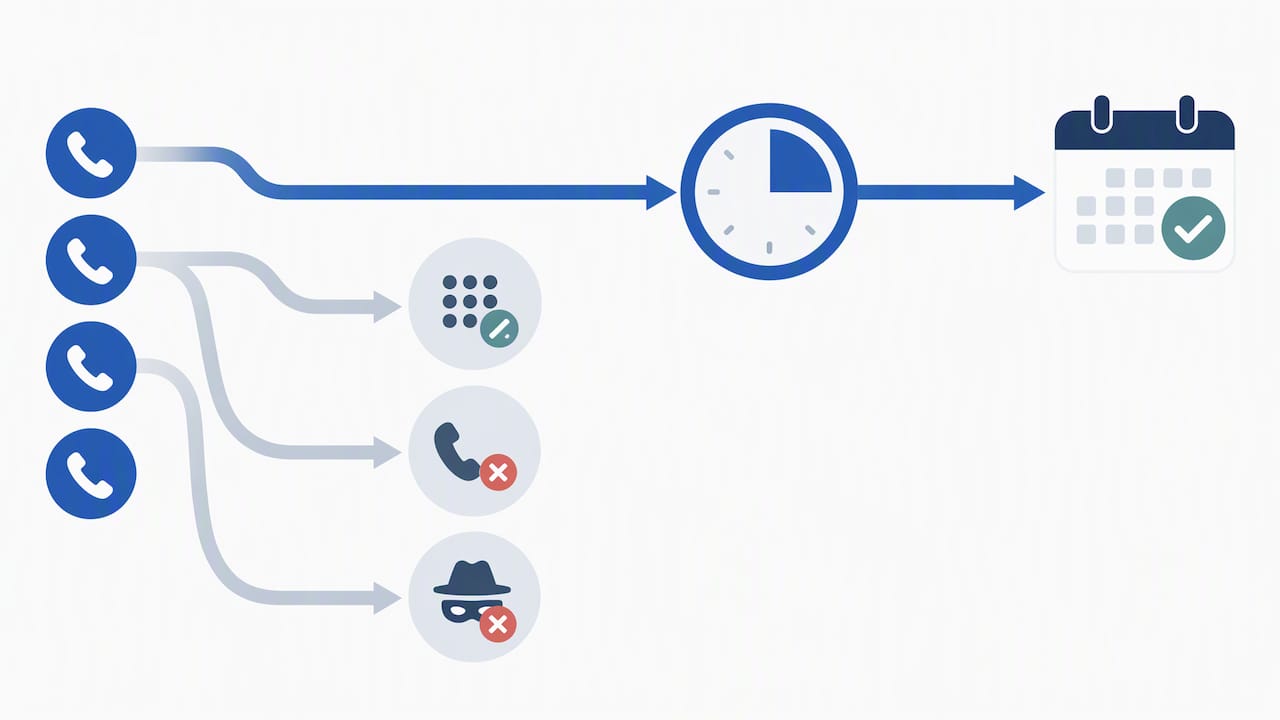
Call reporting through forwarding numbers tracks duration, start time, and area code patterns. Use that data, not guesswork, to refine where and when your ads run.
A practical optimization routine looks like this:
- Review call start times weekly to spot gaps between when calls happen and when your ad schedule is active.
- Cross-reference caller area codes against your service radius to catch targeting drift early.
- Flag any ad group with consistently short calls for a copy or keyword review rather than assuming the whole campaign is underperforming.
Scale budget only after call conversions look consistent across at least a few weeks of data, and hold off on switching to fully automated bidding until your duration threshold and conversion mapping are both confirmed correct. For a technical walkthrough of mapping these conversions properly, see our audit-ready call tracking guide and our broader conversion actions guide for salon owners.
Practical checklist and common pitfalls from Growth Reach Marketing
Before launching, confirm: your verification URL shows the exact phone number in plain text, call reporting is enabled at the account level, your GTM phone snippet is installed if you track website calls, your minimum call duration is set, and your ad schedule matches staffed hours only.
Common pitfalls include a verification page showing a different number than the call asset, counting every call as a conversion regardless of length, and missing conversion attribution between website calls and ad calls. When requesting an agency audit, ask specifically for conversion mapping review, forwarding number behavior checks, and a documented optimization schedule.
Deciding between phone-first and booking-first strategies
Phone-first campaigns suit salons where clients want quick answers or same-day slots, and where a chunk of your client base simply prefers calling. Booking-first setups make more sense for services needing deposits or detailed forms. My honest recommendation: run both, let the conversion data tell you which one your specific client base actually prefers, and adjust spend accordingly.
— Gerard
How Growth Reach Marketing can help set up and optimize call-focused Google Ads
Setting up call assets correctly, mapping conversions, and tuning bidding takes ongoing attention most salon owners do not have time for between clients. A specialized marketing agency can work with salons and aesthetic clinics on the Google Ads side of this, alongside related channels that keep phones ringing and calendars full.
Our team can help with:
- Reviewing or building your call asset setup, including verification and conversion mapping.
- Setting up Facebook & Instagram Ads Management alongside Google Ads so call volume does not depend on one channel alone.
- Ongoing Social Media Management and LinkedIn Management to support visibility between ad clicks and calls.
If you want a second set of eyes on your current setup or help building one from scratch, visit our services page to see what fits your salon.
FAQ
What are call ads?
Call ads, now mostly replaced by call assets on standard search ads, let searchers tap a phone number or call button directly from a Google ad instead of clicking through to a website. They were designed for businesses where a phone conversation, not a web form, is the main path to booking.
How do I advertise my salon?
Most salons combine Google Ads with call assets and local targeting, a Google Business Profile, and social media advertising on platforms like Facebook and Instagram to reach clients at different stages of deciding where to book. Growth Reach Marketing builds these channels together through services like Facebook & Instagram Ads Management so paid search and social advertising reinforce each other.
What is the best POS system for a salon?
There is no single best point-of-sale system for every salon, since the right choice depends on booking volume, payment processing needs, and integration with existing tools. Platforms built specifically for salon booking and payments are generally a better fit than generic retail POS systems, since they handle appointment scheduling alongside checkout.
How do I attract customers to a salon?
Attracting new clients usually means combining visible local search presence, active social media, and clear calls to action like phone numbers or booking links in ads and profiles. Tools that manage social content consistently, such as Xyla, can support this alongside paid advertising by keeping your online presence active between campaigns.
What is a good minimum call duration for conversion tracking?
A 60 second minimum is a common starting point for filtering out misdials and short, non-business calls from conversion counts, as outlined in offline conversion tracking guidance. Many salons test this threshold against actual booking outcomes for a few weeks before adjusting it up or down.