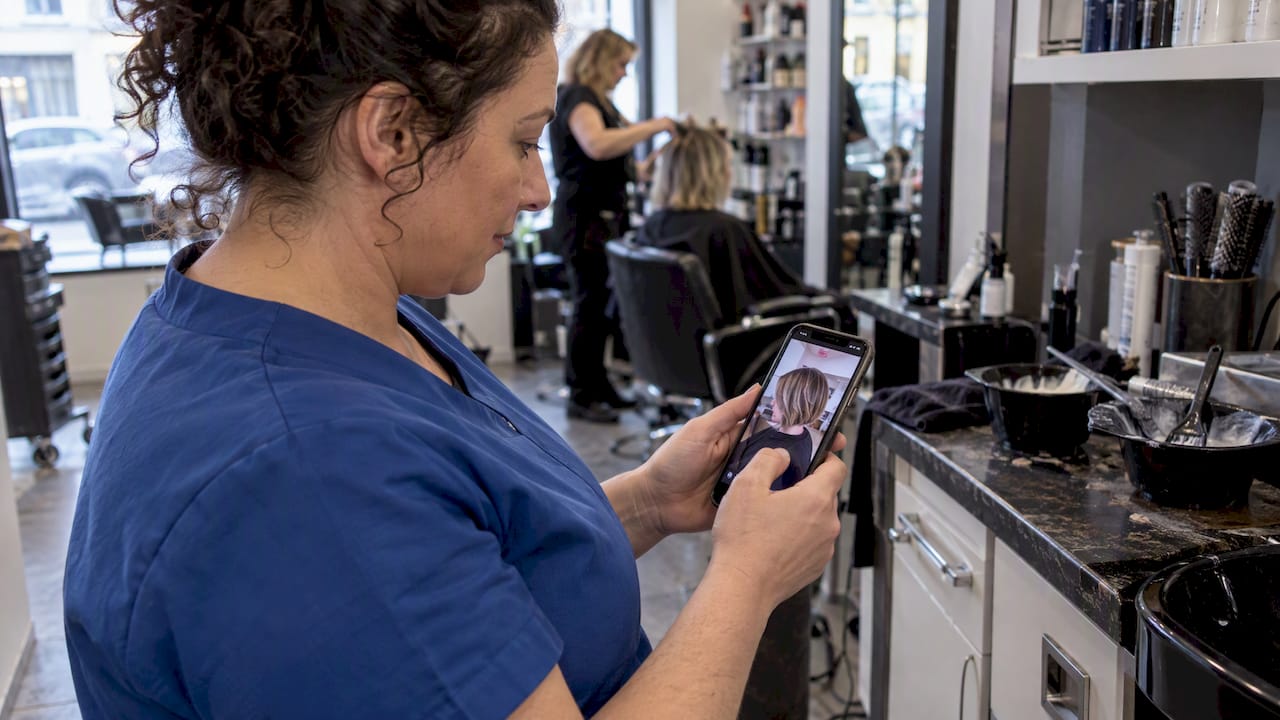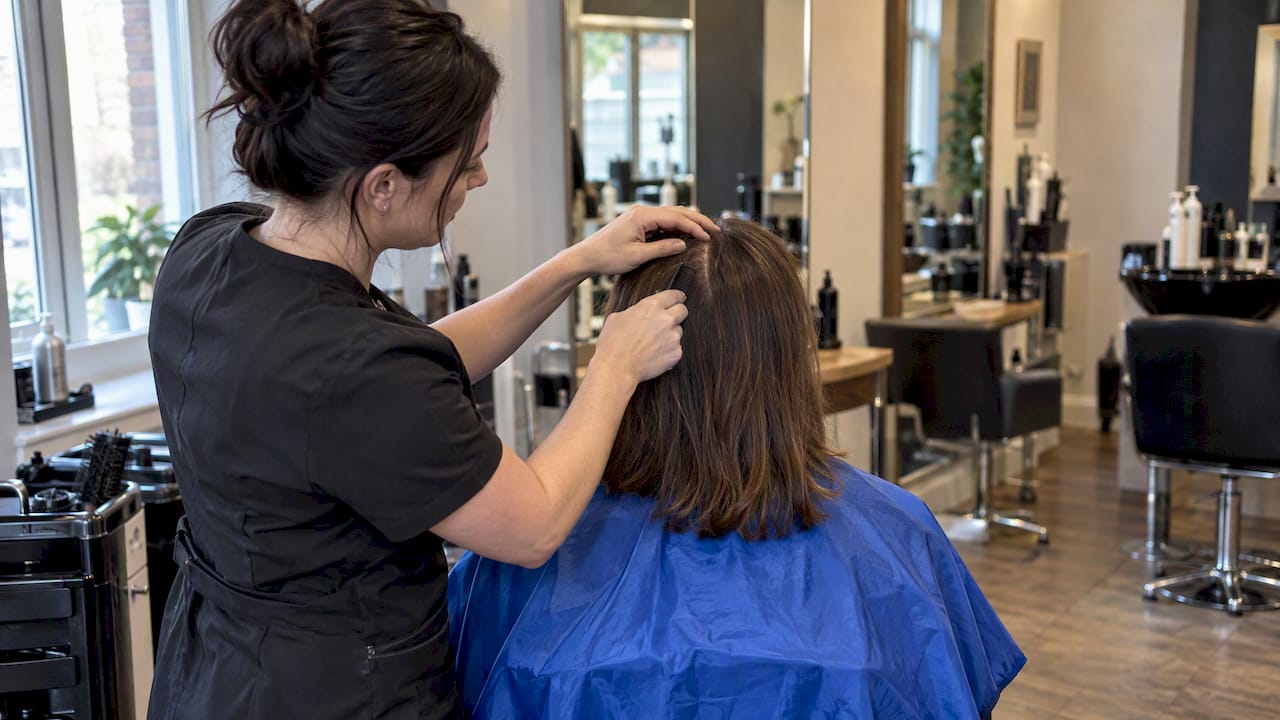

A compliant YMYL procedure page needs three things before anything else: a credentialed author byline paired with a named clinical reviewer, citations to primary medical sources rather than blog summaries, and a visible disclaimer at the top of the page. Google treats medical aesthetic content as “Your Money or Your Life,” meaning every claim about a procedure, risk, or price gets held to a higher evidence bar. This guide covers the full checklist, page templates, and a safe workflow for using AI without triggering compliance or trust problems.
TL;DR:
- Most pages about procedures, risks, pricing, and results are subject to Google’s strict YMYL standards, requiring verifiable author credentials and primary sources.
- Missing or outdated reviewer information, unlinked citations, and generic disclaimers increase risk of non-compliance and ranking issues.
- Using real clinic photos, consistent branding, and signed-off visual assets enhances trust signals and reduces the perception of AI-generated content.
- Following a structured, template-based content process with human clinical review and up-to-date review dates mitigates hallucination and outdated information risks.
- Prioritizing high-traffic, high-risk pages for credentialing, sourcing, and reviews offers the fastest ROI for maintaining YMYL compliance and improving search visibility.
Table of Contents
- What YMYL Content Aesthetics Means for Medical Clinics
- Why Aesthetics Clinics Sit Squarely in YMYL Territory
- What E-E-A-T Requires on Every Clinic Page
- Why the “AI Design Aesthetic” Undermines Patient Trust
- A Copyable Page Template for YMYL Procedure Pages
- Building a Safe AI Workflow Without Losing Reviewer Time
- Templates You Can Copy Today
- How Growth Reach Marketing Builds Compliant Clinic Content
- YMYL Compliance Is a Growth Strategy, Not Just a Compliance Task
- Get a YMYL Audit Built for Aesthetic Clinics
- Sources
What YMYL Content Aesthetics Means for Medical Clinics
YMYL stands for “Your Money or Your Life,” a classification Google applies to any content that could affect a reader’s health, financial stability, or safety. Botox pricing pages, filler risk disclosures, laser consultation guides: all of it qualifies. Google’s own developer documentation confirms that YMYL topics receive elevated weight toward demonstrating strong experience, expertise, authoritativeness, and trust, commonly shortened to E-E-A-T.
Here’s what that means operationally. Think of E-E-A-T as a quality multiplier rather than a checkbox. A blog post about the best coffee grinders can rank on decent writing and a few helpful comparisons. A page describing the recovery timeline after a chemical peel does not get that leniency. The multiplier effect means thin content, unverified authorship, or vague sourcing doesn’t just underperform on a YMYL page. It actively suppresses the page’s visibility, sometimes across the entire domain if the pattern repeats site-wide.
This is where a lot of clinic marketing teams get surprised. A page about “how much does CoolSculpting cost” feels like a pricing page, not a medical page. Google doesn’t see it that way. Cost decisions tied to a medical procedure carry the same scrutiny as the clinical risk information, because a bad financial decision about a body procedure has real consequences.
The scope of YMYL content relevant to aesthetic clinics is broader than most marketing teams assume. It typically includes:
- Procedure overview and candidacy pages (who should or shouldn’t get a treatment)
- Risk, side effect, and complication disclosures for any injectable, laser, or surgical service
- Medication and aftercare guidance, including anything mentioning prescription products like tretinoin or oral antibiotics
- Pricing and financing content, since cost misinformation can lead patients into poor financial decisions
- Before-and-after result pages that imply guaranteed outcomes
- Provider credential and qualification pages
If your content calendar treats these pages the same way it treats a “10 skincare tips for winter” listicle, that’s the gap to close first. YMYL content strategy for a clinic isn’t a content marketing exercise bolted onto a website. It’s closer to publishing a medical reference resource that happens to also convert bookings.
Why Aesthetics Clinics Sit Squarely in YMYL Territory
Clinics often underestimate how many of their pages qualify as YMYL because the language feels routine to them: “lip filler,” “recovery time,” “Botox units.” To a search engine evaluating trust and safety, none of that reads as routine. A misleading recovery timeline can lead a patient to return to work too early. An unsourced claim about filler longevity can shape a financial decision worth hundreds or thousands of dollars.
The pages most likely to draw scrutiny include procedure landing pages, risk and safety pages, any content mentioning drug names or dosages, financing and membership pricing pages, and testimonial or result pages that make specific outcome claims. If a page could plausibly change what a patient does with their body or their money, treat it as YMYL by default.
Beyond scope, there’s a set of recurring mistakes that show up across clinic websites, and they tend to compound each other. The most common pitfalls, in rough order of how often they appear:
- Thin procedure descriptions. A 200-word page that describes a laser treatment in generic marketing language, with no discussion of contraindications, downtime, or realistic results, signals low effort to both readers and ranking systems.
- Unverifiable authorship. Content published under “Admin” or a generic “Clinic Team” byline with no linked credentials fails the most basic trust check a rater or an algorithm applies to medical content.
- Outcome guarantees. Phrases like “permanent results” or “no downtime, guaranteed” are both a ranking risk and, depending on your jurisdiction’s advertising standards, a potential regulatory violation.
- AI hallucinations left unchecked. Generative tools frequently invent plausible-sounding but false details, wrong dosage ranges, incorrect recovery windows, fabricated statistics, and clinics that publish AI drafts without clinical review inherit that risk directly.
- Stale content with no review date. A filler safety page last touched three years ago, with no visible “reviewed on” date, reads as neglected even if the information happens to still be accurate.
If you’re running a site audit, the fastest diagnostic signals are simple: is there a named reviewer anywhere on the page, does the page link to any primary source at all, and does the page show a last-reviewed date within the past twelve months for higher-risk content. Missing all three on a procedure page is a strong predictor of both compliance exposure and ranking underperformance.
What E-E-A-T Requires on Every Clinic Page
Getting E-E-A-T right on a YMYL page isn’t about sprinkling in a few trust badges. It’s a specific set of editorial and technical requirements, and skipping one tends to undercut the rest. Industry analysis of the Search Quality Rater Guidelines treats missing topic-specific disclaimers, absent reviewer bylines, and unsourced claims as critical failures, not minor deductions.
Here’s what a compliant page actually needs:
- A named author byline with verifiable credentials. Not “Clinic Staff.” A real name, their role (registered nurse, medical director, licensed aesthetician), and a link to a bio page listing their license and training. Mark this up with Person schema so search engines can parse the credential data directly.
- A named clinical reviewer, separate from the author when possible. If a content writer drafts the page, a licensed provider should review and sign off on the clinical accuracy. Display their name, license type, and a link to a verifiable registry or professional body listing where one exists.
- A top-of-page disclaimer. Something specific to the topic, not a generic legal footer. “This page is for informational purposes and does not replace a consultation with a licensed provider” belongs above the fold, not buried in a sitewide banner.
- Conflict-of-interest disclosure where relevant. If the clinic sells a product it’s reviewing, or a reviewer has a financial stake in a device manufacturer, say so plainly.
- Primary-source citations, not competitor blog links. Cite peer-reviewed studies, manufacturer safety data, or professional body guidelines. Link the specific claim, not the whole paragraph.
- A references section at the bottom listing every source cited inline, formatted consistently.
- MedicalWebPage schema alongside Author and Review markup, with
datePublishedanddateModifiedfields kept current.
Pro Tip: Don’t just add a reviewer’s name for show. Link it to a page that verifies their license number or professional registration. A named reviewer with no way to confirm they’re real is barely better than no reviewer at all, and raters are trained to notice the difference.
Getting the credential and citation layer right is the single highest-leverage fix most clinics can make, because it touches every page in the YMYL category at once rather than requiring a rewrite of each one individually.
Why the “AI Design Aesthetic” Undermines Patient Trust
Visual choices carry as much weight as the words on a YMYL page, and this is the part most content teams overlook entirely. There’s now a recognizable “AI design aesthetic”: hyperreal skin, symmetrical faces, oversaturated colors, and stock-photo-perfect clinic interiors that never quite look like a real place. Design analysis of this pattern shows audiences are increasingly able to spot it on sight, and on a medical page, spotting it reads as a red flag rather than a design flourish.

Think about what a patient is actually evaluating when they land on a filler risk page. They’re not just reading the text. They’re scanning for signs that a real clinic, with a real provider, wrote this. Generic AI-generated stock imagery of a “doctor” who doesn’t work at the clinic breaks that signal immediately.
The fix isn’t banning AI tools. It’s setting rules for how visual assets get produced and mixed:
- Use clinic-owned photography of the actual space and actual providers wherever possible, not licensed stock photos of unrelated models.
- Lock a consistent brand palette across every page so visuals feel like one clinic, not a template pulled from a design tool.
- Show real clinician headshots tied to real names and credentials, matching the bylines described above.
- Use real before-and-after photos with documented, disclosed patient consent, and label them clearly with treatment type, timeframe, and any relevant caveats about individual results varying.
- Favor real B-roll and candid clinic footage over polished stock video when producing social or landing page content.
When AI-generated visuals do get used, for concept mockups, background graphics, or rapid iteration, the safest approach is mixing them with real assets and locking a defined brand identity before generation starts, a technique sometimes called persona locking. A consistent visual identity system also gives your team a reference point every new asset gets checked against, so drift toward generic AI polish gets caught before it ships. Design consistency itself functions as a trust signal independent of the medical content, a point branding-focused agency research backs up directly. A human reviewer should sign off on every AI-touched visual before publication, the same way a clinical reviewer signs off on written claims.
A Copyable Page Template for YMYL Procedure Pages
Building a compliant page from scratch every time wastes hours your team doesn’t have. A standard template, applied consistently, closes most of the gaps described above without requiring a fresh compliance review for every new procedure page.
Structure the page in this order:
- Top disclaimer banner. One or two sentences, topic-specific, placed before any marketing copy.
- Byline block. Author name and credentials, reviewer name and credentials, last-reviewed date, all visible without scrolling.
- Procedure overview. A plain-language summary of what the treatment does, who it’s typically for, and what it doesn’t do. Keep outcome claims bounded (“many patients notice,” not “guaranteed results”).
- Risks and side effects, sourced. Every risk claim tied to a citation. If you can’t source it, don’t state it as fact, flag it as something to discuss with a provider instead.
- Recovery timeline. Realistic, day-by-day or week-by-week where relevant, with a clear note that individual recovery varies.
- “When to see a clinician” callout. A boxed or visually distinct section listing symptoms or situations that warrant contacting the clinic or seeking urgent care.
- References section. Every source cited above, listed with full titles and links.
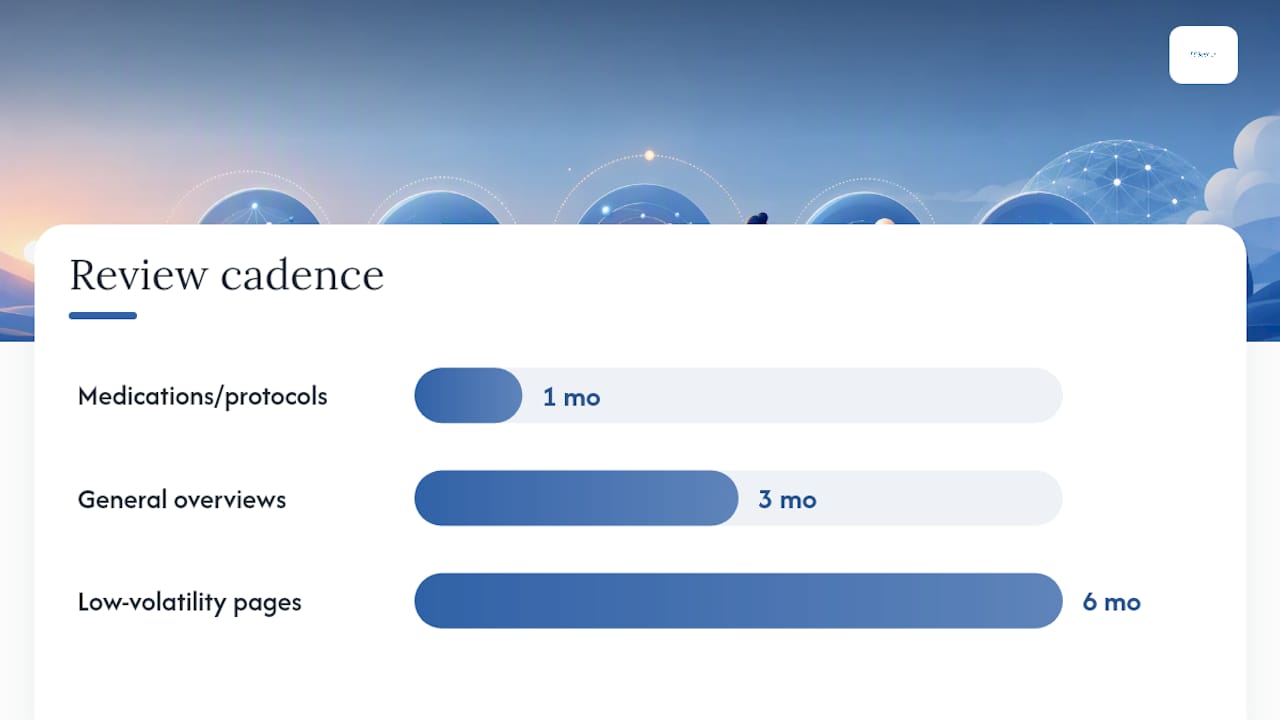
Cadence matters as much as content. Peer-reviewed research on health information quality supports a review schedule tied to how fast the underlying medical guidance can change. Pages mentioning medications, drug interactions, or clinical protocols warrant a monthly review cycle, since dosing guidance and safety data can shift with little warning. Lower-volatility pages, like general procedure overviews, can run on a quarterly or semiannual cycle.
Prioritize by traffic and risk together. A high-traffic Botox risk page with a two-year-old review date is a bigger liability than a low-traffic page about an add-on service nobody searches for. Fix the intersection of “most visited” and “most stale” first.
Building a Safe AI Workflow Without Losing Reviewer Time
AI tools can genuinely speed up YMYL content production, but only inside a workflow with explicit checkpoints. Skip the checkpoints and you inherit every hallucination risk generative models carry, a risk Google’s own guidance on helpful content implicitly warns against by tying E-E-A-T so tightly to demonstrated expertise rather than fluent-sounding text.
A workable process looks like this:
- Planning brief. Define the topic, target claims, and a preliminary source list before any drafting starts, AI-assisted or not.
- Model role, clearly bounded. Use AI for structure, first-draft phrasing, and readability passes, not for generating clinical facts, dosages, or statistics from memory.
- Human draft editing. A content editor rewrites for voice, checks structure against the brief, and flags any claim that needs a source.
- Clinical reviewer verification. A licensed provider checks every medical claim against the cited sources, not against general plausibility.
- Citation checking. Confirm every linked source actually supports the specific claim attached to it, not just the general topic.
- QA gate before publishing. A final check for the disclaimer, byline, reviewer credit, schema markup, and last-reviewed date.
Set clear red-flag triggers that stop publication automatically: any specific statistic without a linked source, any drug dosage the reviewer hasn’t independently verified, and any outcome claim using words like “guaranteed” or “permanent.”
Pro Tip: Disclose AI use plainly but briefly, a single line near the byline block (“This article was drafted with AI assistance and reviewed by [name], [credential]”) works better than a long explanatory paragraph. Readers care more about the reviewer’s name than the tool that helped draft the outline.
Templates You Can Copy Today
Speed matters when you’re retrofitting dozens of existing pages. These short templates cover the elements teams get stuck rewriting from scratch.
Disclaimer banner, placed directly under the H1: “This page provides general information about [procedure] and is not a substitute for a consultation with a licensed provider. Individual results and risks vary.”
Byline template: “Written by [Name], [credential, e.g., Licensed Aesthetician]. Reviewed for clinical accuracy by [Name], [credential, e.g., Board-Certified Dermatologist], on [date].”
Image consent and labeling rules:
- Before-and-after images require documented written patient consent on file, referenced in an internal log, not published publicly.
- Label every result image with treatment type, number of sessions, and elapsed time since treatment.
- Alt text should describe the image factually: “Patient before and after three sessions of laser resurfacing, six weeks post-treatment” rather than generic terms like “amazing results.”
Reviewer note template, placed near the references section: “Reviewed for medical accuracy on [date] by [Name], [license type, license number if publicly verifiable]. Next scheduled review: [date].”
These aren’t decorative. Each one maps directly to an E-E-A-T requirement covered earlier, and having them ready as drop-in text removes the excuse for skipping them on a page built under deadline pressure.
How Growth Reach Marketing Builds Compliant Clinic Content
Growthreachmarketing works with salons, aesthetic clinics, and beauty brands specifically on the gap between marketing content and YMYL compliance, because the two goals aren’t actually in tension. A YMYL audit typically starts by mapping every procedure, pricing, and risk page against the checklist above, flagging missing bylines, absent citations, and stale review dates.
From there, remediation gets prioritized by traffic and risk, not by an arbitrary content calendar. High-visibility procedure pages with the weakest trust signals move first. Content production runs through a credentialed reviewer process paired with structured-data implementation, so MedicalWebPage, Author, and Review schema get applied consistently rather than as an afterthought on a handful of pages.
The practical entry point for most clinics is a low-cost audit, followed by a prioritized remediation plan, followed by an ongoing managed content program that keeps review dates current as guidance changes. That sequencing matters more than most clinics expect. Publishing a beautifully credentialed page once and letting it go stale for two years defeats the purpose almost as thoroughly as never fixing it at all. A well-structured SEO strategy built for aesthetic clinics treats YMYL compliance as infrastructure, not a one-time project.
YMYL Compliance Is a Growth Strategy, Not Just a Compliance Task
Clinics tend to treat YMYL requirements as a cost center: something legal or compliance asks for, reluctantly implemented, rarely revisited. That framing gets it backward. Pages with credentialed reviewers, real citations, and honest disclaimers convert better, because patients researching an elective procedure are actively looking for reasons to trust the provider they’re about to pay. A vague, unsourced page reads as a red flag before a patient ever picks up the phone.
If you do nothing else this quarter, fix your three highest-traffic procedure pages first: add the byline and reviewer, source the risk claims, and post a real review date. That alone closes most of the gap between where a typical clinic site sits today and where Google expects YMYL content to be.
If the backlog feels bigger than your team can clear alone, an outside audit is often faster than trying to diagnose every page internally.
— Gerard
Get a YMYL Audit Built for Aesthetic Clinics
Growthreachmarketing runs YMYL audits specifically for salons, aesthetic clinics, and beauty brands, the exact gaps this guide covers: missing reviewer credentials, unsourced risk claims, absent disclaimers, and content that hasn’t been touched in years. Rather than a generic SEO review, the audit maps each procedure and pricing page against the compliance checklist above and hands you a prioritized remediation list, not just a diagnosis.
From there, Growthreachmarketing can build out credentialed content production, a verified clinical reviewer network, and the structured-data implementation (MedicalWebPage, Author, Review schema) that most clinic sites are missing entirely. If AI is already part of your content pipeline, the audit also covers governance: where hallucination risk creeps in and how to close it without slowing production to a crawl.
Start with a prioritized SEO and content strategy review to see exactly which pages need attention first, and how a managed content program keeps them compliant as guidance evolves.
Sources
Keep these on hand for your clinical reviewer and content team; they cover the primary standards this guide draws from.
- Google Developers — Creating helpful, reliable, people-first content
- Peer-reviewed article on health information quality (NCBI/PMC)
- YMYL SEO Decision Tree: Health, Finance, Legal, Civic — ThatDevPro
- The AI design aesthetic: why AI content all looks the same — Kompozy
Save this list alongside your reviewer templates so credential checks and citation audits stay consistent across every procedure page you publish.